
The journey to insights
Editor’s note: Julia Nilles is the assistant news and content editor at Quirk’s Media, where she works on pieces in market research and insights through various channels. She graduated from the University of Minnesota with a Bachelor of Arts in psychology and communications.
My journey to the Quirk’s Event – New York was tough. After many delays and frustration compounding, we finally took off … and landed in Pittsburgh. Not where we thought we’d be spending the evening before the event. Eventually, after over 24 hours of travel, we landed in Newark running on fumes but ready to take on the second half of Day 1.
Many others had similar experiences, with diversions or delays impacting their travel. Despite this, attendees were able to make the most of their shortened trips and offer perceptive insights for all to enjoy. With the theme of diversions on my mind, these are a few sessions that stood out to me.
The next consumers
Monica Boudreauc, VP qualitative research at Buzzback, led a panel opening the conversation around Gen Z and their relationship to consumerism titled, “Beyond stereotypes: How brands are understanding and engaging Gen Z.” Gen Z doesn’t behave like younger Millennials; due to being raised mid-pandemic and in a fully technological world, they operate in completely different ways.
This generation has the highest level of stress and burnout, meaning brands must divert from previously successful campaigns and focus on reducing pressure on young people. Despite their stress levels, 45-55% of Gen Z feel hopeful, optimistic and motivated for their future. Companies can support this optimism to build trust with this population.
What was most impactful to me was the importance of treating Gen Z as its own group, independent of previous populations. Brands must change their approach, and maybe even their definition, of success.
Decision-making in insights
Charlie Butler, co-founder and co-CEO of Bounce Insights, and Callum Smith, head of product marketing strategy and comms, EU and Israel of TikTok, brought forth an interesting perspective of decision-making in insights in their session, “Closing the gap between insight and decision: Lessons from TikTok.” The best decisions for any company are those that are backed by insights. Although, this isn’t always plausible due to time or financial constraints.
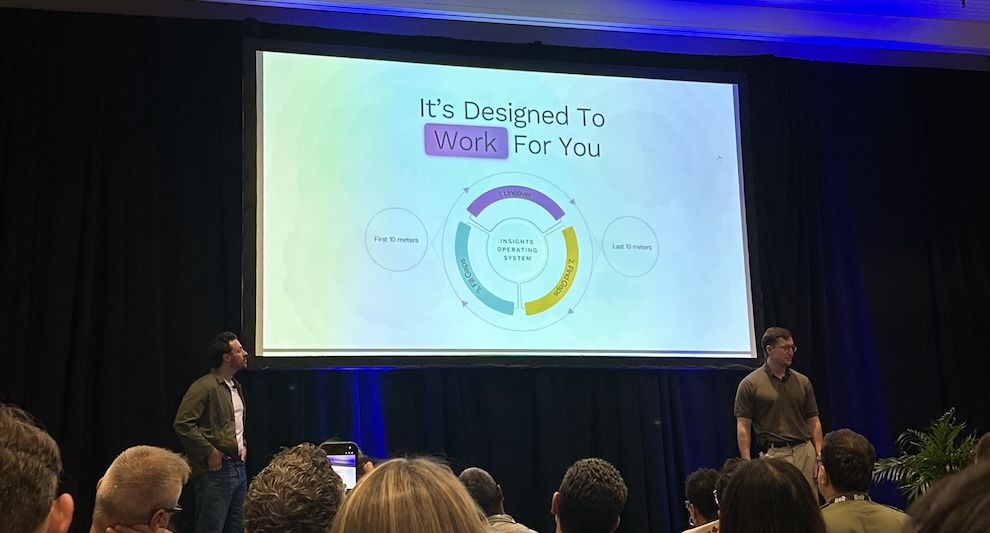 Butler identified the three primary problems for client-side research teams: velocity, visibility and vividness. With agentic AI at the forefront of research, some of these challenges can be mitigated.
The goal of insights has always been and will always be to provide a deeper understanding of the consumers. The most significant change is how these insights are discovered and how they influence a brand’s decisions.
From Broadway to boardrooms
Genevieve Colman, senior director, consumer research at Veterans United Home Loans, led a session all about the importance of telling insights as a story: “On with the show: What Broadway can teach us about consumer insights.” While connecting insights with musical theater, Colman asked the audience, “What is this show about?”
Like a great show, great insights can do three things: be described in one sentence, explain to the audience why they should care and easily define what belongs in the story. When done well, a solid team can pull people into the story of their findings, bridging the gap between life and research.
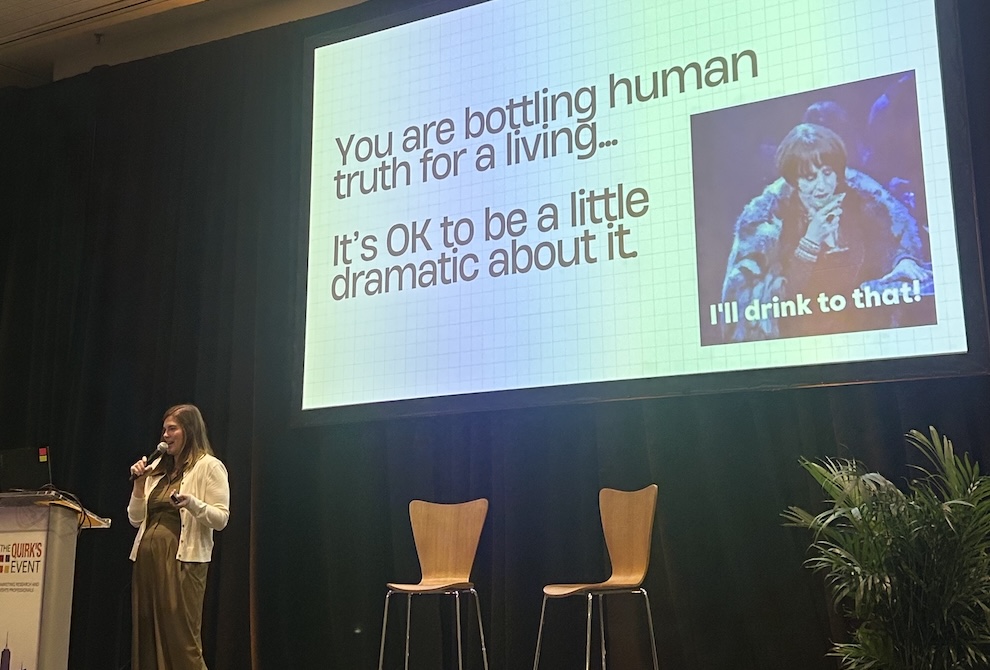 Similar to Butler’s conclusion from earlier, Colman emphasized that the work has always been about understanding people. For centuries, we’ve used stories to learn and understand one another, so why not utilize this skill in insights? This may be different from the general practice of conveying insights, but it offers a new way to liven results and clarify convoluted data.
Changing for the better
The theme of my trip to New York was diversions. From the travel issues to the lessons learned in speaker sessions, approaching the Quirk’s Event – New York from new perspectives (and airports) is what keeps me on my toes. The fundamentals will remain, but the system we go about it will inevitably change. The real question is: Are you willing to change with it?