
Researchers discuss cultural insights, AI and evolving consumer behaviors
The Quirk’s Event – New York was held on July 23-24 and brought market research and insights professionals together to examine how evolving consumer behaviors and emerging technologies are reshaping the industry. Sessions covered a wide range of topics from AI to cultural insights to marketing and brand strategy. This article will explore some key event takeaways.
Maintaining a local eye: Recognizing cultural differences in research
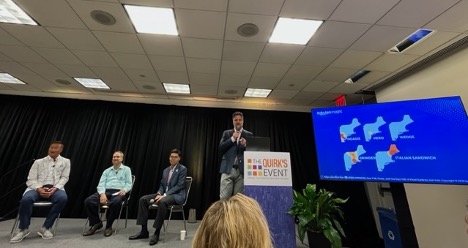
Do you call it a hoagie? An Italian sandwich? A wedge, sub, hero? There are many ways to speak about one item in the Northeast, similar to what can be heard in the APAC region. Researchers cannot generalize or assume countries in the region have similar cultural behaviors. Before conducting research, consider the differences in the market category and whether certain features of your product would be successful in your target country.
An example given in the session “Think local, grow global: Cracking the code of localization for market research success in APAC,” was launching a barbeque sauce in Asia. Barbequing in Japan and Korea is extremely popular, however, unlike traditional tomato-based barbeque sauces in the U.S., these countries are more familiar with soy-based sauces. It is crucial to understand the minor differences when entering a market. Researchers must be open to adjusting their approach as they learn more about the cultures in the countries they are working in.
How social media influencers and celebrity brands are perceived

The session “Influencer or icon? Decoding the power of fame in the beauty industry,” explained that 71% see celebrities and influencers as distinct groups of people. While celebrities are well-recognized and are considered famous for their achievements, influencers are seen as regular people who are extremely relatable and have a strong social media presence. When considering who to work with, it’s important to understand the way each group and the products they’re promoting are viewed. Influencer products are seen as trendy and gimmicky. When a celebrity partners with a brand, they must be relevant in the category and their passion for the product must be evident.
A content creator’s job is to be embedded in their niche category. They can shape the category, define what's coming and influence others on what will become trendy. The session “Predicting the potential, speed and scale of future fragrance trends through content creators and prediction markets,” referred to content creators as cultural barometers. They can offer insights on what matters now and what will matter moving into the future and can validate researchers’ trend predictions before they continue with consumer testing.
When it comes to celebrity-backed brands, authenticity is key. The session from Highlight and nonalcoholic beer company BERO titled, “How brand-led product development wins hearts, minds and mouths with BERO,” explained how it’s founder, Tom Holland, and his personal story with sobriety increased trust in the brand. The brand’s visual language and packaging also infused his English heritage, which added to the legitimacy of the brand and its mission to genuinely engage with consumers regardless of whether they are sober, sober curious or just want to try a nonalcoholic beverage.
Respondent and data quality: Getting real insights from real people
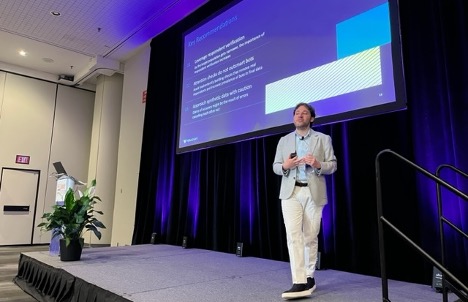
Researchers must leverage respondent verification. In the session “Putting academic research to work: How to apply the latest from academia to elevate your survey research,” speaker Ben Leff emphasized that as the target population narrows, the importance of respondent verification increases. When researchers try to find low incidence groups in traditional panels, their data will be disproportionately comprised of imposters or bad-faith respondents.
Researchers must avoid creating attention checks that remove real respondents and increase the prevalence of bots in final data. Bots and AI are often the most likely to pass attention checks. As a researcher, you don't want to eliminate real people and unintentionally approve bots. Keep in mind that people aren’t perfect and that there are many reasons why a human would fail an attention check question.
In Reckitt’s presentation, “The closeness code: From distance to depth,” the value of honest responses from real consumers was emphasized. Negative responses from lapse consumers in interviews can sometimes teach the researcher more than positive reviews from active consumers. Negative feedback can lead researchers to better understand why some products aren’t being purchased anymore or what product flaws turned people away.
Keeping up with evolving consumer behaviors and needs
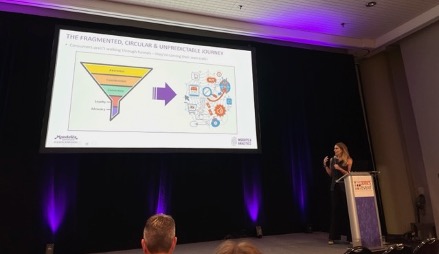
Increasingly fluid lifestyles are driving a new era of shopping. Instead of walking through traditional funnels, consumers are carving their own paths. Today, it is normal for a consumer to find a product on TikTok, read reviews on Amazon, compare prices on Target and make the purchase at Walmart. Researchers must navigate their trails and figure out how to make sense of them. The session, “Elevating and connecting insights from media to shelf,” established that AI is here and it is driving media discussions. AI can target consumers and influence predictive shelf placement. Eighty-one percent of consumers are willing to pay more for shopping experiences reinforcing that they don’t want ads, they want interactive, immersive campaigns.
In the session “Inside the shift: Best practices for understanding GLP-1 consumer habits,” Nolan Lowry explained that we are seeing consumers’ eating habits shift. Those currently taking GLP-1 medications are reducing their overall intake of food. Most food categories have seen a decline, regardless of how healthy they are, but snacks and candy (28%) and adult beverages (24%) are taking the biggest hit. Instead of focusing on demographics or trends, brands were encouraged to understand what consumers are looking for in products and to focus on meeting their needs. Instead of focusing on innovation in response to these changes, brands should use a customer-centric approach in innovation to fully understand what consumers are searching for and ultimately purchasing.
Understanding synthetic tools and the use of AI
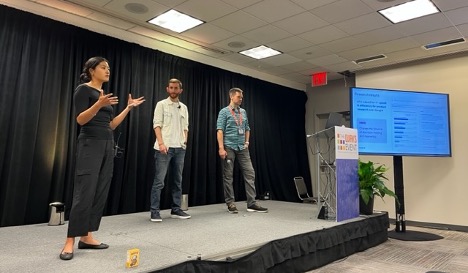
The power of AI depends entirely on the quality of its data. Synthetic data is AI-generated information that captures statistical patterns of real behavior that often leads to faster product testing and higher cost savings. The session, “A new breed of insights: Unleashing synthetic data for product testing,” emphasized that product testing is naturally resource intensive. It requires money and coordination but the real cost isn’t money, it’s your time and competitive advantage. Remember that synthetic data imitates real data, it does not duplicate it. It is meant to be different from real data while retaining characteristics of it. Before adopting synthetic data, consider that relevant data is crucial and risk assessment is essential.
In the session “Unpacking AI with … AI: How Away uses AI interviews to understand the way people shop online with chatbots,” brands were encouraged to recognize how and when consumers incorporate AI when shopping. Luggage is not a frequent, spontaneous purchase. Consumers who are considering making a purchase in this market often conduct their own research and are less impulsive. Consumers who are looking to purchase a suitcase already know their needs for the specific type of travel they’ve planned. They value AI for mid-funnel comparison and use it to breakdown the pros and cons once they’ve narrowed their top brands. Customers remain cautious and are inclined to verify AI results by reading Reddit posts, articles and conducting their own research to ensure it mirrors what they've found. AI has become a last step of validation before purchasing.
How childhood effects fandom
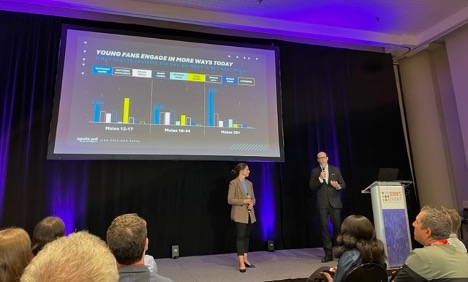
New methods for expressing fandom are continuing to grow. According to the session “The evolution of fandom: How 30 years of insights help ESPN engage multiple generations of fans,” fans are listening to radio or podcasts, keeping up with stats, placing bets, engaging on social media by following players and sharing memes. There has also been a rise of intersectionality, with sports being blended with food, music, fashion, gaming and more. Seventy percent of avid sports fans became fans by age 10. Forty-five percent watch sports with family and friends.
Similarly, the session “How The New York Times is engaging new audiences through strategic insights and data,” established that the No. 1 entry point into being a fan of soccer is through friends and family or playing the sport while growing up, and four in five have been soccer fans for five or more years. With the lead up to the 2026 World Cup, three in four say brands sponsoring soccer should respect the diverse cultural traditions of the World Cup, respect the traditions and values of fan communities and align with the values of cultural diversity and inclusion.