
Reclaiming the time to think
By Matteo Cera, CEO and Co-Founder, Glaut

Recently, I spent hundreds of hours talking to researchers. The conversations often start with curiosity about AI but they quickly turn into something else: anxiety.
The questions come up again and again: Will clients stop valuing methodological rigor and just buy the speed of AI-native agencies? Will I lose my job?
At the same time, there is a quieter frustration: Many researchers no longer feel like researchers; they feel like project managers.
A typical assignment means juggling a small army of external providers: scripters, panels, fieldwork, EDPs, designers. Days disappear into coordination calls, file checking and deadline firefighting.
But anxiety can be overcome. How? Learning how leverage agentic software to regain time to do what researchers do best: think.

The future of DIY research is powered by agentic software, a layer of intelligence that absorbs much of the operational weight researchers have been carrying for years.
At the project level, modern software assists with study design, respondents’ engagement, interview moderation, qualitative data analysis and drafting insight-ready outputs. Instead of producing everything manually, researchers review, steer and refine.
Across projects, something even more powerful happens. Learning accumulates. Patterns recur. Knowledge compounds.
For most researchers, this will feel like a liberation. When they stop managing vendors, they get their time back. Time to challenge briefs, connect dots across studies and act as true advisors again.
This shift matters because competition is changing fast. A wave of AI-native research agencies is popping up, selling speed and software-first execution as the product. Experienced researchers can win by reclaiming what other players lack: context, judgment and trust with their client.
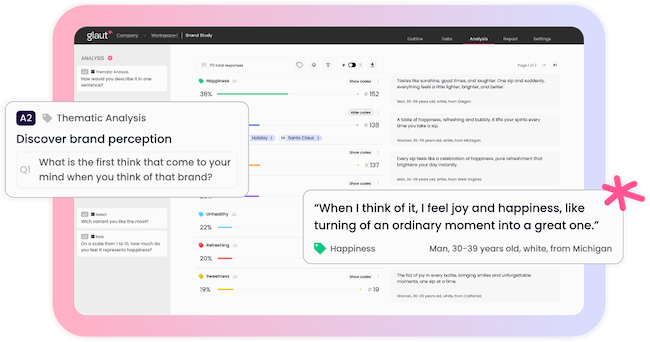
At Glaut, we’ve built the platform we wished senior research practitioners had: one place to design and run research, analyze data and generate insights, without stripping away methodological depth and maintaining full control over each single parameter.
Every technological shift in research has promised efficiency. What feels different this time is not the automation itself but where it applies. When machines take over coordination, processing and production, researchers are left with something rare: time to think. And in research, that has always been the scarcest resource.