
Editor’s note: Nataly Kelly is chief marketing officer at Zappi, a consumer insights platform that helps brands win with consumers. A former Fulbright scholar in sociolinguistics, she is the author of multiple books, including Brand Global, Adapt Local.
Explore Zappi's Connected Insights Imperative 2026 to discover how organizations are connecting consumer understanding across innovation, advertising and brand growth.
Ask marketers when consumers enter the creative development process, and many will tell you it's happening early. Ask the insights professionals responsible for delivering that feedback, and you might hear a very different story.
In Zappi's third annual Connected Insights Imperative report, we surveyed more than 250 marketing and insights professionals to understand how organizations use consumer data to make decisions.
One finding stood out: 46% of brand management professionals said they gather consumer feedback before creative development begins. Just 15% of insights and consumer research professionals said the same.
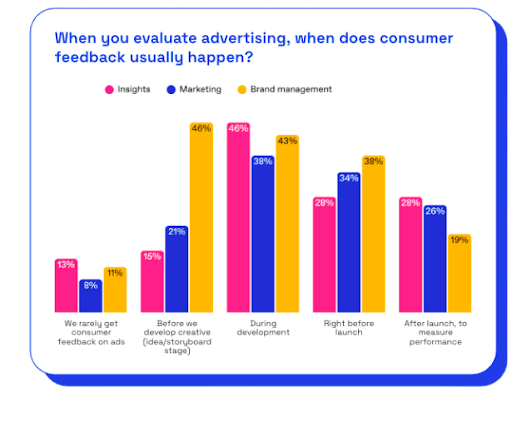
Figure 1: Marketing and Insights report significantly different levels of early consumer involvement in advertising development. Source: Zappi, Connected Insights Imperative 2026.
That's a significant disconnect between two functions that are supposed to be working toward the same goal.
It doesn't necessarily mean either side is wrong. Marketers are increasingly drawing on a wide variety of data, from campaign analytics to sales performance, that they may consider consumer evidence even when it falls outside the research that Insights owns.
But it raises an uncomfortable question: If marketing and insights can't agree on when the consumer is being consulted, how confident can either function be that consumer understanding is influencing the decisions that matter?
And with the speed and volume of marketing decisions accelerating, that question is becoming increasingly consequential.
Decision velocity is outpacing consumer understanding
Marketing has become an exercise in making an extraordinary number of decisions, often simultaneously.
There are more channels to manage, more audiences to reach, more creative variations to produce and more opportunities to optimize campaigns in real time. Priorities shift constantly as consumer behavior, competitive dynamics and business needs change. AI is accelerating content creation even further, giving marketers the ability to generate and activate ideas at a pace that would have been unimaginable just a few years ago.
But the infrastructure for validating those decisions hasn't necessarily kept up.
Research cited by Harvard Business Review found that roughly three-quarters of business leaders had seen the number of decisions they make daily increase tenfold over three years. Meanwhile, 78% reported feeling overwhelmed by data.
That second finding should resonate with anyone who works closely with marketing teams. More information doesn't always create more clarity. When data is scattered across different systems, requires extensive interpretation or presents conflicting signals, it can become another obstacle to making a decision.
For marketers, the stakes are significant. Research highlighted by ThinkTV shows that creative quality can account for up to a twelvefold difference in advertising profitability between stronger and weaker creative.
Yet as organizations expand the number of decisions they're making, many still depend on research systems designed for a slower, more sequential way of working.
This creates a growing gap between decision velocity – how quickly and frequently organizations make choices – and the speed at which reliable consumer understanding reaches those decisions.
When insights arrive after the brief is approved, the creative is developed or the product is launched, their ability to influence outcomes is severely limited.
The opportunity isn't simply to accelerate research. It's to make consumer understanding available across more decisions, earlier and more consistently.
More data doesn't necessarily mean better decisions
Marketers have access to enormous amounts of information. Campaign dashboards show reach, engagement and conversion. Retail and commerce platforms reveal purchasing behavior. Brand trackers monitor awareness, consideration and perceptions over time.
But these signals frequently live in different systems, are owned by different teams and are analyzed against different objectives.
And critically, they don't always tell us the same things.
Behavioral and performance data reveal what consumers do. Consumer research helps explain why they do it.
Both are essential to understanding whether marketing is working and what should happen next.
Zappi’s research found that just 42% of organizations rely on a balance of behavioral and motivational data when making decisions.
The difference between organizations at different levels of insights maturity was striking.
Among organizations with disconnected consumer data, only 14% said they balance the two. Among connected organizations, that proportion rose to 47%.
This matters because a campaign can generate impressive engagement without meaningfully strengthening the brand. A product can attract initial attention without meeting a genuine consumer need. A brand can deliver strong short-term sales while losing relevance with the audiences it needs to grow.
Without connecting behavioral signals to the motivations behind them, marketers are left interpreting incomplete evidence.
And when different teams hold different pieces of that evidence, the organization loses the opportunity to learn collectively.
The consequences are visible in how organizations evaluate their insights capabilities.
Despite more organizations describing their consumer data as connected this year, overall satisfaction with consumer insights fell from 60% to 48%.
Yet satisfaction varies dramatically by maturity. Just 9% of respondents at disconnected organizations were satisfied with their consumer insights, compared with 62% at connected organizations and 75% at AI-accelerated organizations.
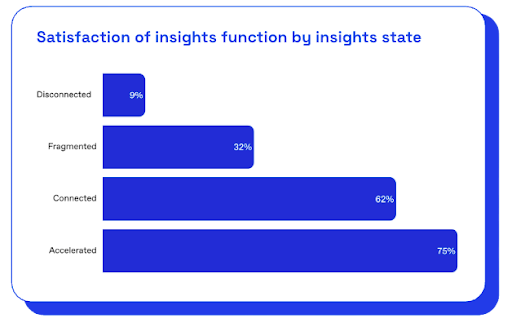
Figure 2: Satisfaction with consumer insights rises substantially as organizations progress toward more connected, AI-accelerated ways of working.
Connection is becoming increasingly important to how organizations experience the value of their research.
AI makes the opportunity bigger – and the problem more urgent
AI has enormous potential to close the gap between decision velocity and consumer understanding.
It can accelerate analysis, identify patterns across historical research, make existing knowledge easier to access and expand the number of decisions that benefit from consumer evidence.
But faster technology alone won't solve fragmented ways of working.
Our research found that 93% of organizations already use AI in some form. Most applications, however, remain concentrated on making existing research processes more efficient, including survey design, reporting and data analysis.
Only 8% of organizations have reached what we describe as the AI-accelerated stage, where connected data ecosystems automatically surface relevant insights at the point of decision.
That's the next major opportunity.
Imagine a marketer developing a campaign who can instantly access relevant findings from previous creative tests, alongside brand tracking data showing which perceptions need to change. Or an innovation team whose next product brief is informed by emerging category needs, previous concept testing and evidence of what consumers actually chose in market.
These shouldn't require separate research projects or weeks of searching through old presentations.
AI can help make that knowledge accessible and actionable. But it needs a connected foundation of trustworthy consumer data to deliver meaningful results.
Insights teams have an essential role in building that foundation, setting appropriate standards for AI-generated evidence and ensuring that faster decisions remain grounded in genuine consumer understanding.
Introducing the Connected Insights Flywheel
At Zappi, we believe the next evolution of consumer insights is about connecting learning across the entire brand-building process.
That's the thinking behind our Connected Insights Flywheel, which connects three essential activities: innovation, advertising and brand growth.
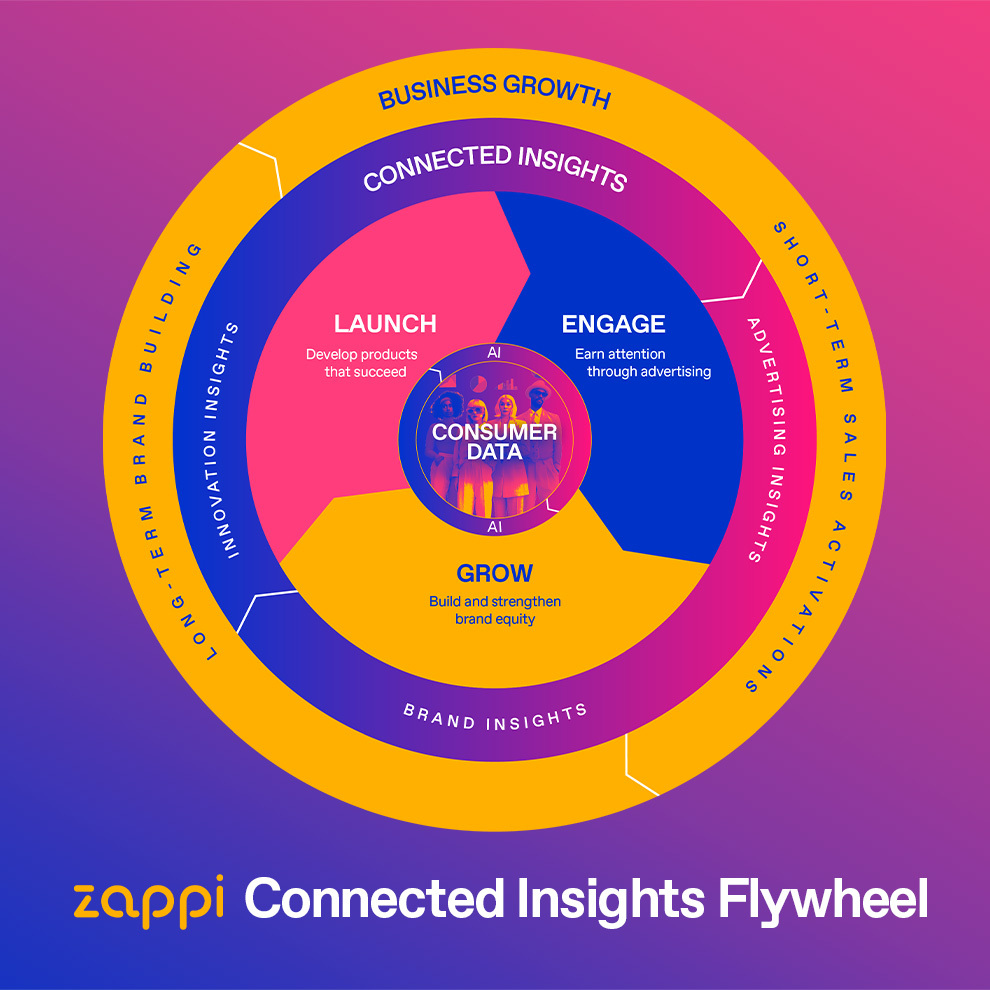
Figure 3: Zappi's Connected Insights Flywheel connects consumer learning across innovation, advertising and brand tracking, creating a continuous feedback loop to inform future business decisions.
Launch: Understand what to bring to market.
Innovation research identifies unmet consumer needs, evaluates new concepts and helps brands develop products and experiences with a stronger chance of success.
Engage: Understand how to connect with consumers.
Advertising research helps brands develop and validate messaging and creative that captures attention, builds meaningful associations and motivates action.
Grow: Understand what happens in market.
Brand tracking reveals how consumer perceptions, associations and preferences evolve once products and campaigns reach the real world.
The critical difference is what happens to that learning next.
Consider a food brand whose tracking data reveals that consumers increasingly value healthier options, but don't associate the brand with them.
That finding could inform a new product concept, a sharper positioning strategy or an advertising campaign designed to change the perception.
Innovation testing helps determine whether the product delivers on the need. Advertising testing helps establish whether the message communicates the intended benefit. Brand tracking then shows whether consumer perceptions change after launch.
Those findings should feed directly into the next product, campaign and brand decision.
That's what makes it a flywheel: every decision contributes to a growing body of consumer understanding, and every new cycle builds on what came before.
Zappi's connected insights platform brings consumer learning across innovation, advertising and brand tracking into a more connected environment, helping organizations reuse what they've learned rather than treating each research project as an isolated event.
AI can further accelerate that process, helping teams analyze existing knowledge, identify relevant patterns and bring consumer understanding into more moments of decision-making.
The objective is to make consumer learning continuous, cumulative and commercially useful.
For insights leaders, this represents an opportunity to move beyond delivering research to shaping how the entire organization makes decisions.
For marketers, it means making faster choices with greater confidence that they're supported by a coherent understanding of the consumer.
And for businesses, it means building a system where better decisions compound into stronger brands and sustained growth.
Marketing's pace isn't likely to slow. The challenge for both functions is ensuring consumer understanding remains central as the volume and complexity of decisions continue to grow.
Because the real measure of an insights function isn't how much research it produces.
It's how many better decisions that research makes possible.
Explore Zappi's Connected Insights Imperative 2026 to discover how organizations are connecting consumer understanding across innovation, advertising and brand growth.