
Bank customers want preferred treatment
Consumers feel strongly about being treated as a preferred customer when visiting a branch of a financial institution, according to a recent research study by Atlanta-based Synergistics Research Corp. entitled "Revitalizing the Branch." Consumers were asked to rate their level of agreement with the statement, "When I do a lot of business with a particular bank, it is important to me to be treated like a preferred customer."
Nearly eight in 10 "strongly" agree with this statement. Another one in six "somewhat" agree, making overall agreement with this statement almost unanimous. Only one in 20 do not expect the royal treatment. Agreement is particularly high among frequent branch visitors. More than eight in 10 of those who visit branches four or more times per month agree "strongly."
"Designing and implementing branches is a costly endeavor. It is essential to know the consumer perspective," says Genie M. Driskill, COO of Synergistics. "For many consumers, the branch is the bank. It is a direct and personal link between the institution and the customer. As depository institutions redirect their attention back to the branch, these findings indicate it may be the little things that cost the least which count the most."
These are findings from Synergistics study featuring a national telephone survey of 1,041 consumers age 18 or older with household income of $25K+. The sample also includes 201 with household income of $100K+.
Value is the holiday shopping theme this year
A survey of consumer holiday buying intent by The NPD Group, Inc., Port Washington, N.Y., confirms this holiday shopping season could be a challenging one for retailers. Sixtynine percent of American consumers indicated they plan to spend the same amount this holiday as last year. Twenty percent of consumers indicated they plan to spend less this year and only 12 percent plan to spend more than last year. In addition, most consumers plan to "shop for value" this holiday by waiting for sales and spending more at discount retailers.
On average, survey respondents plan to spend $661 this holiday season. Consumers with combined household incomes under $30,000 annually plan to spend $379. Spending increases to $618 for those with household incomes of between $30,000 and $74,000, and consumers earning $75,000 or more plan to spend $956.
Value will be a holiday shopping theme this year as consumers said they will delay purchases until retailers offer sales. Forty-nine percent of consumers said buying on sale this year is "just as important" as it was during holiday 2001. An equal percentage of consumers (49 percent) said buying on sale was "more important" than last year. Forty percent of women view buying on sale this year as "much more important," while 30 percent of men view buying on sale as "much more important" than it was to them last year.
This holiday season, consumers say they will shop more in discount stores, warehouse clubs, outlets and online than other types of retailers. Seventynine percent of consumers plan to shop this holiday season in discount stores such as Kmart, Target and Wal-Mart.
Thirty-six percent of consumers say they plan to shop in warehouse clubs and 30 percent of consumers plan to shop in outlets. Forty percent of consumers plan to purchase holiday gifts online. Catalog shopping is preferred by more women than men. Forty percent of women said they plan to shop via catalog/mail order this holiday season, compared to 25 percent of men.
The NPD survey also asked consumers about the influences affecting channel decisions. Value, quality of merchandise and selection were cited as the top three influences on consumers’ decisions about where to shop this year. "Consumers have many options this year. Given the wide range of styles, models, products, prices and retailer alternatives and the commitment to finding value, understanding where the opportunities are and what’s important to consumers is going to be critical to retailers’ holiday season success," says Marshal Cohen, co-president, NPDFashionworld, a division of The NPD Group, Inc. "Retailers are trying to be leaner with inventories, but will that boost or hinder sales? This remains to be seen."
A safe environment is a strong influence on consumer choice this year, particularly among women. Fifty-four percent of women and 34 percent of men view shopping in a safe environment as "extremely important."
Respondents said they plan to purchase more music and books than last year but will purchase less apparel, toys, electronics, video games and fragrances. The most popular gift is clothing, with 74 percent of consumers intending to buy it this holiday season. Toys and books represent the second and third most popular gift items with 55 percent and 43 percent of consumers saying they will purchase them this holiday season.
Gift cards/certificates continue to gain in popularity. This holiday 57 percent of respondents intend to buy gift cards/certificates. This compares to the 53 percent of respondents who said they bought gift cards last year. Women are more likely to give a gift card/certificate this year than men (60 percent vs. 53 percent respectively).
More women intend to buy clothing than men, 77 percent vs. 70 percent respectively. Women also intend to buy more home/holiday decorations (34 percent vs. 18 percent) and books (49 percent vs. 36 percent respectively) than they did last year. Men intend to buy more consumer electronics than women (27 percent vs. 19 percent respectively).
More and more consumers will be shopping before Thanksgiving, the traditional start to the holiday shopping season. In fact, 57 percent of consumers say they will begin their holiday shopping before Thanksgiving. Women are more likely to get an early jump on holiday shopping - 65 percent of women said they will start their shopping before Thanksgiving weekend and 49 percent of men said they start before Thanksgiving. Men are more likely to wait until December to begin their shopping. Thirty-two percent of men and 19 percent of women wait until December to begin their shopping.
The NPD Holiday Survey was fielded September 17 to 24. It was e-mailed to 5,000 members of the NPD Online Panel. The findings presented here are based on information from 2,363 completed interviews.
Almost one-third of email addresses are changed annually
A study indicates that e-mail addresses are changed at the rate of 31 percent annually, causing 53 percent of those consumers to lose touch with personal and professional contacts, as well as preferred Web sites. The survey, conducted by research firm NFO WorldGroup, identified that half of all Web site relationships are lost, on average, due to email address changes. Return Path Inc., a provider of e-mail change of address services, and Global Name Registry, license operator of the .name domain, commissioned the study.
According to the study, e-mail address remover is driven by ISP switching, job changes and consumer efforts to avoid spam. Loss of contact with valued Web sites and e-newsletters occurs most often. And, the survey revealed that young adults (53 percent) are significantly more likely to lose these contacts than older individuals (42 percent).
"The rate of e-mail address turnover continues unabated from the pace we first identified in September 2000," says Matt Blumberg, chief executive officer of Return Path. "In addition to the impact on consumer relationships identified, there is a real and significant subsequent financial impact on reputable businesses that rely on e-mail to communicate with their customers."
Notifying contacts of an e-mail address change is no small task, according to the survey. While consumers, on average, registered their e-mail address with more than 12 Web sites, according to the study, e-mail address changers only notified about six Web sites of the change. And, 22 percent of those who changed an e-mail address did not notify any Web site about the change. Email address changers also reported lost personal and/or professional relationships after switching e-mail addresses.
The survey, conducted in August 2002, updates a similar study by Return Path and NFO WorldGroup from September 2000, which identified a 32 percent annual rate of e-mail address churn. The results are based on responses from 1,015 consumers from NFO WorldGroup’s online panel of U.S. email users over the age of 18. The panel is representative of U.S. online households.
Loyalty highest for pet food shoppers
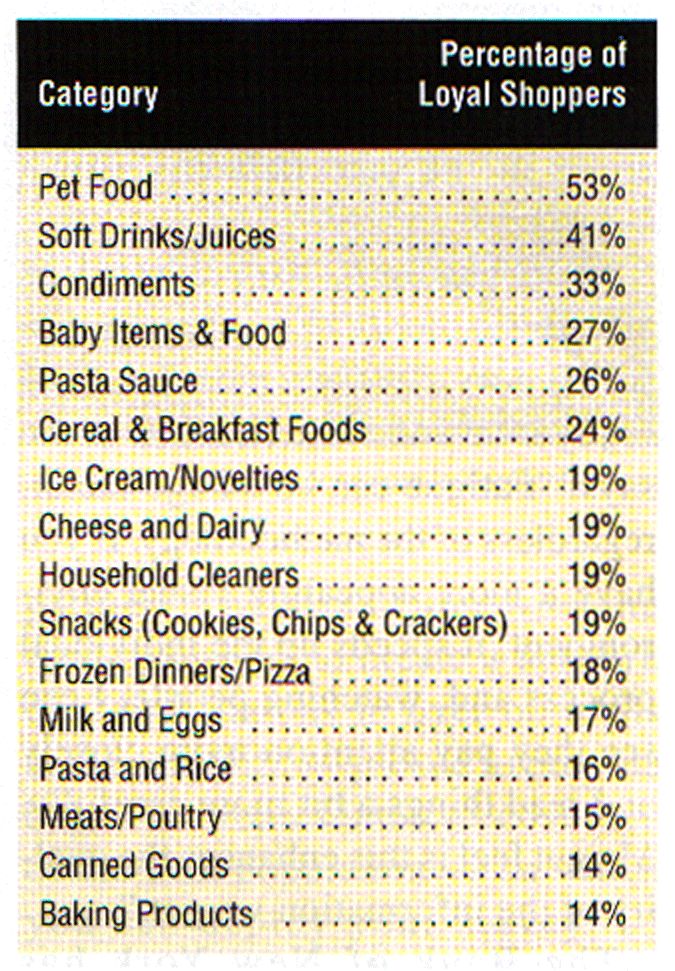
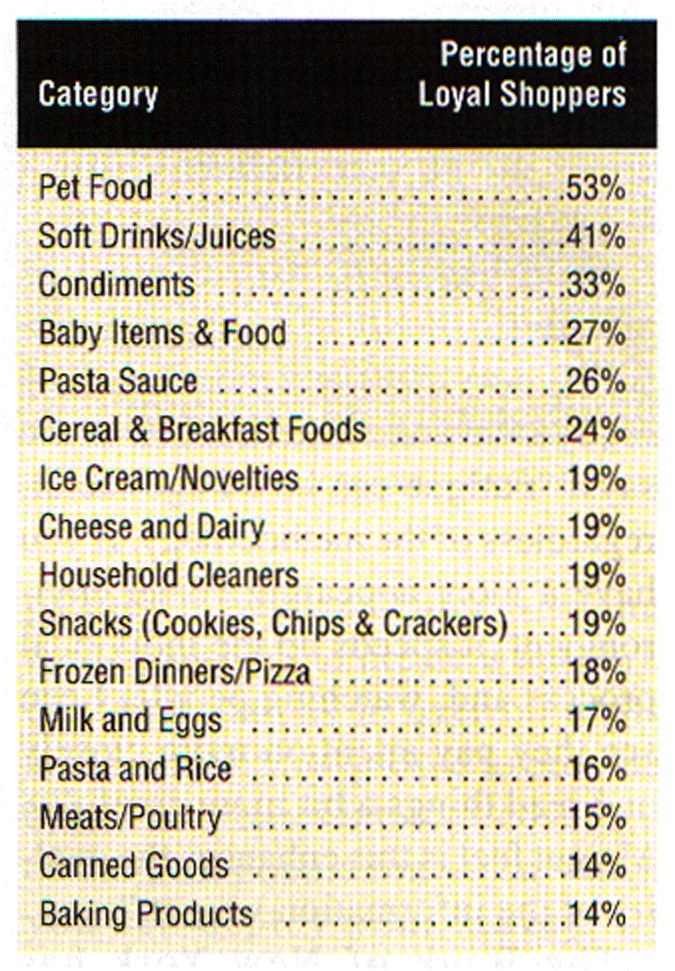
Purchasing loyalty on behalf of Fido far exceeds that for baby Junior when it comes to the grocery store, according to a survey of 500 grocery shoppers conducted by InsightExpress, a Stamford, Conn., research company. The survey reveals that Americans report tittle brand loyalty when shopping for themselves or their children in the supermarket, with the most loyalty-inducing products cited by participants being soft drinks at 41 percent and condiments at 33 peBaby food and baby items rated just 27 percent brand loyalty. But when purchasing food for their pets, more than one haft of consumers purchasing pet food (53 percent) say they are more likely to stick with one brand (see chart for loyalty levels by product category).
When asked about compelling reasons to switch brands, nearly four in five consumers cited price (78 percent), followed by product quality (66 percent), an available promotional offer or coupon (40 percent), and the sheer availability of other products or brands (33 percent).
"In an attempt to affect loyalty and drive purchase behavior, stores and manufacturers have been using an everincreasing array of tactics - not all of which are effective," says Lee Smith, president of InsightExpress. "Traditional, tangible methods should be the method of choice for marketers."
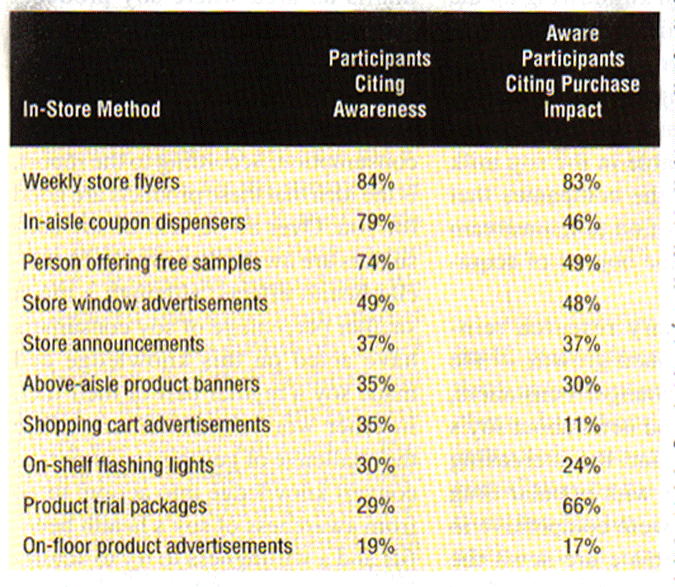
Participants indicated weekly store Weekly store flyers produced the highest level of awareness and translate into greatest level of sales, followed by in-aisle coupon dispensers and individuals offering free samples (results for other methods are shown in chart).
The survey also revealed that while 86 percent of Americans guide the shopping efforts using a grocery list, only 28 percent adhere to the list they created at home, thereby remaining uninfluenced by in-store promotional activities. "Marketers need to recognize the tremendous power and influence they have when consumers are walking the aisles of their favorite grocery store. With shoppers spending an average of 47 minutes in the grocery store, there are enormous opportunities to induce trial," says Smith.
The survey was conducted in September. The data has a tolerance of +/- 4.4 percent.
Are gender stereotypes about favorite school subjects still accurate?
Not so long ago, there was a stereotype that girls’ favorite subjects in school were English and history, and boys’ favorite subjects were math and science. However, according to a recent study conducted by KidzEyes.com, a U.S.-based online research panel operated by C&R Research, many American girls have broken away from the old gender stereotypes.
Interestingly, girls are now showing varied interests in many subjects at school. The subjects that rose to the top as favorites for girls were art (22 percent), math (15 percent), and music/choir/band (13 percent). Likewise, only 8 percent of girls selected English/language arts as their favorite subject, and a mere 4 percent selected social studies/history as their favorite. Boys still have a large interest in math and science, and the mostpopular subjects for boys were gym (28 percent), math (18 percent), and science (15 percent).
The study was conducted among 3,795 children nationwide and inquired about a wide variety of topics relating to school.
Heinz most popular brand in U.K.
The GfK Brand*Check survey carried out by London-based Martin Hamblin GfK has revealed that Heinz is the most popular unprompted recalled brand in the U.K. In a consumer survey of 1,000 adults, representative of the U.K. population, people were asked to name five brands of products or services. Heinz was top of the list with 17 percent of mentions above Sony (14 percent), Kellogg’s (13 percent), Persil (11 percent) and Coca-Cola (9 percent) closely followed.
Heinz was most popular with female respondents and those aged between 40-49 (21 percent). Brands like Sony, Nike and Adidas were more popular with males and those in the 16-22 age bracket.
There were a high number of UK brands mentioned including Tesco, Sainsbury’s, M&S, Cadbury’s, BT, Asda and Vauxhall.
These results were from the first GfK Brand*Check survey, which will be carried out on a monthly basis using the Britbus Omnibus Survey from Martin Hamblin GfK.
Soy market set to double in size
Soy food and drink is now a small but very significant sector of the U.S. food industry. With strong growth since 1997, the soy food and drink market experienced a 12 percent increase in size during 2002 and is now worth $1.6 billion. Yet according to its report "The Soy-based Food and Drink Market," Chicago-based Mintel Consumer Intelligence forecasts that the market will double in size during the next five years to an astonishing $3.3 billion in 2007.
Multinational and national organizations have been swallowing up the smaller companies who originally pioneered this product - and taking charge by putting more dollars into promoting the category. This change is especially notable in the soy milk segment, where the companies that sparked the transition to mainstream distribution are the objects of acquisition activity.
Mintel’s primary research reinforces this continued growth - the interest among younger consumers, the continued good news about soy’s health benefits, and the increasing number of issues with popular drug therapies which were competitive to soy. Into this climate are sown the increased investments of major food companies, along with additional marketing, advertising and promotion dollars for leading brands. Continued improvements in product forms, soy product taste, and distribution also improve soy’s future. Indeed, it is an often-noted fact in the food industry that people talk about health but make their purchase decisions on taste, and this is an area where soy products have advanced and appear to be positioned to further attract new consumers.
The most popular reason for soy consumption, according to the report, is the idea that these products are good for you. Over 80 percent of soy consumers are aware that soy has beneficial health effects, although a much smaller percentage of soy consumers have acted on this knowledge and made soy a regular part of their diet. In other words, manufacturers face the challenge of getting consumers to convert knowledge into action: to go from awareness of soy’s health benefits and a willingness to try to actually making it part of their regular lives.