

••• financial services research
Millennials dig their mobile payments
I like to pay as I go
New research from GfK reveals vast age differences in U.S. attitudes toward mobile payments, with Generations Y and Z – often referred to as Millennials – twice as likely to view them as faster, easier or more efficient than other types of transactions. These younger U.S. consumers also show more confidence in the security of mobile payments – although Generations Y and X are actually more concerned than Baby Boomers about the possibility of a personal information breach via mobile payments.
The new findings come from an in-depth look at mobile payments included in a GfK FutureBuy study, which tracks the convergence of digital and bricks-and-mortar activities in shopping across 15 product categories.
The research shows that, despite attitudinal differences, the generations are essentially the same in their use of mobile payments, which account for just 2 percent to 3 percent of all transactions in the U.S.
When asked if mobile payments are “easier,” “faster” or “more efficient,” 29 percent to 46 percent of Generations Y (ages 25 to 34) and Z (ages 18 to 24) agreed either completely or somewhat – compared to a range of 18 percent to 30 percent for Gen X (ages 35 to 49) and Baby Boomers (ages 50 to 68). And 38 percent of those in Gen Z said that mobile payments are more secure than other payment methods – compared to just 16 percent for Gen X and 12 percent for Boomers.
Overall, more than half (57 percent) of U.S. respondents agreed completely or somewhat that they are worried about the security of their personal information with mobile payments. In addition 42 percent said they found mobile payment technology “still clunky”; and 37 percent saw mobile payments as “more of a gimmick than a major way I pay.”
“While some view mobile payments as a solution in search of a need, our findings suggest that Millennials and even younger consumers will embrace mobile payment methods more and more,” says Tom Neri, executive vice president of GfK’s financial services team in North America. “This will accelerate store retail adoption – especially as devices such as wearables offer more convenience and sophisticated payment options. But, to encourage widespread acceptance, financial services companies and device makers will need to come to terms with consumers’ concerns about security and their sense that mobile payments may just be a gimmick.”
••• financial services
Americans report declining trust in banks
Credit unions holding steady
With the increasing prevalence of online-only banks and the option of completing most transactions via the Internet at any institution, Americans have more choices than ever before when it comes to selecting a financial institution and deciding how to conduct their monetary transactions. But just how much trust do Americans have in these institutions? According to a Harris Poll, half of American adults (50 percent) say their trust in banks has declined over the past few years, though they are not alone as trust in other financial institutions, including Wall Street and mortgage lenders, shows declines as well (57 percent for each). However, only 18 percent of Americans say the same about credit unions. Nearly half (49 percent) state their trust in credit unions has remained consistent over the past few years.
Many factors have a great deal of influence on the trust Americans have for financial institutions. Personal experience tops this list, with 66 percent of Americans stating this factor has a great deal of influence on their level of trust. The quality of products and services, quality of customer care, and amount charged in fees all tie for next most influential, with 56 percent saying each of these have a great deal of influence.
Personal experience is particularly important for older generations. Matures, Baby Boomers and Gen Xers are all more likely than Millennials to say this factor has a great deal of influence on their trust (75 percent, 71 percent, and 69 percent vs. 56 percent, respectively).
At the bottom of this list, only one-fourth of Americans consider an institution’s role in the community (24 percent) to be greatly influential, with even fewer greatly influenced by what they’ve read about them on social media (12 percent).
While still small percentages, both Millennials and Gen Xers are more likely to state social media has a great deal of influence on their level of trust (15 percent and 14 percent, respectively), compared with only 9 percent of Baby Boomers and 7 percent of matures.
Survey results suggest a financial institution’s sphere of influence might inversely relate to Americans’ trust in it, with a narrower area of influence correlating to a higher amount of trust. Local credit unions and local/community banks are the most trusted institutions, with over three-quarters of Americans having some or a great deal of trust in them (77 percent and 76 percent, respectively). Local branches of regional banks come in third, with 70 percent having at least some trust in them.
Local credit unions are more trusted by matures and Baby Boomers (85 percent and 83 percent, respectively), than by Gen Xers and Millennials (76 percent and 69 percent, respectively). The same is true for local branches of regional banks (77 percent matures and 74 percent Baby Boomers vs. 68 percent Gen Xers and 66 percent Millennials).
Big national banks rank second to last, having the trust of only 50 percent of Americans. Meanwhile, 42 percent state they have no trust at all or very little trust in these institutions. However, a slightly larger percent (61 percent) trust local branches of these banks.
Online-only banks are seen as the least trustworthy, with only 39 percent of Americans having at least some trust and 47 percent having no or very little trust in them.
Younger generations (42 percent of both Millennials and Gen Xers) are more likely to trust online-only banks, compared with just 30 percent of matures.
There is also a regional divide. Those in the East and West are more likely to trust these institutions, compared with adults in both the Midwest and South (46 percent East, 44 percent West vs. 36 percent Midwest, 33 percent South).
So who do Americans choose? Despite big national banks being among the least trustworthy institutions, they retain the highest percentage of customers, with 45 percent of Americans stating they are a customer of one of these institutions.
Not surprisingly, those who are customers of a national bank are more likely to have at least some trust in these institutions, compared with those who are customers of a local/community bank, a local credit union, or a regional bank (63 percent vs. 46 percent, 44 percent and 52 percent, respectively).
Those in the West are more likely than those in other regions to be a customer of a big national bank (61 percent West vs. 43 percent South, 36 percent Midwest and 42 percent East).
Americans living in a rural location are less likely to be customers of big national banks, compared to those living in other locales (30 percent rural vs. 49 percent suburban and 52 percent urban).
One-third of Americans (33 percent) are customers of a local credit union, with older generations more likely than Millennials to utilize them (39 percent matures, 38 percent Baby Boomers, 33 percent Gen Xers and 26 percent Millennials). One-in-10 Americans state they are customers of an online-only bank.
How Americans choose to conduct their financial transactions is largely dependent on the transaction type. When making a check or cash deposit, an in-person experience with a bank teller is the preferred method (49 percent and 54 percent, respectively). ATMs are favored by 58 percent of adults for cash withdrawals. An online experience through an automated portal is preferred by 56 percent of Americans when making a transfer between accounts.
Interestingly, most Americans prefer to phone it in when it comes to the rest of the financial transactions tested. For requesting a credit line increase, disputing a charge, cancelling a check, requesting a new card and reporting a lost or stolen card, speaking on the phone with a live person is the preferred method by the highest percentage of Americans (20 percent, 36 percent, 29 percent, 28 percent, and 46 percent, respectively).
This Harris Poll was conducted online, in English, within the U.S. between August 13 and 18, 2014, among 2,537 adults (aged 18 and over). Figures for age, sex, race/ethnicity, education, region and household income were weighted where necessary to bring them into line with their actual proportions in the population. Propensity score weighting was also used to adjust for respondents’ propensity to be online.
••• health care research
Study outlines barriers to exercise for the disabled
Many forms of access present problems
About half of respondents with disabilities surveyed in the Pathways to Greater Inclusion of People with Disabilities Study note they are in good health but those with disabilities encounter many accessibility and adaptability constraints that negatively impact their ability to stay healthy, according to the study. Assembled by Kantar-owned Lightspeed in partnership with Chicago-based organization disABILITYincites using a sample of 5,000 people with disabilities, the study examines the segment’s consumption behaviors, unmet needs due to accessibility challenges and other areas of focus.
For the 57 million adults in the U.S. with disabilities, there is limited access to the tools and information necessary to make healthy choices and the knowledge about how to prevent illness. “People with disabilities need and want health care and health programs for the same reasons as anyone else,” says Lightspeed All Global’s Amber Leila Esco, vice president business development U.S. “They want to stay well, lead full active lives and be a part of the community. While their aspirations to stay healthy are the same as their able-bodied counterparts, the journey to get there is uniquely different and often lacks access and adaptability to their needs.”
“Accessibility as it relates to health programs for people with disabilities extends far beyond ramps and lifts in hospitals and medical facilities to include better packaging and labeling of medications, accessible Websites, better phone and in-person support by health care professionals and insurance companies who interface with people with disabilities. It also includes adaptive exercise programs, better equipped fitness and wellness centers and informed staffs trained to address the specific needs of people with disabilities,” says Tonya Deniz, DisABILITYincites founder and executive director.
The study shows the more physically challenging the disability is, the less likely people with disabilities exercise. “Our research shows only half of people with disabilities exercised in the past 12 months and only 20 percent report having exercised 10 plus times in the past year,” says Daniel S. Fitzgerald, Lightspeed’s chief client and marketing officer. “People with mobility and/or dexterity difficulties, which includes people who use wheelchairs and scooters, are 66 percent less likely to exercise than people with cognitive disabilities, e.g., brain injuries, genetic disabilities, dyslexia, ADHD and other learning disabilities. Additionally people who are deaf or hard of hearing are 76 percent less likely to exercise than people with cognitive disabilities.”
When asked about fitness clubs, gyms and other exercise facilities in terms of the physical environment (e.g., sufficient lighting, wide entry ways, ramps/elevators, available parking for people with disabilities, etc.) meeting their overall needs, only 42 percent of people with disabilities report feeling satisfied. The number drops to about one-third reporting feeling satisfied with these types of businesses when it comes to disability awareness by business staff and Web accessibility, phone support and information access for people with disabilities.
People with disabilities are not a homogenous group and they vary in terms of their access needs, Deniz says. According to the study, people with vision, mobility and dexterity access needs are least satisfied with Web accessibility and phone support provided by fitness clubs and gyms. “Most Websites are not designed with an understanding about Web users with disabilities. As a result most Websites and Web software have accessibility barriers that make it difficult or impossible for many people with disabilities to use the Web,” she says.
••• loyalty research
Special shopping experiences can earn Millennial loyalty
Teach me to reach me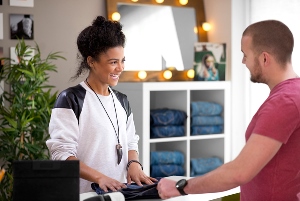
Research from LoyaltyOne, a Cincinnati firm, research shows that retailers should consider providing Millennials with a hands-on shopping experience by offering exclusive sessions with a consultant or expert in the field, as a way to motivate this high-value segment to shop more at their stores.
In a notable example from the U.S. consumer survey research conducted by LoyaltyOne in September 2014, 84 percent of Millennials (age 18-29) said that being able to redeem rewards/loyalty program points for a session or consultation with a chef or nutritionist would motivate them to shop more with that grocer.
Millennials’ interest around in-store sessions and consultations wasn’t limited to grocery shopping. Here’s how Millennials responded when asked about other retailers: 79 percent said a session with a stylist as a loyalty program benefit would entice them to shop more at the clothing store offering the session; 77 percent said a session with a technician or software expert would spur them to shop more at the electronics dealer; 68 percent said a session with a makeup artist would prompt them to shop more with the cosmetics retailer; 69 percent said a session with a plumber or electrician would motivate them to shop more with the home improvement or renovation store.
“Marketing to Millennials successfully will depend on how well retailers meet their unique needs,” says Fred Thompson, LoyaltyOne retail practice leader. “Offering sessions with a consultant or expert in the field helps to develop a meaningful relationship between the retailer and shopper, which leads to increased engagement, loyalty and, ultimately, profitability.”
Survey results showed that Millennials are not the only consumer segment motivated by expert session opportunities offered as loyalty program perks. Sixty-nine percent of the general population said an expert session with a chef or nutritionist would motivate them to shop more with the grocer offering the session. When broken out by gender, 72 percent of women said they’d be motivated by the chef or nutritionist session, versus 64 percent of men; 68 percent of women said they’d be motivated by a session with a plumber or electrician, versus 63 percent of men; 69 percent of men said they’d be motivated by a session with a technician or software expert, versus 67 percent of women.
The question about being able to redeem rewards/loyalty program points for expert sessions or consultations was part of a survey LoyaltyOne conducted of 1,034 U.S. consumers in September 2014. The survey’s margin of error is +/-3.05.
••• advertising research
Product placement can curb TV commercial audience loss
Potential for large benefit to $600 billion ad industry
Coordinating product placement with advertising in the same television program can reduce audience loss over commercial breaks by 10 percent, according to a new study in the Articles in Advance section of Marketing Science, a journal of the Institute for Operations Research and the Management Sciences (INFORMS).
“Synergy or interference: The effect of product placement on commercial break audience decline”is by David A. Schweidel, associate professor of marketing at Goizueta Business School, Emory University; Natasha Zhang Foutz, assistant professor of marketing at McIntire School of Commerce, University of Virginia; and Robin J. Tanner, assistant professor of marketing at Wisconsin School of Business, University of Wisconsin-Madison.
“A 10 percent reduction in audience loss could generate substantial gains for networks and advertisers in the $600 billion ad industry that routinely measures and competes for audience changes in terms of a tenth of a ratings point,” says Foutz.
Using second-by-second audience tuning, product placement and advertising data provided by Kantar Media, the study finds that product placement affects the extent to which viewers tune away during subsequent commercials in the same television program. The authors reveal that this relationship depends on the nature of the brands and products featured in the product placement and advertisement, as well as the timing of the advertisement relative to the product placement. The study finds that product placement from different categories and brands can contribute to increased audience loss during the first advertisement of a break, which may stem from general message fatigue.
This story reverses, however, when the product placement and advertising are conducted for the same brand. In particular, when the same product is featured in the placement and the ad, the audience loss during the ad decreases by 5 percent. The largest synergy between product placement and advertising occurs when the placement and ad feature the same brand but different categories, giving rise to a 10.8 percent reduction in audience loss. “The synergistic effects that we observe reveal that the strategic use of product placement can contribute to increased audience sizes during a brand’s subsequent commercials,” Tanner says. But reaping these benefits requires tight coordination between advertisers and the TV networks, especially as the synergies are lower when the placement and ad do not appear close together within the program.
The study also reveals that the synergistic benefits extend beyond the brand engaged in both product placement and advertising. That is, by reducing the audience loss during the first commercial of a break, the audience level for the remainder of the commercial break is higher. As a result, all subsequent advertisers in the same commercial break can benefit from the coordination of placement and advertising by the brand airing the first commercial. Networks also stand to benefit, because increased audience levels during commercials may make their programs more appealing for advertisers. Given these potential benefits, Schweidel suggests that networks should consider providing marketers with an incentive to better coordinate their placement and advertising activities.
“Ads can’t be effective if they’re not seen,” says Schweidel. “Our findings suggest that product placement efforts may offer two routes of effectiveness for marketers. One, as its own form of advertising, embedded within the program, and a second by increasing the reach of traditional television advertising.” Based on the study findings, marketers may be in a better position to negotiate deals that include both product placement and advertising; networks might encourage such negotiations as the increased audience levels persist throughout the entire commercial break. Simply coordinating the timing of placements and commercials within the program can enable the same ad to reach a larger audience.
••• employment research
He’s the boss – for now
Gallup poll finds male bosses still preferred
Americans are still more likely to say they would prefer a male boss (33 percent) to a female boss (20 percent) in a new job, although 46 percent say it doesn’t make a difference to them. While women are more likely than men to say they would prefer a female boss, they are still more likely to say they would prefer a male boss overall, as reported by Rebecca Riffkin in Gallup’s Women and the Workplace article series.
These results are based on Gallup’s annual work and education poll, conducted August 7-10. In 1953, Gallup first asked Americans, “If you were taking a new job and had your choice of a boss, would you prefer to work for a man or a woman?” At that time, 66 percent of Americans said they preferred a male boss. Five percent said they preferred a female boss and 25 percent volunteered that it made no difference.
In an age when women are told to “lean in” to get positions of power at work, even women are more likely to prefer a male boss to a female boss. However, women have historically been more likely than men to prefer a female boss, although support for preferring a female boss has grown among both groups over time. In 2014, 25 percent of women say they would prefer a female boss, compared with 14 percent of men.
The percentage of women who would prefer a female boss has never surpassed 30 percent. Currently, both genders would prefer a male boss, with 26 percent of men and 39 percent of women saying they would prefer a male boss if they were to take a new job. Men are more likely than women to say they have no preference – 58 percent mention this response, compared with 34 percent of women.
The survey indicates that 51 percent of working Americans currently have a male boss and 33 percent have a female boss. Those who have a female boss are more likely than those with a male boss to say they would prefer a female boss if they got a new job (27 percent vs. 15 percent, respectively).
As Gallup has previously noted, younger Americans are slightly more likely than older Americans to prefer a female boss; however, preference for a male boss is consistent between the two groups.
In June, Fortune reported that the number of female CEOs of Fortune 500 companies had reached an historic high, yet only 4.8 percent of this elite group are women. And while bestselling books like Lean In by Sheryl Sandberg push women to achieve their goals and focus on their careers, Americans’ views about wanting female bosses haven’t changed since Gallup began asking about them regularly in the 1980s. More Americans continue to prefer a male boss to a female boss – although, since 2002, the greatest percentage continue to say it does not make a difference to them. While the percentage who prefer a female boss has grown over the last 60 years, it has never passed 25 percent.
Results for this Gallup poll are based on telephone interviews conducted August 7-10, 2014, with a random sample of 1,032 adults, aged 18 and older, living in all 50 U.S. states and the District of Columbia. For results based on the total sample of national adults, the margin of sampling error is ±4 percentage points at the 95 percent confidence level.