
Ads are hot topic for teens...
If you're a teenager and you see an ad you like - or don't like - your friends will hear about it. According to a new survey by Teenage Research Unlimited (TRU), Northbrook, Ill., 80% of teenagers talk with their friends about commercials they like or hate. The research firm asked 2,051 demographically selected respondents, ages 12 to 19, about their opinions on a variety of advertising- and marketing-related issues.
For teenagers, advertising isn't just information, it's entertainment as well. More than 60% of respondents agreed with the statement, "Bad advertising can make me think or feel worse about a product or company." Half the adolescents think advertisers should be clear with their message, while 43% want them to be "original, creative or different." According to TRU president Peter Zollo, for most teens, being "creative" often means being funny. Teenage boys are somewhat more interested in humorous advertising than females (63% vs. 56%), while girls value honesty slightly more (63% vs. 58%). Boys are also more open to using sex to sell than are girls, by amargin of two to one: 36% of teenage boys said advertisers should "show sexy girls," while only 18% of girls want advertisers to "show sexy guys."
In 1993, adolescents will have spent a projected $58 billion of their ownmoney (money from jobs, allowances, gifts, etc.) and $31 billion of family money (for things like groceries, family errands, etc.). TRU projects that teens will have a combined income of $86 billion in 1993, down about 2% from the year before (which was down 7% from 1991). 1993 was the second year in a row where the teenage population has grown, to an estimated 27.8 million.
...for parents, ads are hot-button topic
Ads are as much a conversation grabber among parents as they are among teens - and opinions vary as widely. The reasons, however, can be a little different. An overwhelming 92% of parents are concerned that commercials are making their kids too materialistic. Almost half (46%) believe that strongly, according to a July 1993 telephone poll of 1,000 parents of children under 18, conducted by New York-based EDK. About half (52%) wish there was less advertising on children's shows because their kids drive them crazy about buying things they see on TV, but most parents say they can cope with this pressure. About half say they have simply told their children to stop asking for things just because they saw them advertised on TV, while almost 60% will explain to their child that an item is just too expensive. One in five will have the child use his or her allowance to buy the item.
But there is evidence that ads directed at kids do work. Almost three-quarters admit they've bought a toy that appeared in a TV ad aimed at children; 36% say TV commercials that influenced their kids have led them to visit amusement parks; and 29% say ads for sneakers aimed at their children, have influenced purchases. A related complaint was false or deceptive advertising: 61% say they have bought a toy because their child saw it on TV, only to have to cope with the child's disappointment when they toy was different than how it seemed on TV.
And what concerns parents most isn't pressure to buy specific products, but ads that contribute to a pervasive, general materialism among children. More than three-quarters of parents think TV advertisers are marketing more aggressively to children than they did just five years ago, and nearly the same proportion say they are frustrated with Saturday-morning cartoons that seem like one long commercial.
Yet while parents are bothered by commercials that promote materialism, a majority supports "public service"-type ads. Ads that promote recycling got a 91% approval rating; 70% of parents support spots that urge children to tell someone if their parents are using drugs, and 58% support ads that tell kids to urge their parents to stop smoking.
Outsourcing a growing trend
Businesses and governments are buying more goods and services from outside sources, rather than producing them internally. According to a Penton Research Services survey, 44% of the purchase decision makers report that their organization is outsourcing more than it did five years ago, and 47% expect to outsource more by the year 2000. The survey found that goods-producing industries outsource the most, although government, which is privatizing a number of operations, and many service firms expect to do more outsourcing in the years ahead.
Large organizations provide the greatest sales opportunities for suppliers, but are getting tougher to sell to. Over the last five years, 60% of the large organizations have increased the amount of outsourcing done, while reducing the number of vendors bought from. Business and government buyers want to establish partnerships with their best suppliers. Outsourcing companies should consequently build a reputation for quality and make customer satisfaction one of their top priorities. Penton Research Services is a division of Cleveland-based Penton Publishing.
Americans love their hoops
Basketball is America's favorite team sport and the third most popular sports activity in the nation, according to a national survey that measures participation in 58 different sports. The survey, conducted early in 1993, found that 40.4 million Americans aged 6 and older played basketball at least once in 1992. Only bowling and freshwater fishing were more popular. Basketball is particularly appealing to younger people, especially 12- to 17-year-olds.
Basketball has grown steadily in popularity since the study was first conducted 1987 by American Sports Data Inc. The number of participants has grown 13.2% over that period. The number of people who play for the first time in a given year has also grown during that period, as has the number of people saying basketball is their favorite sport.
Manufacturers' sales of basketballs and equipment in the U.S. have increased 36% since 1988, from $95 million to $129 million in 1992.
Other highlights of the study:
- Male players outnumber female players by a 70% to 30% margin, but between the ages of 6 and 17, participation is more even: about 60% male and 40% female. Participation among males has grown 14% since 1987, compared to 11% by females.
- The key age segment for the sport are young people aged 12 to 17. Two-thirds of all boys and 47% of all girls that age played at least once. Frequency of play is also higher than other age groups. Male players aged 12 to 17 averaged 63 days of play; females, 47.
- Some 22% of all players (9 million in 1992) are in the youngest age group measured, 6 to 11 years old. This is viewed as a sign of continuing strength for the sport.
- A great deal of basketball is played outdoors and in "pick-up" situations. Asked where they played most, 23% said at home and 10% said in the schoolyard. Meanwhile 31% said in the school gym, while 4% said a YMCA or non-profit facility. Others cited locations that could be either indoors or outdoors.
- Wholesale sales of adult basketball shoes in the U.S. climbed from $1.31 billion in 1988 to $1.71 billion in 1992, reflecting both increased participation and fashion leadership.
- In 1992, basketball shoes accounted from 29% of all adult athletic footwear sold, compared to 17% for cross-training shoes, the second most popular category.
Movies, news services will pick up hitchhikers on info superhighway
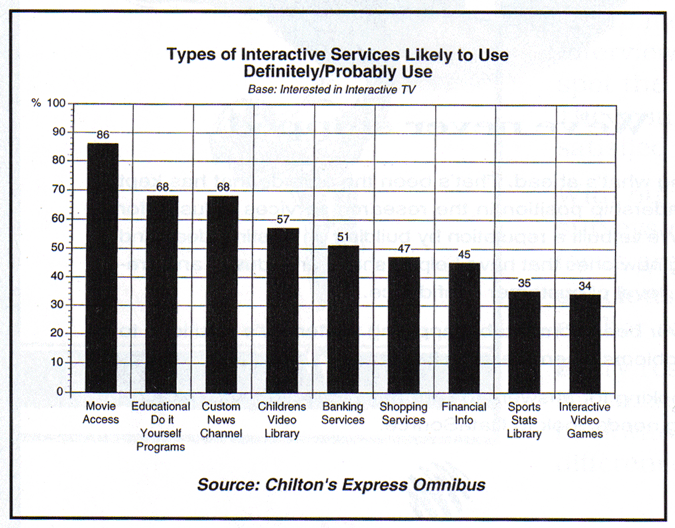
About 60% of people in a recent Chilton Poll expressed interest in "interactive television," part of the much-touted "information superhighway." Of this interested group, 86% said they definitely or probably would use a service that would give them access to movies to watch later, at their leisure. About two-thirds of those polled also were likely to use educational or "do-it-yourself program, like home repair shows. The same percentage thought they would be likely to use a custom news channel to pick the topic they want to watch. Between 50% and 60% thought they would take advantage of a video library of children's programs and movies, or interactive banking services.
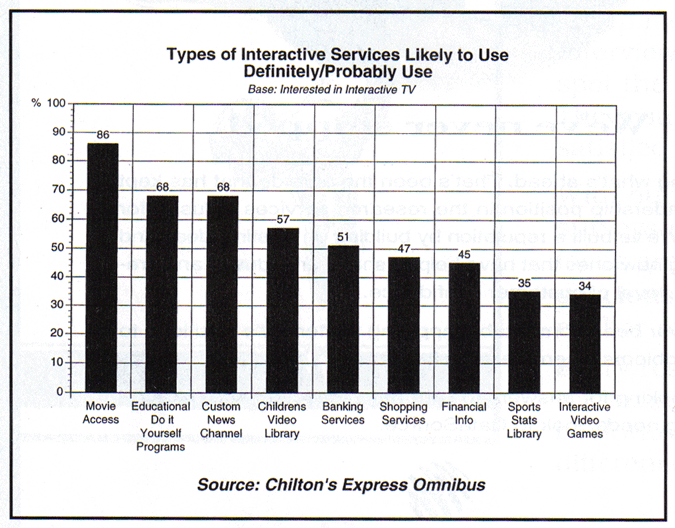
Other transactional activities, like push-button shopping, or a financial information service, interested just under half of those polled. About a third were interested in a sports statistics library, or interactive video games, where a person could compete against people nationwide.
There were gender-based preferences for some services. About twice as many men (47%) as women (24%) were interested in the sports statistics, while 77% of men would access educational programs, compared with 60% of women; and men were more interested in interactive banking by about a 5-to-4 margin. Women, on the other hand were more interested in shopping services, by about a 10% spread.
Age brings nutrition habit changes
Older Americans may be less certain of what they believe about nutrition and that may affect their dietary practices, according to Lydia Medeiros, who conducted a telephone survey of 1,560 Wyoming residents while an assistant professor atthe University of Wyoming. (Medeiros is now assistant professor of human nutrition at Ohio State University.) The findings were published in the July/August issue of the Journal of Nutrition Education.
Respondents were asked how much they agreed with seven statements about nutrition. They were also asked about their dietary and food-shopping practices, including how often they snacked and whether they read nutrition information on food labels.
Age differences appeared in four of the seven nutrition statement. Respondents under 60 tended to agree more strongly with the statement, "Eating less fat will reduce the risk of heart attack," and were more likely to disagree with the statement "Too much sugar causes skin problems."
When differences appeared, people over 60 tended to respond in the middle of the scale, rather than at either extreme. Medeiros believes this could indicate that they felt less strongly about their beliefs. This makes sense, Medeiros says, citing an emphasis on nutrition in educational curriculums that is relatively recent. Without that base, older people may feel uncertain about the enormous number of nutrition messages from the media and other source.
Those over 60 tended to eat less red meat, less fried food, less salt, and fewer dairy products. The reasons were not clear. However, Medeiros says nutrition information geared to this group might help overcome some possible misinformation. For example, it might be worthwhile to emphasize to older people that milk is not just for children, and that its calcium and vitamin D are important for older people as well. Older people also may not want to drink milk because of lactose intolerance, but a nutritionist can help them find other ways to get enough calcium and vitamin D in their diets.
The survey also indicated that older respondents were much more likely to eat breakfast and less likely to snack. Other age-related behaviors the study uncovered include:
- Eighteen- to 30-year-olds were most likely to skip breakfast and most likely to snack. They were also less likely than older groups to read nutrition labels or newspaper food ads.
- Respondents 18 to 45 were more likely to budget for their food purchases.
- Respondents 31 to 45 were most likely to plan daily menus and shop with a list.
- All age groups thought that their knowledge of nutrition was good.
Toothbrushes have most teeth in oral hygiene market
The oral hygiene market is growing at an annual rate of 4%, and Packaged Facts Inc., predicts it has finished 1993 at $3.2 billion in retail dollars.
These are among the findings in the New York-based firm's Oral Hygiene Market report. The firm predicts that the market will maintain its current growth pace and will hit almost $4 billion by 1998. Dental floss and toothbrushes segments are projected to be the two biggest gainers for 1994-98. In another long-term trend, the PDA is expected to approve plaque-fighter Triclosan in 1997, which could significantly affect the market.
In 1993, toothbrushes and dental floss were the big winners, with sales up by 15% and 7%, respectively. Next are denture products and dentifrices, each up 3%. Breath fresheners and mouth-washes brought up the rear: the former's sales remained flat, while the latter dropped by 1%. Packaged Facts believes the breath freshener market will fluctuate wildly in the next three years.
The projected growth of dental floss and toothbrushes suggests that consumers are listening to their dentists, who have been giving them a clear message to floss and brush. Toothbrushes marketers responded to the increasing popularity of floss and its plaque-fighting properties by creating new types of brushes specifically designed to clean between teeth where plaque builds up.
On the other hand, the PDA's ruling that product makers could only claim cosmetic reduction of plaque, has left consumers with a bad taste in their mouths. Worse still, a 1991 National Cancer Institute study suggested that high alcohol (more than 25%) mouth-washes increase the risk of mouth cancer. While the bottom has not dropped out of this market, it clearly has been hurt by these developments.
Wireless market is booming
Forty million people use cellular, paging and voice, and "data fleet dispatch" services. A study conducted by Response Analysis, Princeton, N.J., and Coopers & Lybrand suggests that wireless providers have the potential to transform the telecommunications industry.
The study was designed to broadly gauge users' appetite for and views of wireless services and features. It defined the wireless concept to respondents as follows: "The telephone could be carried with you at all times, and you would be able to make and receive calls from anywhere - on the street, in your car, and while you are in your home or office but away from your wired phone." Moderate to strong interest in the various market segments broke down as follows: communications to anyone, anytime, anywhere, 90%; emergency communications, 84%; backup for landline, 62%; access to information and other services, 56%; mobile fax and data, 49%; and consolidating multiple phone lines (home/office, etc.), 39%. The study also found that:
- Interest in wireless is strong, even though the majority of respondents appear to be relatively satisfied that current service meets their communications needs.
- Interest seems to be driven by desire for greater convenience and security.
- Though consumers want the comfort and security of knowing they can place a call on demand, some resist the idea of being reachable at all times.
- Current cellular users (those more likely to use cellular for business reasons) are most interested and most willing to pay for the service.
- Respondents interested in wireless for primarily personal use were the most price sensitive.
Woodworking is a thriving market
Nearly 17 million Americans practice woodworking as a hobby, accounting for a $10 billion annual market, according to "Woodworking in America," a 1993 study conducted for American Woodworker magazine by National Family Opinion Research Inc. According to the study, the typical America woodworker has an average household income of more than $43,000. More than three-quarters are men; he is, on average, 44 years old, married, and generally highly educated. (Roughly two-thirds of all amateur woodworkers have completed at least some college). Once again, the aging boomers are making themselves felt in the marketplace.
Overall, the average American woodworkers spend more than $450 a year on all woodworking products, equipment and supplies. The average amount spent increases dramatically, however, as people become more skilled and involved in woodworking. The average expert spends more than $ 1,000 a year.
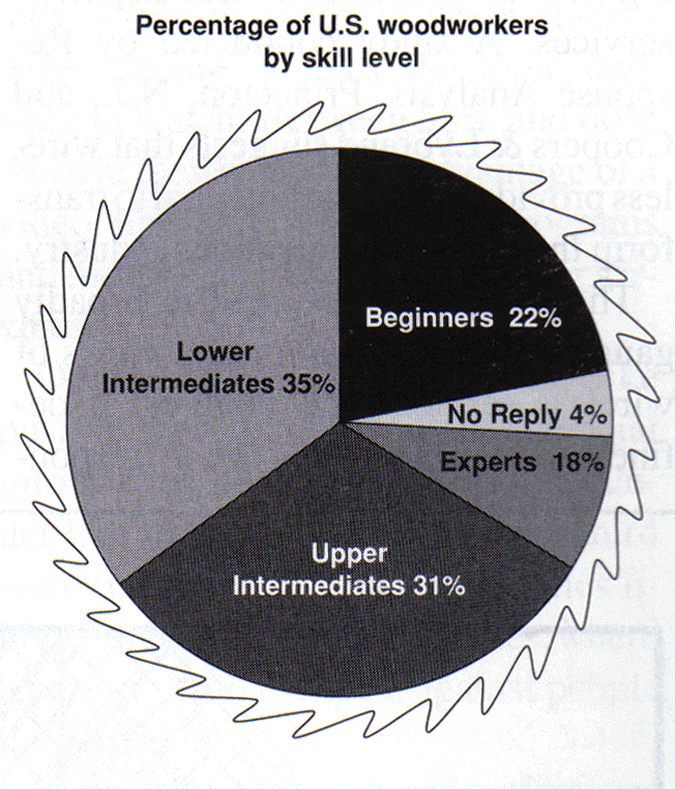
Most woodworkers are at an intermediate skill level. About one in four consider themselves beginners, and 8% consider themselves advanced or expert.
The products that take the largest portion of woodworkers dollars are raw materials. Last year, woodworkers spent 38% of their total woodworking budget, or $4 billion, on woods and veneers. As they become more skilled, woodworkers spend more on these materials. Beginners spend only a quarter of their hobby budget on these products, while experts spend 41%.
Woodworkers also spend a substantial amount on power tools: more than $2.5 billion, or 25% of all money wood-workers spend on their craft. Of that total, the largest portion is spend on portable power tools.
Virtually all (96%) of woodworkers own some type of portable power tool, and more than three-quarters (77%) own some type of cordless power tool. The value of all portable and cordless power tools owned by the average woodworkers is $886. For the most advanced, the value nearly doubles, to $1,700.
American Woodworker publisher David Sloan says TV programs like "This Old House" and "Home Improvement" underscore the "national obsession" with craftsmanship and woodworking. The magazine has also seen circulation jump in the past six years. The study consisted of an initial phase of 150,000 interviews with households nationwide, and a second phase of intensive interviews with 4,000 selected woodworkers.