New products: a look back and a look forward
2002 saw a host of innovative introductions
Corporate America would just as soon forget about 2002, but packaged goods marketers made the year a memorable one on the new product front. Collectively, these companies managed to introduce 31,785 new food, beverage, health and beauty aids, household and pet products during 2002, according to the Productscan Online database of new products (www.productscan.com) from Naples, N.Y.-based Marketing Intelligence Service.
2002’s new product total was just 0.7 percent shy of 2001’s record new product count. Even better, though, was the news on the innovation front. Packaged goods companies may have launched fewer new products in 2002, but they also introduced more products that were genuinely new and different. Of 2002’s new product introductions, 8.8 percent earned an Innovation Rating, the highest Innovation Rating since 1989, when 13.4 percent of product launches were deemed to be innovative. Productscan Online’s Innovation Ratings tally the number of new products that offer breakthrough features or benefits in any one of the following six areas: formulation, positioning, packaging, technology, creating a new market, and merchandising.
Busy consumers want products that will save them time and effort, a common theme for 2002’s "Build a Better Mousetrap" winners. Some of the year’s top new product innovations also feature technological breakthroughs that should save consumers time and money in comSng years. The 10 new products below were chosen as the year’s top innovations from U.S. and Canadian introductions reported in 2002 by Productscan Online.
You like wheat bread, your kids like white bread. Buy a loaf of each and mold will get half of each loaf before either of you will. Enter Toronto, Ontario, Canada-based Weston Bakeries with its Country Harvest The Better Half Bread. This sliced bread is actually two loaves in one. One half of the loaf is Harvest White bread, the other is Stone Milled Whole Wheat bread. The bread bag opens at both ends (a resealable zipper at one end and a plastic clip at the other) so consumers can easily retrieve the desired slices.
In many households, a hot breakfast is something that is only enjoyed on weekends when there’s no rash to get to work or school. That doesn’t have to be the case thanks to Vernon, Calif.-based Uncle Ben’s, Inc.’s new Uncle Ben’s Frozen Breakfast Bowls. These portable, disposable plastic bowls contain traditional breakfast favorites like bacon, egg and potatoes as well as more adventurous fare like peach and pecan pancakes.
Cuts and scrapes can occur anywhere. And when kids are involved, as many as three of every four injuries take place outside. So how come most first aid supplies are stuck in the bathroom cabinet, far away from where they are actually needed? That doesn’t have to be, thanks to Greenwich, Conn.-based Chesebrough-Pond’s USA’s new Q-Tips Treat & Go Swabs. Treated with Bacitracin ointment, the cotton swabs each come in plastic packets that easily fit into a purse or backpack.
Infertility tends to be viewed as a female problem, but it’s really a two-way street. Until now, though, there was no quick and easy way to test for male infertility at home. Now there is with the Baby Start FertiliMARQ Infertility Test for Men. New from Lake Consumer Products of Vernon Hills, Ill., it’s the first and only at-home screening test for male infertility. Priced at $39.99, it’s low-cost compared to hospital or office testing.
Every parent has run into this before: the child with a hacking cough who refuses to take cough medicine because it doesn’t taste good. Now there’s a better way to get that child to take cough medicine with new Benylin DM Medicated Dry Cough Freezer Pops for Children. A medicated freezer pop with.an active ingredient ofdextromethorphan, the Icy Orange and Glacier Grape fiavored pops not only relieve dry coughs, but cool and soothe the throat too.
Cleaning the toilet routinely ranks as one of the least favorite household cleaning jobs. Anything that makes the job easier should be welcomed, which is good news for Flushable Toilet Wipes by Scrubbing Bubbles from Racine, Wis.-based S.C. Johnson & Son. Use them to wipe up stains from the toilet seat, rim, tank or other outside toilet surfaces. When done, simply toss the biodegradable cloth wipes in the toilet.
What would you call a product that is big enough for a family of four to sit on yet small enough to fit into a beach bag? Neenah, Wis.-based Kimberly- Clark calls it The Neat Sheet Ground Cover and boasts of its many uses. Made of a special fabric that repels sand and water, The Neat Sheet is also designed to stay cool in the hot sun, yet is resistant to most stains and fading.
Use it as a bleach blanket, stadium seat, leaf hauler or a painting drop cloth. Aluminum foil is great for containing the mess when baking sloppy foods like chicken, but sometimes these foods end up stuck to the aluminum foil. That problem may be a thing of the past with Richmond, Va.-based Reynolds Consumer Products’ new Reynolds Wrap Release Non-Stick Aluminum Foil. One side of the aluminum foil has a non-stick side so foods just slide off. Release also works well in the freezer, preventing foods from sticking together, so there’s no prying frozen foods apart.
Scentco Paint Pourri Scented Paint Additive helps paint smell as good as it looks. New from Thomasville, Ga.-based Scentco, LLC, this colorless product is added to paint and gives off a time-released fragrance for up to a year after application. Use it to freshen up rooms, eliminate odors and create "fragrance moods" throughout the house with scents including Airy Fresh, Wildflower, Ocean Breeze and Soft Vanilla.
As some dog owners know all too well, a dog left home alone all day can sometimes find new ways to have fun such as tipping up the house. Dogs do this because of boredom, anxiety, fear or stress and until now there have been few ways to deal with the problem outside of removing the dog from the house. Phoenix-based Farnam Pet Products has a new solution to the problem with Comfort Zone Canine Behavior Modification Plug-In with D.A.P. This plug-in diffuser continuously releases a "dog appeasing pheromone" that mimics the natural pheromones of a lactating female dog to give dogs a sense of well-being.
Multimedia multitasking
Americans have become well-known for their ability to multitask. It’s not uncommon for people to balance their checkbook while talking on the phone or prepare dinner while helping the kids with homework. A new study by BIGresearch, Worthington, Ohio, and the Retail Advertising and Marketing Association, a division of the National Retail Federation, has found that Americans have begun multitasking in a new arena: media.
According to the Simultaneous Media Usage Study roughly half of consumers engage in simultaneous media usage.
- 59.8 percent of males and 67.2 percent of females watch TV when they go online (all percentages are Regularly plus Occasionally).
- 69.3 percent of males and 76.0 percent of females while online have the TV on.
- 50.7 percent of males and 52.0 percent of females read magazines when they have the radio on.
- 53.4 percent of males and 58.7 percent of females watch TV when they read the newspaper.
- 50.4 percent of males and 60.0 percent of females watch TV when they read magazines.
- 66.7 percent of males and 74.3 percent of females read the newspaper while they have the TV on.
The study was conducted online, with more than 7,800 respondents participating.
Women spending less time on their personal finances
Certified Financial Planner Board of Standards Inc.’s 2002 Consumer Survey of upper-income households shows that on average, women who are primarily responsible for their household’s finances spend 3.86 hours a month on those duties, down from 4.96 hours in 1999. Yet 44 percent of the women surveyed said they were satisfied with how they handle their financial affairs, up from 38 percent in 1999.
CFP Board’s 2002 Consumer Survey shows that the percentage of women who consider themselves as their primary financial advisor declined (43 percent vs. 50 percent in 1999) while those who used a financial planner as their primary advisor increased (22 percent vs. 17 percent in 1999). The percentage who have used or currently use a financial planner also increased (42 percent vs. 36 percent.in 1999).
The survey showed differences between men and women when comparing attitudes toward financial matters. Women were less likely to feel that they are financially knowledgeable (56 percent vs. 69 percent for men) or more knowledgeable than most of their friends (43 percent vs. 54 percent), and they are less likely to enjoy planning and thinking about financial matters (31 percent vs. 38 percent).
The survey also showed that women are much less likely to use the Intemet for financial purposes than men (42 percent vs. 57 percent), and that men access the Interact for a wider array of information than do women.
CFP Board’s 2002 Consumer Survey was conducted via written questionnaire from October 23-November 19 and includes responses from 996 households whose income placed them in the top income quartile for the age group of the person completing the survey. The qualifying income level varied depending on the age group.
2003: the year of white tea and citrus?
Chicago-based Mintel offers the fop lowing predictions for 2003 from its Global New Products Database.
- Cuisine of the year: Asian.
Easy to prepare and healthy, Asian foods will experience a surge in popularity in 2003. Always flying just under the radar by being available as take-out and at some deli counters, the appeal for Asian-inspired foods will propel mass production by manufacturers. Frozen meals and meal kits (perhaps in the refrigerated section because of the heavy veggie component) will be the first to show development.
- Look of the year: simplicity.
Clean graphics with minimal print on packs will be what hooks consumer in 2003. And manufacturers won’t have to figure how to fit every "low fat, low calorie, you-won’t-gain-an-ounce-by-eating-this-product"
claim on a package.
- Flavor of the year: citrus.
Nothing new, but getting extremely popular. And everyone needs vitamin C. Runner up: wasabi.
- Scent of the year: vanilla.
This traditional scent is popping up everywhere in skin care, fragrances, and even teas. We’ll be seeing more of a good thing.
- Ingredient of the year: White tea.
Green tea was all the rage for the last three years; now it is white tea’s turn. It’s already appeared in skin care products and, of course, tea. Expect this ingredient, which is chock-full of beneficial antioxidants, to be popping up in vitamins and health care products, hair care, and other food products.
- Kids with mature taste buds. Children generate billions in business and manufacturers have tuned in. In 2001 we saw "mystery" ketchup colors, blue french fries, and, most recently, green pancake syrup from the Mrs. Butterworth’s brand. In essence, products that were already kid-friendly got more so. In 2002, however, we expect to find that kids are going to be the target for products that have been considered only to be appealing to the adult market. For example, coffee. Coffee drinkers are getting younger, and with the growing appeal of readyto- drink iced coffees and the mammoth spread of Starbucks, Mintel predicts that there will soon be a kid-targeted coffee drink.
- Going the distance. Ten years ago, the newest fad was having your makeup tattooed to your face. It never seemed to catch on, but it did highlight the desire women have for longerlasting, no-mess cosmetics. We now have long-lasting lipsticks and a threeday wear last tint but the next area up for semi-permanence is fragrances. Potent-but-not-overpowering scents will last until you take them off.
- Beverages crossover. There has been a surge in amorphous beverage and dairy drinks of late. Is it a soda, a juice, a milk drink, a meal replacement beverage? This trend is primed to burst like a shaken can of soda in 2003. Manufacturers are playing with all sorts of products with niche appeal. Perhaps juice-flavored milk packed with nutrients to replace a meal? A yogurt drink with fizz?
- Puppy love. Are pets people? Expect to see gourmet cat and dog food, perhaps the kind you store in the refrigerator next to your own food, to be mass produced in 2003. We’ve seen bakery kits that allow owners to make their own doggie bones and premiumpriced single-servings of pet food.
- The universal sauce. Spiked ketchup, mixed-up mayo - these seasoned products hit the market in 2002. And with each new product, one wonders when we will find the "universal sauce." Something like a hot and spicy, but mild-mannered sauce that can serve every application and please everyone.
- Downsizing carbs. Manufacturers will be busy reformulating everything they can to be low in carbohydrates. Anheuser-Busch did it with Michelob Ultra and a new reformulation of Doc's Hard Lemonade and now the Atldns diet is getting even more buzz as consumers wonder whether this whole low-fat, low-calorie thing they’ve been cottoning to for the last 10 years is the right choice. Expect to see the "low carbohydrate" claim push over the "low fat" claim.
- Beverages get hip. 2002 was packed with events and promotions that were geared toward the urban market. Sprite held a Summer Liquid Mix Tour that offered entertainment, fashion, and music, SoBe sponsored the ESPN Rock ’N’ Rip tour in early 2002, and we’re all familiar with those popular Pepsi commercials and ads. Mintel expects more of a musical tie-in with alcoholic beverages next year, as artists continue to incorporate them into their songs and videos. And with hip-hop mogul Jay-Z recently purchasing a brand of vodka, this prediction will prosper.
Loyal to loyalty programs
Customer loyalty programs are gaining ground, with 50 percent of all participants in a recent survey stating that they belong to at least one customer rewards program.
The survey of 500 Americans conducted by InsightExpress, a Stamford, Conn., research firm, revealed that loyalty and affiliate programs can be the deciding factor on where people choose to shop, as 56 percent of those who belong say that membership influences their buying behavior.
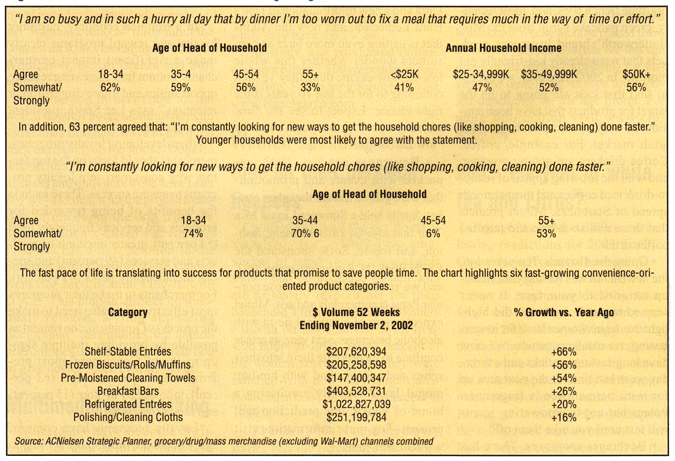
The survey also found that airlines, which were among the earliest adopters of loyalty programs, have fallen behind credit card loyalty offerings when it comes to customer participation. The table shows the percentages the survey uncovered.
"In a troubled economy, customer loyalty and reward programs clearly make a significant impact on merchants’ bottom line, increasing revenue oppommities and improving customer retention," says Lee Smith, president of InsightExpress.
When developing loyalty programs, merchants should focus on the top factors why consumers join loyalty programs to ensure success. These include the benefits of being rewarded for products and services frequently used (54 percent), greater discounts on products and services (49 percent) and special member-only perks (42 percent). For merchants to make their programs most effective, they also need to make the process of joining as convenient as possible by providing multiple signup methods. Consumers’ most preferred way to join is online (63 percent), followed by in-store (15 percent) and mail (14 percent).
"Loyalty programs have come of age. People are much more willing to part with personal demographic information if the reward perceived is valuable," says Smith. "Cash-back offers, free products or gifts, and airline miles are the clear winners when it comes to customer rewards."
Not everyone can be enticed to join a loyalty program. The predominant reason respondents cite for not joining is that rewards are perceived to lack any general value (35 percent).
The survey was conducted in mid-December 2002. The data has a tolerance of +/- 4.4 percent.
Consumers too tired to cook or clean
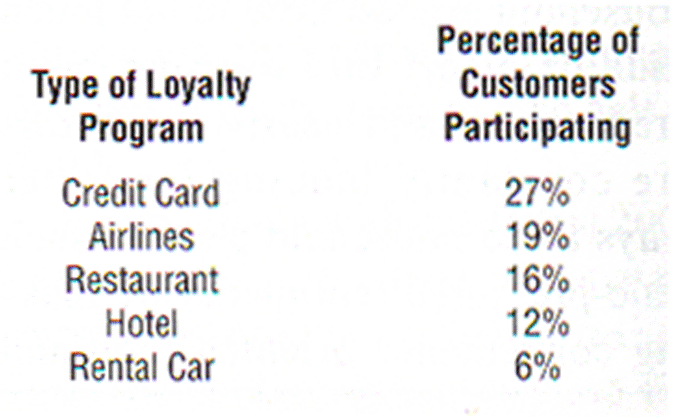
Schaumburg, Ill.-based ACNielsen U.S. reports that half of all heads of household are too tired to put much time or effort into evening meal preparation, and nearly two-thirds are constantly looking for faster ways to do household chores. Such time-pressured sentiments are making convenience-oriented food and cleaning items some of the fastest-growing consumer packaged goods (CPG) products on the market, according to an ACNielsen Consumer Pre*View survey of consumer attitudes and behaviors.
The research showed that 50 percent of respondents (heads of household age 18+) agreed that: "I am so busy and in such a hurry all day that by dinner I’m too worn out to fix a meal that requires much in the way of time or effort." As the chart shows, those most likely to agree with the statement were younger and had somewhat higher incomes.
Shelf-stable and refrigerated entrees are fully-cooked meals that just need to be heated; boosting sales in the frozen biscuits/rolls/muffins category are products that allow people to select the quantity that they want to heat; pre-moistened cleaning towels have cleaning or polishing ingredients already in them; numerous new product introductions, such as "cereal-with-milk bars," are boosting sales of breakfast bars; and refills for popular electrostatic floor and furniture cleaning products are driving growth in the polishing/cleaning cloths category.
"Several CPG manufacturers are successfully serving today’s timestarved consumer," says Phil Lempert, a food industry expert and spokesperson for the ACNielsen Consumer Pre*View service. "However, many retailers are still trying to figure out how to do so: The challenge of providing a freshly prepared great-tasting meal at a reasonable price and with a maximum of convenience has yet to be solved. For those who come up with a good solution, there’s tremendous upside potential. I don’t see consumers slowing down anytime soon, and meal preparation is a key area where consumers are looking to save time."
The ACNielsen Consumer Pre*View service conducts surveys once a quarter among members of the ACNielsen Homescan consumer panel. The study was conducted in September and October 2002, and included responses from more than 21,500 demographically balanced U.S. households.