

••• shopper insights
Similar but different
Report compares African-American grocery shopper generations

Additionally, African-American Millennials and older black generations buy more “from scratch” cooking items than non-African Americans. Popular items include shortening and oil; spices, seasonings and extracts; sugar and sugar substitutes; syrups and molasses; baking mixes and unprepared frozen meat and dried vegetables and grains. These are all items that are most commonly found in the meals prepared for dinner tables during the holidays in African-American households. During holiday seasons, grocers and retailers should consider strategies that bridge traditions with in-store shopping experiences, such as offering live, in-store demos of prepared meals and cross-promoting meal-ready ingredients throughout the store.
When it comes to cooking and dining, African-American Millennials and older black generations have very similar sentiments. Almost three-quarters of both age groups say that during any given week, they frequently cook meals. Both age groups also plan their dinners ahead of time and like to cook with fresh ingredients.
When African-Americans aren’t cooking holiday or special-occasion meals, their day-to-day lifestyles influence their cooking habits. Busy African-Americans are on-the-go and they need convenient meal solutions. More than half of African-American Millennials agree that frozen dinners are a convenient alternative for quick meals. And when you consider that 58 percent of African-American Millennials say they often eat meals on the run, it’s no surprise that 92 percent of them say they have visited a quick-service restaurant in the past 30 days – a rate that mirrors non-African-American Millennials (91 percent). This need for expedience and convenience explains why African-Americans buy unprepared frozen meats, seafood and vegetables at a higher rate than non-African-Americans. Combining African-Americans’ desire for fresh foods and a need for speed provides brands and grocers an opportunity for innovation and new product development in the convenient healthy eating space.
When it comes to shopping channel frequency, African-American Millennials and older generations have different preferences. Black Millennials spend 14 percent more when they shop than older black generations, while older black consumers make more trips, shopping 23 percent more frequently than their younger counterparts.
Convenience and price often dominate African-Americans’ purchasing decisions overall but black Millennials shop more frequently at drug stores and dollar stores than the total U.S. population. Collectively, African-Americans make frequent trips to convenience stores, gas and service stations and dollar stores. One thing to keep in mind is that this may not always be about preference, as, in many African-American neighborhoods, these are the closest and sometimes the only store options available. And this is partly why the shelves in these convenient stores often resemble aisles at traditional grocers and other retailers.
Everyone loves a good bargain and African-Americans are no exception. So when it comes to reaching African-American consumers, a cross-platform approach is important. African-Americans of all ages agree that media advertising using multiple sources provides them with meaningful or useful information. But even with a cross-platform approach, advertising on TV is still the most popular source of information about bargains among African-American Millennials and older black generations. A greater percentage of older black consumers say advertising in print media such as magazines and newspapers is a useful source for sales information, while advertising on mobile phones, radio and the Internet stand out for African-American Millennials.
Price is an important factor in many African-Americans’ purchasing decisions. Fifty-three percent say they will gladly switch brands to use a coupon and 62 percent say they will purchase store brands or private labels over their usual name-brand items in they’re on sale. Seventy-percent agree that generic or store-brand items are as effective as brand name products, which is an attitudinal shift from what Nielsen’s previous surveys have found regarding African-Americans and their brand-loyalty attitudes. Brands should take note of this new reality where-by African-American shoppers are balancing both loyalty and price in their shopping considerations.
While important, price isn’t the only factor African-American shoppers consider when making purchases. Both African-American Millennials and older black generations agree at higher rates than their total-population counterparts that a variety of other factors are just as important in their shopping decision criteria, such as celebrity endorsements, the latest trends, friends and family influence and brand image. Black Millennials can also be strong brand advocates and influencers, as 45 percent agree that they like to share their opinions about products and services by posting reviews and ratings online – a rate that is 24 percent higher than total U.S. Millennials.
••• brand research
Journey-mapping pays for top marketers
B2B focuses on brand awareness in 2017
Journey-mapping pays off for marketers, according to findings from the 2016 State of Customer Journey Marketing report by San Francisco digital marketing firm Autopilot. As reported in a Research Brief from the Center for Media Research, 71 percent of high-performing marketers surveyed by Autopilot for its study have mapped their customers’ journey and 88 percent say this initiative is driving better customer acquisition, satisfaction and retention.

Seventy percent of marketers now rank social media as their top-performing non-e-mail channel and 81 per-cent are using data to personalize their marketing, with the majority saying it creates a better customer experience.
The high-performers are investing in customer events and marketing, referral and satisfaction programs and analytics and attribution, rather than in online ads, says the report. Sixty-four percent of high-performers send automated e-mails to their contacts at least once a week and automation adoption is up more than 4x in two years.
Cost, not lack of awareness or complexity, is now the main impediment of use, says the report: 48 percent of marketers list budget constraints as their No. 1 challenge. B2B marketers are most concerned with converting leads into sales, while B2C marketers seek high ROI approaches to grow with thin margins and tight budgets.
In 2017, says the report, most marketers will be investing first in online ads (30 percent) and customer events and marketing (30 percent) but high-performers are focusing more on the customer experience, investing in customer events and marketing (35 percent) and referral and loyalty programs (29 percent) to achieve ROI to drive referrals and repeat purchases.
High-performers are even more focused, in 2017, on brand, with 27 percent ranking it as their top priority, fol-lowed distantly by lead-generation (21 percent) and customer satisfaction (19 percent). In contrast, everyone else is more evenly split between growing brand awareness (21.8 percent) and tactical lead-based initiatives such as converting leads into sales (22.1 percent) and generating new leads (18 percent). Among B2B-focused marketers, 43 percent indicated “brand awareness” as the leading priority at more than twice the rate of their second priority, customer satisfaction.
••• loyalty research
Most see loyalty programs as on the level
Except for Millennials, that is
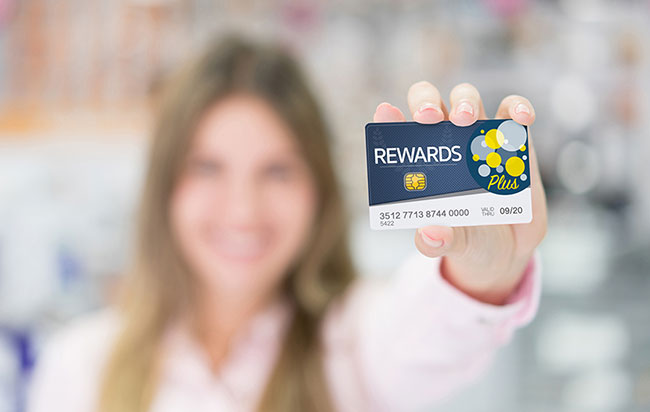
Colloquy uncovered the 59 percent to 41 percent gap in consumer sentiment about reward programs when it asked for a yes-or-no response to the question: Do you feel that loyalty marketing and customer reward pro-grams are rigged?
In another key result from the survey, 53 percent of young Millennials in the 18-24 age group said reward pro-grams are rigged, a 29 percent increase over the general population. Just 37 percent of older Millennials in the 25-34 age range said reward programs are rigged.
In the survey, Colloquy asked respondents who benefits most from customer reward programs. Savvy shoppers topped the list at 34.5 percent, followed by credit card companies at 27 percent, brands at 26.5 percent and wealthy people at 12 percent.
“In an atmosphere where venerable institutions are being questioned, it should be reassuring to marketers that nearly 60 percent of consumers believe in their programs and that consumers identified smart shoppers as the chief beneficiaries,” says Colloquy Editor-in-Chief Jeff Berry. “At the same time, the survey should remind brands that rewards must be relevant, easy to earn and redeem and that they must uphold the value exchange.”
Elsewhere in the survey, Colloquy crosstabulated results to compare views based on political party leanings. Forty-eight percent of consumers who identified themselves as Republicans said reward programs are rigged, versus 30 percent of respondents who said they are Democrats.
More women (43 percent) than men (40 percent) said reward programs are rigged.
Seventy-six percent of consumers said they plan to make no changes in their level of participation in reward programs in 2017, while 12 percent said they’ll participate more, and 12 percent said they’ll participate less.
Colloquy’s consumer survey was conducted between October 17-21, 2016. The nationwide survey of 1,500 U.S. consumers has a margin of error, which measures sampling variability, of +/- 2.5 at the 95 percent confidence level.
••• consumer psychology
Stressed-out shoppers seek to restore control
No time for splurging
As reported by Dory Devlin in Rutgers Today, a study co-authored by Kristina Durante, an associate professor of marketing at Rutgers Business School, indicates that stress leads consumers to favor saving money. Durante, who researches the effect of hormones and consumer behavior, has found that although stressed consumers want to save, when faced with a spending decision, stressed consumers will pay for necessities they think will help restore control rather than splurge on non-necessities.

In several experiments, Durante and Laran created stressful situations for participants, including leading them to believe they would give presentations in front of judges and directing others to write about a stressful time in their lives. Faced with the stress alone, most say they wanted to save more money.
Durante says the body reacts to stressful challenges with an increase in the hormone cortisol, which leads us to focus our attention toward the threat so that we can attempt to overcome it or alleviate it. “People lock down and enter survival mode and protect resources as a means to ensure survival,” she says.
When researchers tasked stressed participants with making a decision about how to spend up to $250 – one group on everyday products and necessary household goods, the other on non-necessities including entertainment goods – the group buying items deemed necessary spent more money. Neither group spent all of the $250.
In another experiment, researchers restored a sense of control for one group before asking them about spending money by having them write about an instance in their life where their actions led to a good outcome. That group spent more money on purchases. “What we found was for those with momentary levels of acute stress who then go and make a decision about how to spend their money, they want to save their money,” Durante says. “But for those who were stressed out and then had their sense of control restored, we found they were more willing to spend their money.”
The roots of the stress matter. People who said they were stressed about a current job situation, for example, were less likely to spend money on clothes, while others stressed about starting a new job were more likely to spend money on new clothes because they perceived the purchases as helping alleviate new-job stress. “What people feel is a necessity shifts depending on what kind of stress they have,” Durante says.
Having some control versus no control seems to affect the buying decisions people make when they are stressed, she says. “You can have situations where stress and a high level of control can improve your performance, like it does for elite athletes. But if you have a high level of stress and a low level of control, that’s when our cognitive efforts can get impaired and we want to save.”
The implications for marketers are many, Durante says. When there are unpredictable situations – extreme weather, elections – consumers may be more open to products that are framed as necessities or those that can restore control, she says.
For consumers, the findings can help people be aware of how they react when they are stressed and making buying decisions. “When humans are stressed, we still have to go out and about,” Durante says. “We have a lot of consumers out there who are stressed and are faced with decisions about what to purchase.”
Stress is unavoidable in life, yet research on how stressful situations affect how people make spending decisions as levels of the stress hormone cortisol are rising is limited and the findings mixed, Durante says. This re-search, she notes, is a start. “Not a lot of research has been done on stress and spending,” Durante says. “It’s so nuanced because different people respond in different ways.” The researchers are in the midst of a follow-up study on how consumers engage with products during a stressful time.
••• financial services
I choose to save, you choose to spend
How Boomers vs. Millennials view money

Of the more than 2,100 American adults surveyed:
The majority of savers prefer a spouse who is also a saver (61 percent saver men, 60 percent saver women).
A majority of spender women (59 percent) married a saver spouse, as opposed to 39 percent of spender men with a saver spouse.
One benefit six in 10 savers noted for being married to another saver is that it prevents arguments.
Does the saver/spender distinction matter more later in life? Two-thirds of Boomer savers are married to savers, compared to 52 percent of Millennial savers. Forty percent of Boomer savers say they would not be happy in a relationship with a spender vs. 23 percent of Millennial savers.
“It’s more about attaining the right balance than finding an identical match,” says Matt Sadowsky, director of retirement at TD Ameritrade. “It becomes more and more important over time for spouses to be aligned on how to manage their finances, especially when they are living off their nest egg in retirement. It’s not critical that both spouses be spenders or both be savers. But it is critical that there is an open dialogue between the two about what retirement looks like for them and a shared vision and plan for their future.”
Sixty percent of Millennial savers say they save in order to meet their financial goals. While Millennial men and women share several common long-term goals including saving for a retirement, 56 percent of Millennial women save for non-retirement items versus 46 percent of Millennial men.
More Millennial women said saving for a vacation is top of their list (69 percent), while 49 percent of Millennial men are concerned with affording a vacation. Millennial men are more likely to put a vacation on their credit card (22 percent vs. 19 percent of women).
Millennial women appear to be more concerned with the potential for a financial disruption, with 62 percent saving for an emergency vs. 50 percent of Millennial men.
Twenty-nine percent of Millennial men are investing in the stock market, which significantly outweighs the 18 percent of Millennial women. About one-third of Millennials are saving for a down payment on a home (32 percent Millennial women, 27 percent Millennial men).
Millennial and Boomer women have different attitudes toward money. Boomer women are more financially conservative and strict about saving, whereas Millennial women are more like men in how they save, spend and help support their families.
Millennial women save to help their families (58 percent), while Boomer women mostly save for themselves with only 37 percent saving to help their families.
Fifty-three percent of Millennial women are most anxious about having debt vs. 39 percent of Boomer women. Millennial women (41 percent) would choose to spend $200 on an experience they enjoy vs. 28 percent of Boomer women.
While Millennial men and Boomer men are similar in how they spend, the older men save more and allocate more money to family-related expenses. Millennial men feel the greatest pressure to spend and generally need the most money in order to be happy.
At an average of $925 a month, Boomer men save the most for retirement followed by Millennial men at an average of $593. Boomer men spend $130 more per month on groceries than Millennial men, $105 more on utilities, $45 more on technology and $50 on eating out and entertainment.
More Millennial men (18 percent) like to spend money in order to make a good impression vs. 3 percent of Boomer men. Millennial men need the most money in order to be happy saying they require a minimum income of $73,000.
“Millennial men’s spending habits are vastly different from their female partners. Men want to enjoy life by spending money now because they’re confident they can make up the money later,” says Dara Luber, senior manager of retirement at TD Ameritrade. “Women appear to have more anxiety over spending and fear they will not be able to make up a gap in their savings. Part of this reason could be their fear of debt since they tend to earn less over their lifetime.”