
Summer travelers take to the road, not the air
The economy may be slowing down, but travelers are gearing up for their summertime retreats. And, in choosing their mode of travhl, many may abandon the skyways for the highways. In a recent online study conducted by Davidson-Peterson Associates, a Kennebunk, Maine, research firm, warm-season travelers indicated that while most will vacation as much as last year (if not more), a significant number are less inclined to travel by air.
The April online survey, which polled 2,221 Americans who travel in the spring and summer, revealed that 79 percent anticipate taking as many (or more) trips as they did last year. And, in talking about their mode of transport, more than one third (39 percent) expect to take fewer leisure trips by plane, whereas only 17 percent indicate they will cutback on car trips.
The study is based on an Intertrak poll, a monthly national online omnibus service of Digital Research, Inc./Davidson-Peterson Associates (DRI/DPA). The total sample for April’s Intertrak wave consisted of 2,998 completed online responses, made up of male and female adults, 18 years of age and older. The respondents are members of DRI’s Consumer Technology Panel, an online panel of U.S. households that reflect the Internet population at large. A random sample of panel members was invited to complete the questionnaire. The survey was in the field from April 11-17. Completed surveys were weighted to ensure accurate and reliable representation of the total U.S. Internet population.
Health insurance shoppers seek more than just lowest premium
HealthInsurance.com, a Los Angeles company that helps individuals and small businesses access health insurance for themselves and their employees, has found that the vast majority of online health insurance shoppers are looking for more than the lowest premium when selecting a health insurance policy. HealthInsurance.com’s consumer research also found that nearly 70 percent of its customers were actively seeking health insurance products, either to get a competitive quote and/or buy insurance online.
Other key findings include:
• Over 60 percent of site visitors have found it somewhat or very difficult to find a traditional offline health insurance broker to service their needs.
• Nearly 70 of customers were looking for quotes from carriers or were ready to buy insurance at the time of their visit. Accordingly, two-thirds of customers with insurance had policies set to expire in one to three months.
• 52 percent of shoppers currently did not have insurance.
“While finding affordable coverage is still the number one concern of our shoppers, the vast majority are looking for reputable carriers and a solid set of benefits to cover needed medical expenses. Consumers are looking to the Internet to find assistance in selecting the best health plan to meet their needs,” says Bob Darin, chief operating officer of HealthInsurance.com. “While we found that getting instant quotes and the ability to compare benefits are very important, we also found that our customers look at the company behind the Web site – one that can provide experienced, licensed agent support and that has a long history serving customers.”
HealthInsurance.com partnered with Insiteful Surveys, Garland, Texas, to conduct and analyze the survey results. The survey was based on the responses of over 500 individual and small business site visitors in April 2001.
Consumers in favor of ads for prescription drugs
Fifty-one percent of consumers report prescription (Rx) drug advertising keeps them informed of available Rx treatments, according to information released by The NPD Group, a Port Washington, N.Y., research firm. The farm’s PharmTrends unit conducted a survey among more than 12,000 individuals which confirmed that consumers agree Rx drug advertising helps them take more control of their personal health care and motivates them to request specific drug brands of their physicians.
"When it comes to healtJa care, consumers are telling us that they want to be more informed of their treatment alternatives," says Fariba Zamaniyan, senior account manager of NPD PharmTrends. "This is evidenced by their positive response to Rx-branded drug ads. But the key to success for Rx drug advertising is whether or not the ads prompt doctor visits, generate prescription fulfillment for that drug, and improve patients’ likelihood to comply with their recommended drug therapy."
The study indicates that consumers aren’t flocking to their doctor’s office because of an Rx drug they became aware of through advertising. Only 11 percent of the consumers interviewed report they were actually prompted to make a doctor’s appointment to inquire about the Rx drug they saw advertised. Not surprisingly, two-thirds of consumers who were prompted to visit their doctor because of a prescription drug advertisement had Rx drug insurance.
Although consumers may not be making appointments to talk specifically about drugs seen in advertisements, they are communicating with their physicians. NPD’s data show they do discuss the Rx drugs they became aware of through advertisements. Nearly a quarter of the respondents asked their doctors about specific Rx drugs they learned about through direct-to-consumer (DTC) ads.
Not all consumers agree that Rx drug advertising is beneficial. Thirty-eight percent of consumers interviewed feel that there is too much advertising for these products. One-third said that the advertisements are too confusing and that they would not like to see more Rx drag advertising in the future.
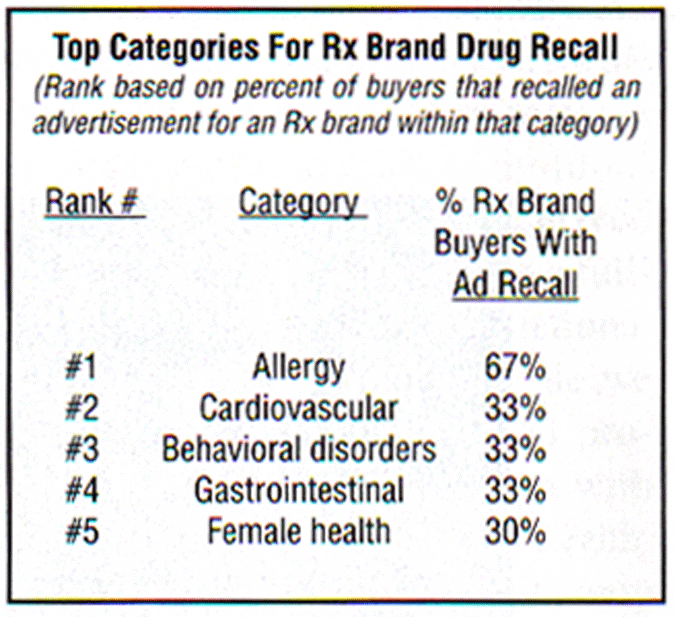
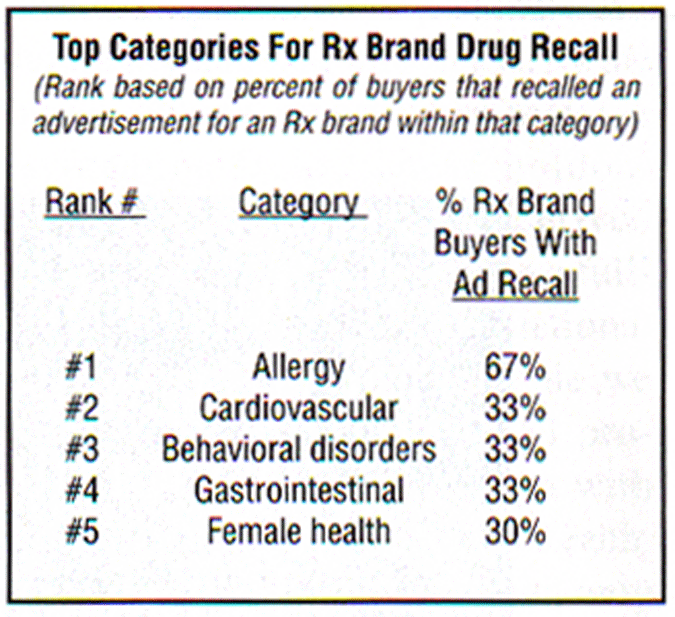
Certain categories have higher ad recall among consumers. Nearly three-quarters of the patients on a Rx allergy medication recalled an advertisement for their drug. The top-ranking categories for ad recall levels are shown in the accompanying table.
"Consumers who are suffering from a disease or condition are more interested in what the Rx drug advertisements have to say," says Zamaniyan. "Therefore, we see a correlation between prescription sales and ad recall."
NPD PharmTrends confirms that Rx and over-the-counter (OTC) drug sales have seen steady growth. The strongest year for DTC Rx advertising was 1999, which helped drive Rx growth by 18 percent year over year. In the year ending September 2000, sales growth remained brisk but was slightly less than the peak in 1999, +9 percent.
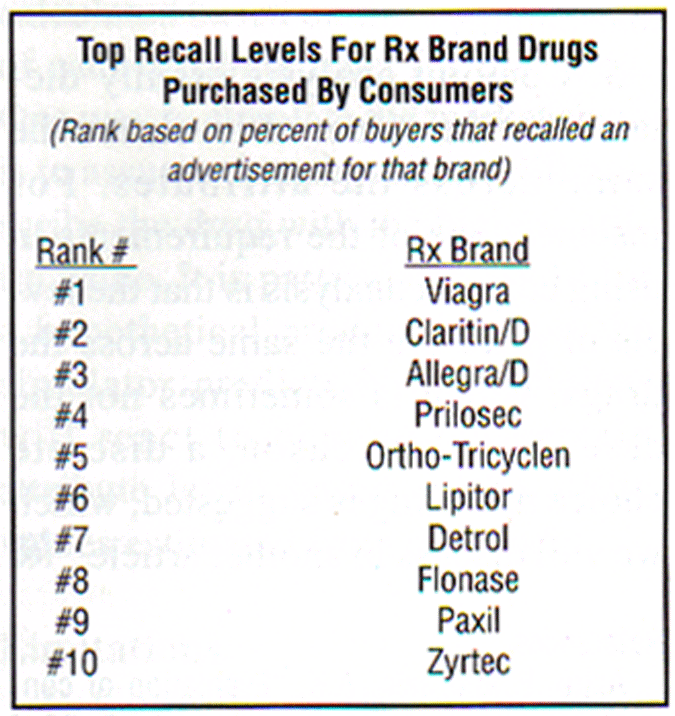
Consumers who purchase Rx drugs as part of their treatment regimens report high levels of ad recall for that Rx medication. For example, Viagra tops the list for ad recall among buying consumers. Ninety-two percent of the consumers who purchased Viagra recalled seeing an ad for the brand.
"With more ’blockbuster’ brands going off-patent in the next few years, it will be more important than ever for drug manufacturers to raise awareness for existing and upcoming formulations," says Zamaniyan. "Consumers are receptive to what drug manufacturers have to say about their brands, particularly if they or a family member suffer from the ailment. Drug companies who can use Rx advertising effectively to convert consumers to well-informed buyers and build longterm loyalty will be most successful. These companies should therefore continue to support the use of DTC advertising in their market."
Doctors prefer to see specialty sales reps
Ninety percent of physicians prefer to be visited by specialty sales representatives, according to "Specialty Reps: A Growing Force," a new study by Scott-Levin, a Newtown, Pa., consulting firm.
The almost 6,000 doctors from 21 specialties participating in the study felt that specialty reps know more about specific therapeutic areas as well as current and competing products. Most physicians (84 percent) said a specialty rep’s detailing presentation has at least some impact on their decision to prescribe. Other highlights from the physician section of the study:
- Almost all the doctors (97 percent) see about 10 reps per month. On average, 62 percent of those are specialty reps.
- One-third of physicians expect their need for specialty reps to increase over the next two years, while 62 percent expect it to stay the same.
- Oncologists, neurologists, and dermatologists are the specialists most likely to say they prefer to see specialty reps. Pediatricians are the least likely.
- About 32 percent of doctors say specialty reps’ presentations have "quite a bit" or "a lot" of impact on their decision to prescribe. Another 27 percent say they are "very likely" or "extremely likely" to prescribe a particular product after a detail from a specialty rep.
- Almost 60 percent of physicians say that being detailed by a specialty rep makes it more likely that they will prescribe the drug.
Some key findings from the rep portion of the study:
- Specialty reps tend to have at least two years of experience and usually are recruited from a company’s general sales force, according to specialty reps from the companies with the 20 largest specialty forces.
- Over half (56 percent) of the specialty reps are assigned to more than one therapeutic area or drug class.
- Specialty reps make an average of nine sales calls per day, and most detail two to three products at each call.
- When the doctor is not available, specialty reps see nurses about half the time. Of the reps who call on nonphysician staff members, most feel their meetings with nurse practitioners (61 percent) and physician assistants (57 percent) are extremely productive.
The overwhelming majority of specialty reps (88 percent) say they were trained separately from general and primary care reps. When asked which aspects of training were most helpful in dealing with physicians, specialty reps mentioned product and disease knowledge, advanced selling and communi-cations skills, and clinical and competitor knowledge.
Catalogs still an important sales tool for retailers
Amazon did it. So did Nordstrom. Even Toys R Us got into the game. This year, retailers of all stripes blended ecommerce with tried-and-true "old economy" marketing tools. Catalogs are fast becoming a tool of choice for many e-tailers to drive customers to Web sites. Not online catalogs, but the good oldfashioned paper ldnd, which are being revamped for the new economy.
An online survey by San Francisco market research firm King, Brown & Partners (KB&P) revealed that 79 percent of those who purchased gifts online this past holiday season received a catalog in the mail from an online retailer, and that 72 percent said catalogs were "very" or "somewhat" useful when making online purchasing decisions. Catalogs also encouraged nearly two-thirds (62 percent) who received a catalog to buy from the company who sent the catalog and of those, 89 percent purchased online.
Mixed e-commerce models have other advantages. When retailers reach customers using two or more channels they tend to be far more profitable than store-only or online-only customers. Eddie Bauer, for example, has 570 stores, ships 110 million catalogs per year and runs four Web sites. The company found that shoppers who use all three methods spend five times more than those who shop only by catalog.
The study also revealed that online shoppers were strongly influenced by brand awareness last holiday season. Online shoppers overwhelmingly purchased from unfamiliar sites - as long as they had familiar brand names.
A survey among 1,178 respondents showed that a fu!l 71 percent of online shoppers bought at sites they had never purchased from before; the same proportion (71 percent) were familiar with the brand and almost two-thirds (64 percent) felt that knowing the brand name beforehand was "very" or "somewhat" important.
"When attracting new customers, brand familiarity is critical," says Hal King, CEO of KB&P. "Retail brands that have built their reputation over many years in the bricks-and-mortar arena have an enormous advantage over pure-play dot-corn companies whose brands are relatively new to consumers."
King believes the holiday shopping survey points to the need for continued branding initiatives consistently updated and tracked for effectiveness. "Even with the speed of the New Economy, the best brand strategies are long-term, consistent and sustainable - and they take lime," says King. "The biggest mistake New Economy companies can make is to abandon brand building altogether. Online shoppers are willing to give new companies a chance as long as they’ve heard of them."
What drives switching of cold-remedy purchases?
A Shopperinsight study, conducted by Harris Interactive, Rochester, N.Y., found that price is substantially less important among supermarket shoppers who switch to drug stores for purchasing certain products vs. among those who switch to discount stores.
The nationwide study conducted among 5,797 respondents in late February and early March tracked retailer switching behavior for over 40 consumer packaged goods categories. Respondents who switched away from their primary supermarket for particular product categories were asked why they switched. The reasons cited, and the emphasis placed on those reasons, differed strongly by class of trade.
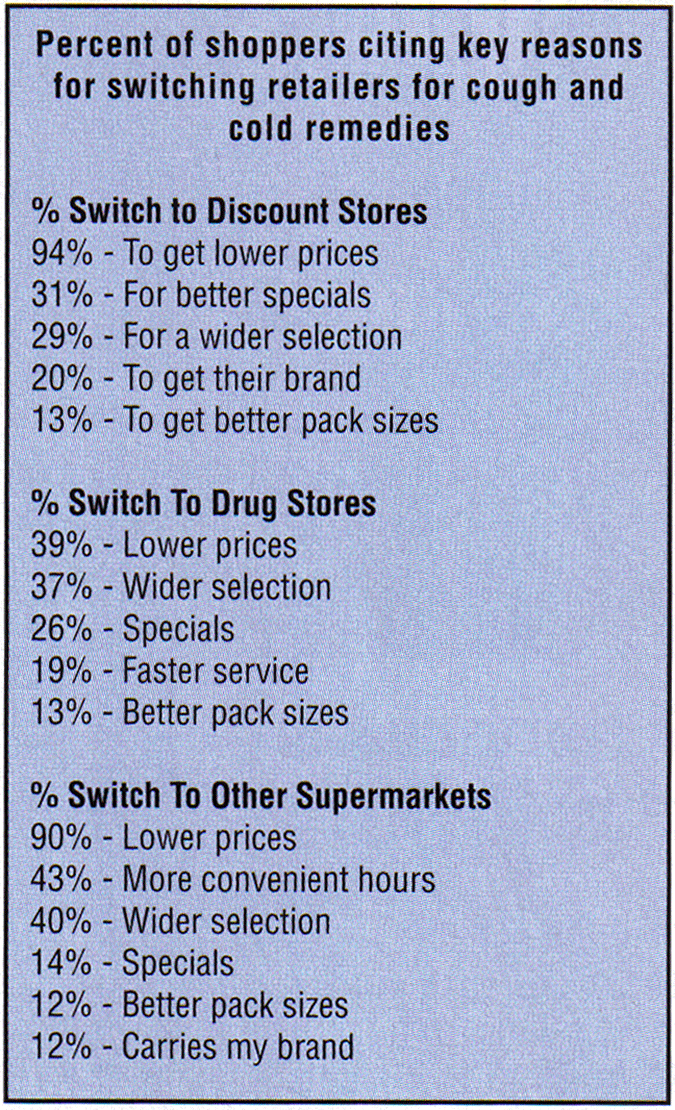
The study finds that among supermarket shoppers who reported purchasing a cough and cold remedy somewhere in the last six months, 30 percent of them prefer to purchase the category at their primary supermarket (converted), while 70 percent prefer to go elsewhere (unconverted): 30 percent prefer to purchase cough and cold remedies in discount stores, 26 percent in drug stores, 9 percent in a supermarket other than their primary, and 5 percent in another class of trade.
Not surprisingly, price is the most frequent reason that supermarket shoppers switch to discount stores for cough and cold remedies. A whopping 94 percent of switchers to discount stores cite price as a reason for switching, compared to 29 percent who say wider selection motivates them to switch to discount stores. By contrast, shoppers who switch to drug stores to buy cough and cold remedies are half as likely to consider pricing issues (39 percent) as switchers to discount stores - making wider selection as important as pricing.
"As retailers struggle to capture their markets, they must strike a balance among price, selection and service," says Peter Gold, vice president and director of consumer package goods research at Harris Interactive. "Customers’ reasons for going elsewhere to buy are very specific. This study makes it clear that while supermarkets may find it hard to compete on price, they, and their customers, may benefit from placing greater emphasis on their product assortment - particularly for categories such as cough and cold remedies, where drug stores pose serious competition."
Outfitting the pharmacy of the future
What should the drug store of the future offer its customers? An on-site nurse practitioner was the top choice, according to the AmeriSource Index, a new nationwide quarterly survey released by AmeriSource Health Corporation, a Valley Forge, Pa., distributor of health care products and services. The survey covered a range of topics including purchasing medications over the Interact, the use of herbal medicines, why people use a particular pharmacy and whom people go to for advice on medications.
When presented with a list of products and services that they would most like to find in the pharmacy of the future, 30 percent of respondents chose an on-site nurse practitioner. When asked what their second top choice was, nutrition counseling and a nurse practitioner tied at 15 percent. A specialist on different diseases came in next, at 14 percent. Other top contenders for second place were kiosks with medical or diagnostic information, at 12 percent, and weight loss counseling, at 8 percent. Chiropractors and masseuses followed, with 7 percent and 5 percent respectively.
While Internet purchases have increased in recent years, the vast majority of survey respondents - 64 percent - said they had not purchased medications over the Interact and did not intend to do so in the future. However, when asked what might encourage them to do so, the ability to order from a local pharmacy online drew the largest number of responses - 21 percent. Next were lower prices
(20 percent), convenience and improved security (12 percent), at home delivery of orders (10 percent) and obtaining Interact access (3 percent).
Waiting to have a prescription filled was an experience just about all respondents shared. Twenty-nine percent of those surveyed reported an average wait of more than 20 minutes. Eighteen percent said they usually waited 11-15 minutes, while 19 percent said they waited six to 10 minutes. Only 13 percent of respondents reported waiting five minutes or less.
The AmeriSource Index polled 1,034 consumers nationwide about their medication-purchasing habits and preferences. It was conducted by Opinion Research Corporation International on behalf of AmeriSource Health Corporation.
What is the most important factor in selecting a pharmacy? A convenient location, according to 26 percent of the survey respondents. Low prices came in next, at 20 percent, followed by "trust" and "personalized attention and service" at 15 percent.
Among respondents 55 and over, who purchase more medications than any other goup, the results were different. Trust ranked even higher among respondents 55-64. In fact, 23 percent said this was their top criterion. Among senior citizens (64+), personal attention also ranked high, with 20 percent of seniors selecting this as the key reason to choose a pharmacy.
Pharmacists also ranked second only to physicians when people seek advice about medications or medication interactions, according to the survey. When asked whom they were most likely to consult about these issues, 48 percent of respondents chose physicians, while 37 percent chose pharmacists. Among adults 35 to 64 years of age, pharmacists were the top choice, while women were almost evenly split, with 45 percent choosing physicians and 44 percent selecting pharmacists.
Lastly, the survey questioned people about their use of herbal and homeopathic medicines. While 27 percent of respondents said they did take these products, nearly two thirds of those who reported using herbal or homeopathic products said they did not inform their pharmacists about it. Herbal and homeopathic products were used most by adults ages 35-54. This goup was also the least likely to inform pharmacists about the use of these products.
TheAmeriSource Index is a quarterly survey of trends, purchasing behaviors and opinions about pharmacists and their customers. Future surveys will be released on a quarterly basis.