

••• advertising research
Study on multitasking finds TV still a constant
Always on though not always watched
YuMe Inc., a Redwood City, Calif., digital video advertising firm, commissioned a study from Nielsen that concluded that multitaskers exhibit differing levels of engagement on multiple devices. The research experiment was designed to explore how viewers engage with devices when put in situations that are conducive for multitasking and begins to address the issue of how device interactions can provide the greatest value for brand advertisers.
The study – an observational lab experiment that simulated a multitasking environment – demonstrates that the digital environment provides an opportunity for user engagement and complements television campaigns and reveals that attention lost from TV ads can be regained by ads on digital platforms. Findings from this study are observational and are not meant to be a reflection of all consumers’ viewing habits.
To understand the individual behaviors within multitasking, YuMe commissioned Nielsen to conduct in-lab observations across 200 respondents in Las Vegas over a two-month period from October to November 2014, in which video consumers were instructed to engage with any of the devices as they would naturally at home for 20 uninterrupted minutes. As a result, 50 hours of video footage was gathered with second-by-second coding of attentiveness for four devices, totaling nearly 2 million data points to analyze regarding the behaviors and interactions across devices.
For multitaskers in the study, TV was still the initial medium of choice but some participants quickly switched their attention, opting to begin seeking out content on other devices. In the experimental multitasking environment, TV provided a constant background, even if the participants were not interested in the specific program that was airing at the time and choosing to engage with content on other devices; the shift to other devices typically happened within the first few minutes.
While television was the most- used device (used 53 percent across all respondents) during the experiment, the participants spent less than half of that time paying attention to it while it was on. Attention to television dropped from over half of multitaskers to under 20 percent of multitaskers in the first four minutes.
In the study’s multitasking environment, a campaign served to the same number of multitasking consumers on each device would be seen by more than two times as many viewers on laptops and more than three times as many on tablets or smartphones than on TV.
Pre-roll was generally more effective than mid-roll at ensuring multitasking viewers were attentive to advertising.
When a participant found content they were interested in watching on television, they were much more likely to maintain their focus on the TV set.
In the study, of all the ads that were shown: for television, 30 percent of ads were seen; for laptop, 71 percent of ads were seen; for tablet, 93 percent of ads were seen.
“No one is debating that consumers are multitasking. This ethnographic study was specifically designed to garner insights into users’ behaviors and preferences while multi-tasking,” says Paul Neto, director of research, YuMe. “Despite distraction levels among consumers, it will be important for brand advertisers to continue running campaigns cross-screen, as viewers continue to show they are also attentive on laptops, tablets, and/or smartphones while ‘watching’ TV.” Full study results are available at www.yume.com/research.
••• automotive research
Consumers can’t picture themselves in a self-driving car
No drive to go driverless

These are some of the results of The Harris Poll of 2,276 U.S. adults surveyed online between November 12 and 17, 2014.
When provided with a brief description of self-driving vehicles and an aided list of potential feelings they may have towards the technology, Americans display a wide range of sentiments towards the subject. On one hand, there are many positive reactions to the vehicles. Over one-third (35 percent) say these vehicles are the future of driving and 24 percent think they are the designated drivers of the future. Meanwhile, almost one quarter of adults (24 percent) believe self-driving vehicles are something out of The Jetsons. Just over one-fifth of Americans (22 percent) say it’s a technology they’d love to have and 19 percent say they’re “insanely cool.”
But it’s not all sunshine and robots, with 34 percent saying the vehicles are an unnecessary luxury and nearly a third (32 percent) feeling they’re something only rich people could afford. Furthermore, 30 percent say they’re an even lazier way to drive. Then there are those who just don’t know what to make of them, with 12 percent saying they’re “confusing.”
Digging into the specifics, Americans see a number of benefits and drawbacks to the use of self-driving vehicles, when presented with a list of options. Likely benefits include increased fuel economy (30 percent), more leisure/free time (21 percent) and increased productivity (18 percent). It should also be noted, however, that one-quarter (25 percent) of Americans do not see any benefits to self-driving vehicles.
Looking at the drawbacks, 80 percent of Americans feel computer “glitches” are a likely downfall of self-driving vehicles. Added costs are a concern as well. Nearly seven-in-10 (69 percent) feel the vehicles would cost more to service due to increased complexity and 45 percent say higher insurance costs or an additional “rider” are likely drawbacks. Thirty-seven percent (37 percent) of Americans also note personal data breaches as a likely drawback. Only 7 percent of adults don’t see any drawbacks to self-driving vehicles.
There are many safety factors to consider when looking at self-driving vehicles. Are they safe for those inside them? What about for others on the road? Can they make mistakes? Will they prevent accidents? Americans are largely split on implications for those inside them: 48 percent say self-driving vehicles would be “safe” for this group and 52 percent say “dangerous.” However, Americans edge towards a consensus when thinking of those outside the vehicles. Fifty-seven percent feel self-driving vehicles would be dangerous for other drivers in their proximity and 61 percent say the same for pedestrians. Matures are especially likely to worry that self-driving vehicles would be dangerous for pedestrians (73 percent vs. 63 percent Baby Boomers, 61 percent Gen X and 56 percent Millennials) and other drivers (69 percent vs. 59 percent, 57 percent and 51 percent).
And how do Americans rate self-driving vehicles against the average driver? Well, it depends on the activity. Americans have the most confidence when it comes to parallel parking, with 62 percent expecting that self-driving vehicles are less likely to make an error than human drivers; slightly fewer say the same for parking in a parking lot (56 percent) and driving on the highway (54 percent). This confidence dwindles when it comes to driving in a city; in this situation, 57 percent of Americans say self-driving vehicles will be more likely than the average driver to make an error.
Americans do, however, see some safety-related benefits in these vehicles in the form of fewer accidents and minimizing other driver-induced errors. Over half identify fewer accidents caused by drunk driving (53 percent) and distracted driving (also 53 percent) as likely benefits of self-driving vehicles. Half of adults (50 percent) feel they have a reduced likelihood of speeding tickets and 44 percent feel there is a reduced likelihood of rearending another car. Another potential benefit, seen as likely by 41 percent, is a reduced likelihood of running a red light.
All things considered, what will it take before Americans will consider purchasing this new technology? Over one-fifth (22 percent) say they will consider buying/leasing when they believe the bugs have been worked out. Seventeen percent say they will consider doing so when self-driving vehicles drop to a price they think is reasonable. This is especially true of Millennials (23 percent vs. 15 percent Gen X, 13 percent Baby Boomers and 13 percent matures). Others say they’ll wait until they read or hear positive feedback from people using them (7 percent) and 17 percent simply aren’t sure what it will take for them to consider buying/leasing.
Most notably, however, a third (33 percent) say they will never consider buying or leasing a self-driving vehicle. Matures are more likely than all other generations to indicate this (50 percent vs. 36 percent Baby Boomers, 36 percent Gen X and 22 percent Millennials).
Americans who drive more than 30 miles a day may be the best target for these newfangled vehicles for a number of reasons. They are more likely than their counterparts (those driving less than 30 miles a day) to share some positive sentiments towards self-driving vehicles, including feeling they are a technology they would love to have (27 percent vs. 20 percent) and that they’re “insanely cool” (24 percent vs. 17 percent). Those who drive more are also more likely to cite increased productivity as a benefit (23 percent vs. 17 percent). Furthermore, they may be more open to buying or leasing one, as they’re less likely than lower-distance drivers to say they will never consider purchasing a self-driving vehicle (28 percent vs. 35 percent, respectively).
••• demographic research
SLC and D.C. on top
Gallup charts payroll-to-population rates in metro areas

Gallup’s P2P metric tracks the percentage of the adult population aged 18 and older who are employed full-time for an employer for at least 30 hours per week. P2P is not seasonally adjusted. Gallup does not count adults who are self-employed, work fewer than 30 hours per week, are unemployed or are out of the workforce as payroll-employed in the P2P metric.
These results are based on Gallup Daily tracking conducted throughout 2014 in the 50 most populous U.S. metropolitan statistical areas. Gallup assigns respondents to metro areas using the definitions for MSAs developed by the federal Office of Management and Budget. Each MSA sample is weighted to ensure it is representative of the population of that metro area. Sample sizes ranged from a low of 1,312 for New Orleans, to a high of 18,154 for the New York metro area.
Dense urban areas tend to have higher rates of workforce participation, which drives P2P rates up as well. The average P2P rate among the 50 largest MSAs in 2014 was 46.0 percent, compared with the average of 44.0 percent for the U.S. as a whole. Nationally, the less densely populated an area is, the more likely adults are to be out of the workforce, while rates of part-time work, self-employment and unemployment remain much more consistent.
As with P2P rates, MSAs in California and Florida dominate the 10 metros with the highest unemployment in 2014. Tampa registered the highest unemployment rate at 10.8 percent, followed by Miami at 10.3 percent and Riverside, Calif., at 10.2 percent. Salt Lake City had the lowest unemployment rate in 2014, at only 3.5 percent. The Florida MSAs, all of which are in the bottom half in P2P, are also among the highest 10 in unemployment – suggesting their lower P2P rates are not merely a result of having a higher retired population.
While P2P reflects the proportion of adults working full time for an employer relative to the entire population, Gallup’s U.S. unemployment rate reflects the proportion of adults in the workforce – all those working or seeking work – who are not working, but would like to be. Nationally, the U.S. averaged 6.9 percent unemployment in 2014. Gallup’s calculation of unemployment mirrors that used by the government’s Bureau of Labor Statistics (BLS) but still differs from it in several ways, including that Gallup’s measure is not seasonally adjusted.
Five of the top 10 MSAs for P2P also rank in the 10 lowest MSAs for unemployment in 2014: In addition to Salt Lake City, Austin; Denver; Raleigh, N.C.; and the District of Columbia all make the list. However, Buffalo, N.Y., also makes it, despite being among the bottom 10 MSAs for P2P. Buffalo ranked last among the 50 largest MSAs on workforce participation, at 61.1 percent, compared with 66.7 percent nationally.
Both P2P and unemployment are objective indicators of the employment situation, and as such, there is a great deal of overlap on these two metrics among the best- and worst-performing MSAs. The measures also correspond with the best and worst performers on Gallup’s Job Creation Index and Economic Confidence Index, which provide a more attitudinal assessment of an MSA’s employment and economic picture. Six of the top 10 MSAs for P2P also rank in the top 10 for economic confidence, and four rank in the top 10 for job creation. Interestingly, Detroit ranks seventh lowest in terms of P2P, but eighth highest for job creation, potentially forecasting an improvement in that employment ranking.
Comparing employment levels among the 50 largest U.S. metropolitan areas in 2014 tells a familiar story. Once again, the biggest factor countering full-time employment is not unemployment but failure to participate in the labor force at all. According to BLS data, labor force participation declined and unemployment rose sharply in the U.S. in the wake of the 2008-2009 recession. Yet both BLS and Gallup data show that while unemployment has fallen consistently in the intervening years, labor force participation remains at historically low levels.
Higher rates of full-time employment translate not just into higher incomes but higher well-being, too. American cities that find ways to mobilize working-age adults provide some of the best opportunities to put more Americans back into quality full-time jobs.
Results for this Gallup poll are based on telephone interviews conducted in 2014, on the Gallup U.S. Daily survey, with a random sample of 353,732 adults, aged 18 and older, living in all 50 U.S. states and the District of Columbia. For results based on the total sample of national adults, the margin of sampling error is ±1 percentage point at the 95 percent confidence level. For results based on MSA-level data, the margin of sampling error is no more than ±3 percentage points at the 95 percent confidence level. Respondents are assigned to metro area using OMB definitions of metropolitan statistical areas. All reported margins of sampling error include computed design effects for weighting.
www.gallup.com
••• television research
Technology, it seems, begets technology
Report looks inside SVOD homes
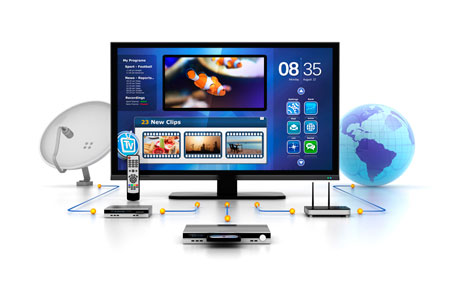
According to Nielsen’s recent Total Audience Report, 41 percent of U.S. homes had access to an SVOD service in fourth-quarter 2014. In terms of race and ethnicity, the multicultural makeup of in SVOD homes is different from other types of homes. For instance, among homes with SVOD, 71 percent of them are white, 12 percent are Hispanic, 10 percent are black and 5 percent are Asian-American. However, that distribution is quite different in homes with no broadband: 56 percent of homes are white, 18 percent are Hispanic, 22 percent are black and only 2 percent are Asian-American.
But money talks – or at least it lets consumers connect with original programming whose characters are doing the talking outside of the linear TV screen. The report found that penetration of both high-speed Internet and SVOD access are strongly income-related. In fact, about 13 percent of homes boast multiple streaming services in their homes and nearly half of homes with SVOD access have a yearly household income of more than $75,000, while two-thirds of homes without broadband access have annual household incomes of less than $40,000.
It’s not an all-SVOD-or-nothing proposition to homes with these services, however. Actually, it’s quite the contrary. “When looking at how homes with access to subscription-based streaming services compare to a typical TV home, homes with broadband and no SVOD – and even homes with no broadband at all – we see that SVOD homes really go ‘all in’ in terms of the devices that they are using through their traditional televisions,” says Dounia Turrill, senior vice president insights, Nielsen. “From DVRs to video game console usage, these homes, perhaps because of their income level, both adopt and rely on these devices at a much higher rate. Technology begets technology.”
The report found that homes with subscription streaming services have a both a penchant for TV-connected technology and, perhaps more importantly, display the greatest usage of these devices – nearly 50 minutes more a day than a typical TV home. Additionally, these homes average 10 more minutes daily watching time-shifted TV and double that in terms of time spent using a multimedia device (such as Apple TV and Roku) than a typical TV home.
www.nielsen.com
••• alcoholic beverages
Four beer trends for 2015
Has craft beer lost its edge?

Peak craft? This most irreverent of segments, craft beers, is switching its bohemian attire for a smart-casual look as the corporate suits attempt to dress down for the occasion. And it’s getting crowded in there. As the explosive adolescent years are now behind and the craft proposition is coming of age, its inevitable convergence with “Big Beer” sets fresh aspirations and challenges. From a dearth of quirky brand names to hop shortages and from improvements in distribution networks, retail policies and lending availability to the widening pitfall of “bandwagon microbrewing” (which led to the inexorable burst of the previous cyclical microbubble of the 1990s), craft is now part of the mainstream as much as the charming outsider.
Speers: Partly an accidental offshoot of the craft revolution and partly a last line of defense for Big Beer fighting off the advancing spirits tide, spirit beers or speers will enter the mainstream and carve their own niche as one of the most prominent flag bearers of hybrid experimentation and the blurring of category lines. From barrel ageing to spirits amalgamation with the common denominator of higher alcohol-by-volume levels, speers will make inroads in both mature and emerging markets fighting in two fronts: against maturity across the west and against cultural traits favoring spirits consumption in markets such as India.
Flavored, low- and non-alcoholic losing their stigma: Flirting with the ever-elusive female demographic but increasingly adopting a more gender-neutral positioning, flavored, low- and non-alcoholic alternatives will consolidate and increase their share-of-throat. Demographic forces, legislative changes, lifestyle fads and leaps forward in terms of production techniques will guarantee the impressive performance of the non/low-alcoholic segment in both mature and emerging markets. They will however remain a niche, much like flavored variants that, spear-headed by the radler segment (beer mixed with lemonade), will provide an entry point for the sweeter palates of the Millennial generation while mediating the chronic declines of Big Beer icons.
Home is the new micro(brewing): With microbrewers moving confidently center stage, the opening left in the brewing fringes will be covered by mini-scale home production and technological advances streamlining the process. While off-trade home consumption will also remain in focus, the playing field will not be dominated by gimmicky dispensers but rather by the democratization and deconstruction of the brewing process and the social sharing of recipes and ideas. Such ventures bridging technology, brewing and the Internet of Things will account for minute volumes but might well provide inspiration for the next waves of craft launches. “Coopetition” amongst the small players will remain as paramount as the industry behemoths’ respect towards the heritage of the ones they will inevitably take under their wings. Consistency and quality control on the one hand and clarity in regards to the narrative on the other will be the dual pillars making or breaking the segment. And its inherently disruptive nature should remain in the core of its proposition as radical experimentation, local credentials and independent character will remain the key drivers moving forward.
www.euromonitor.com
••• corporate responsibility
Women show more concern for corporate citizenship
Men care too, just not as much

The short answer is yes.
Corporate social responsibility, also referred to as corporate citizenship or conscious capitalism, has become a meaningful way brands can differentiate themselves – and a growing base of consumers are clamoring to pay for it. In fact, 55 percent of global respondents in a recent Nielsen survey say they’ll pay extra for products and services from companies that are committed to positive social and environmental impact. And when we look at how the perspectives vary between the sexes, we see that most of the differences show up in the causes that women care about, both in magnitude and ranking.
Data from Nielsen’s 2014 corporate social responsibility survey shows that while concern runs deep for both men and women across a variety of causes, the level of commitment between the sexes shows somewhat different agendas. While this might seem fairly intuitive, the findings show notably different perspectives between men and women when it comes to supporting issues like access to clean water, poverty, animal welfare and gender equality.
Overall, the responses from women suggest that they’re more concerned than men. In fact, across the swath of questions the survey fielded about social causes, there were only four in which men expressed stronger sentiment than women, and those pertained to areas of small business support, education, technology and construction. Comparatively, women appear more invested in more human-oriented causes, such as disease and maternal health.
Even though the sexes are somewhat divided on their level of support to various causes, men and women are very aligned in their overall interest in brands and products that give back. And that interest is rising quickly. In fact, the global average of people who say they’re willing to spend more for products and services from companies that are committed to positive social and environmental impact increased 5 percent between 2013 and 2014.
But actions speak louder than words, so it’s worth pointing out that consumers aren’t just paying lip service when it comes to causes they believe in. In the last corporate social responsibility survey, 53 percent of men and 52 percent of women said they had bought at least one product or service because they believed the company is committed to making a positive social and environmental impact. A review of sales trends across 20 brands in nine countries showed that these intentions led to a 5 percent greater rate of sales for companies that communicated their sustainability efforts through marketing programs.
And consumers aren’t just acting with their wallets. In many ways, their consumer behaviors correspond with their general sentiment about making a difference themselves: nearly 50 percent of men and women say they actively engage in volunteer work and/or donate to social causes, and 67 percent say they prefer to work for a company that is committed to positive social and environmental impact.
While it’s important to understand how men and women view the world’s social issues and causes, women remain the primary decision-makers when shopping is concerned, making it critical for marketers to engage them.
And with that in mind, marketers should review their brand strategies and assess the relevance of their social responsibility efforts – largely because they’re so important to consumers, making them essential in today’s market rather than a point of differentiation. Key questions include: Are your current connections strong? Are your current connections aligned with those of your desired customers? Are you missing opportunities by having strong connections to causes that aren’t known about by consumers?
It’s important to note that Nielsen’s global survey data is representative of online households rather than total households. This is a nuanced point, but it likely makes the findings that much more relevant when you consider the buying power of the global households that are online vs. those that aren’t.
These insights were derived from the Nielsen Global Survey of Corporate Social Responsibility, which polled more than 30,000 consumers in 60 countries throughout Asia-Pacific, Europe, Latin America, the Middle East, Africa and North America.