Consumers waiting before they fly
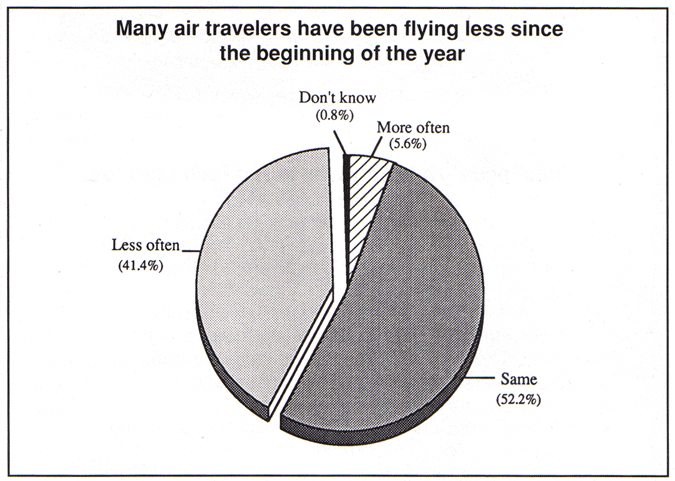
Forty-one percent of air travelers have been flying less often since January, according to an AmeriPoll survey by Maritz Marketing Research Inc. But, while the threat of terrorism has been a deterrent to some (16%), the study shows economic factors are the chief reason that 23% have reduced flight schedules. Other reasons the industry is in a crunch: 21% of respondents say they have no need to take a trip; 18% are waiting for vacation; 2% are concerned about airline safety.
"Even though the war is over, many passengers may not resume a normal travel schedule until the economy improves and ticket prices go down," says Beth Nieman, Maritz research manager.
The AmeriPoll finds the following conditions must exist before travelers return to pre-war schedules:
- ticket prices have to come down (21%)
- vacation time needs to be available (16%)
- the economy improves (15%)
- have a need to travel (12%)
- threat of terrorism has to be reduced substantially (10%)
Since airport security measures have been strengthened, 55% of air travelers feel more secure; one-third feel as safe now as before; only 4% think they are less secure. Even though the new procedures are more time consuming, an overwhelming number of respondents (86%) say they should be continued.
Fifteen percent of those who participated in the survey fly for business only. Twenty-six percent use the airlines for both business and pleasure, and 58% take to the air for pleasure only. The majority of air travelers surveyed (58%) fly more than one round-trip commercial flight per year.
Telemundo poll finds U.S. Hispanics troubled by quality of life issues
A large portion of U.S. Hispanics are deeply concerned about their quality of life and cite crime, drugs, poor education, faulty health care and discrimination as nagging problems in their communities, according to a recent Telemundo Hispanic Opinion Poll.
The 1990 Census estimates the Hispanic population to be as high as 24.1 million or nine percent of the U.S. total. The poll, sponsored by Telemundo, the Spanish-Uanguage television network, also sampled Hispanic views on the Bush administration. U.S.-Mexico free trade, affirmative action and Puerto Rico statehood.
Hispanics surveyed rated crime first and drugs second - over unemployment, education, the environment and discrimination - as the most pressing problems in their communities. Four out of ten Hispanics feel that crime in their neighborhoods has worsened in recent years with 63% calling the situation "serious." More than 50% of respondents said that Hispanics receive worse treatment in the hands of police than other community members.
"Fair to poor" is how 54% of Hispanics polled view education standards in their communities. 84% believe that bilingual education is "very important" to their children's future. The quality of health care in their neighborhoods received a similar rating.
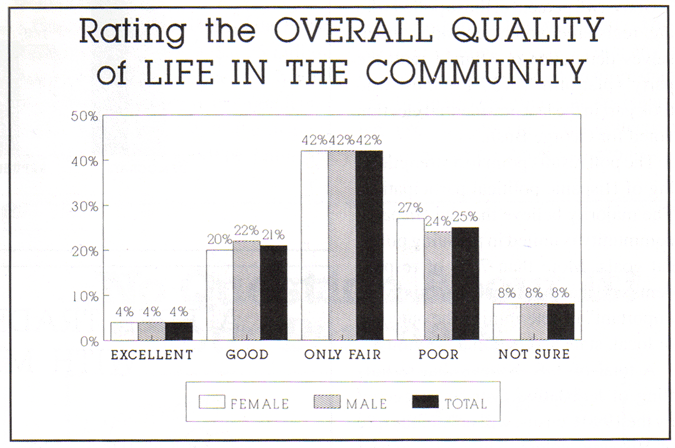
Hispanic views on quality of life issues as revealed by the Telemundo Poll compare disproportionately to the results of a recent independent general market survey. Only 25% of participants in the Hispanic poll rate their quality of life as "good to excellent" versus 70% in the non-Hispanic study.
Similarly, 32% of Hispanics polled gave the quality of education a good-to-excellent rating as compared to 56% of the general population. Thirty-six percent of Hispanic respondents versus seven percent of the general sample regard the crime situation as "very serious" with more Hispanics than non-Hispanics citing a noticeable worsening during the last two years.
Hispanics surveyed were divided in their views on President Bush's economic performance, with a slight margin in favor of the job he is doing. Concerns regarding the nation's economy were evident in the respondents' views on job stability: 43% reported being "somewhat to very concerned" that someone in their household may lose a job in the next six months. Most respondents said that their present financial situation has not improved in recent years. However, 74% praised Bush's handling of foreign policy.