
While more attention is being paid to how the B2B buying process is often driven by as much emotion as B2C purchases (see this very issue of Quirk’s for examples!) and that B2B is therefore more like B2C than unlike it, there are still many stark differences between the two types of marketing (and their attendant forms of marketing research).
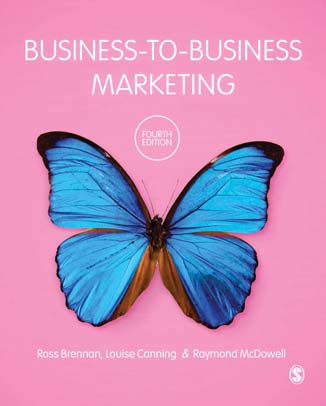
Though obviously geared to the higher-education market in its tone, the book is written with a well-informed and practical style and features many real-world examples (along with the usual trove of citations of scholarly research on the various topics being explored), giving it a relevance beyond the typical business textbook. (The glossary and list of references are especially valuable to new B2B researchers and those who are hungry to dive a bit deeper into some of the material.)
Segmentation is a topic near and dear to any B2B researcher’s heart and the book gives a good overview of segmentations, touching on the many criteria upon which they can be built. Too much of a good thing can be, well, too much, especially with segmentations, and the segmentation chapter draws from earlier work by Art Weinstein (2006) to help readers use a framework of nine questions to ask in order to successfully implement market definitions and segmentations – and avoid going too far with them.
Elsewhere, authors Ross Brennan, Louise Canning and Raymond McDowell spend ample time on the marketing side of things, looking at price-setting, routes to market and managing product offerings. I especially appreciated the chapter on responsible business-to-business strategy and its well-informed approach to considering the value that ethics and social responsibility can and should play. Those notions seem painfully naive against the current backdrop of regulatory rollbacks and profits primacy in this country but there are still many examples of companies that try to do well by doing good and the chapter lays out four theories of marketing ethics and makes a good case that the pursuit of corporate social responsibility doesn’t have to be mutually exclusive from profits.
Getting back to the topic of emotions, so much of B2B success hinges on relationships – how you build them, sustain them and, perhaps most important for researchers, measure them – and the book’s strongest chapters are those on relationship communication and account management. For the seasoned marketer, there isn’t anything revolutionary in these sections but there is certainly value in having a reference tool on your bookshelf that so effectively summarizes and analyzes current systems of thought on these and many other crucial aspects of the B2B realm.