
Editor’s note: Thuy Sindell is co-founder and president of Skyline Group International’s coaching division, a San Francisco-based human capital solutions company. Milo Sindell is president of Skyline Group.
Popular culture is obsessed with extremes. Whether it is fast cars, bizarre foods, extreme sports – bigger, faster, spicier, riskier – extremes are compelling. Our t-shirts even boast our pride in extremes: go big or go home. Our attraction to extremes comes naturally to us and our own base brain responses are composed of two extremes: fight or flight. We are naturally attuned to extremes because of the clarity in the polarities of black and white, fight or flight, etc.
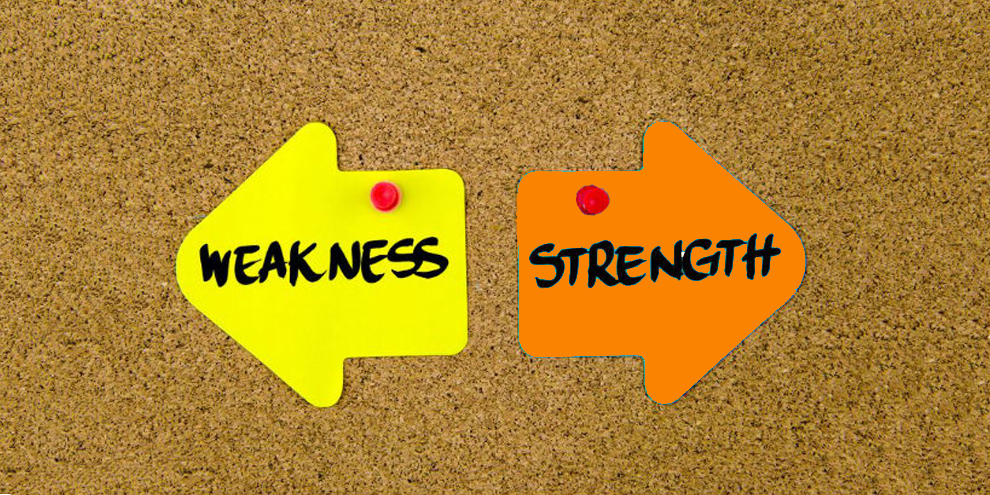
This same attraction to extremes is prevalent in the world of leadership development. A great deal of effort is spent knowing and polishing one’s strengths while attempting to improve one’s weaknesses. Once again we act on our attraction to the clarity of extremes, “I am good at this, therefore I’ll keep doing it.” Or, “I’m bad at this, I better work on improving.”
You can make the argument that focusing on your strengths is good for your self-esteem, effectiveness and career. According to a February 2014 Gallup.com business journal article, this is why the point continues to be reinforced. That’s been the whole basis for the strengths movement.
What about the argument for focusing on your weaknesses? Besides a long and outdated tradition of teachers forcing us to focus on our weaknesses, what is the point of that? It doesn’t get you anywhere significant or fast. Meaning, if you focus on getting better at details, you will only marginally get better. If you focus on getting better at being neat at home, it will only last for a few days until you are back into your old habits again.
Where our minds don’t naturally go to is the middle. It isn’t sexy. For some reason we forget about the middle, whether it’s the middle child or middle schools. The first born child and youngest child get all of the attention. Similarly, primary school and the early years are instrumental in child development and high school years are pivotal to getting into college.
What opportunities lie in the middle? The Sales Executive Council (SEC) reports that when you spend time focusing on your middle performers you see a higher return due to the sheer volume of people benefitting from it. Specifically, in 2000, the SEC demonstrated this point by running the numbers on 625 sales reps across 11 different organizations. The median sale was $4.5 million. When they took the high performers (who made up 20 percent of the population) and calculated their sales, the final figure came out to $158 million across these 11 companies. Five percent more would have yielded $7.9 million. The SEC looked at the middle performers (who made up 60 percent of the population) and found them only to be producing $271 million (not quite double the revenue). If this group had achieved 5 percent more, it would have yielded $13.5 million. While high performers achieve much higher sales individually, if you try to squeeze another 5 percent out of them, you are not going to see much. If you go after another 5 percent from middle performers, you get 70 percent more revenue.
We don’t naturally gravitate toward the middle. Take another example of the neglected middle: your skills. Most people will naturally default to leveraging their strengths or putting a significant amount of time into correcting their weaknesses. This happens daily to millions of company leaders when they get their 360s or performance reviews. They immediately focus on their weaknesses and what they need to do to fix them.
Also, in the last decade, organizations and leaders have been pushing more for leveraging strengths and ignoring weaknesses. While this strength-based approach is appropriate when we are looking at whether we are in the right jobs or roles, when it comes to growing and developing ourselves as a professionals and leaders, we often overlook the huge pool of development opportunities found in the middle – the skills that aren’t the tried, true and overused strengths and aren’t the things at which we will never get much better.
Research by Michael Lombardo, Robert Eichinger and many others has shown that effective leaders evolve and grow throughout their careers, whereas failed leaders get stuck in a pattern of overusing their strengths to the point of staleness. We have found the greatest source of individual development comes from the majority of skills that you have in between your strengths and weaknesses – skills that fall in that middle range in which, with some investment, can quickly become learned strengths.
We still need to leverage strengths and quickly triage weaknesses; however, spending too much time on both of these extremes is not going to help you grow as a leader. Overly depending on strengths is not going to make you stronger and is especially risky as the business landscape changes, whereas focusing on your weaknesses will only cause incremental improvements over time.