
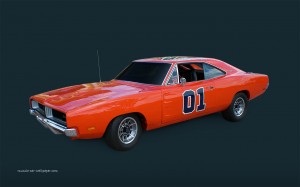

When I was growing up, I loved to watch Starsky and Hutch in their red-and-white Ford Gran Torino catching bad guys using the signature hood slide. Then there were those darn Duke boys and the General Lee, a custom-painted Dodge Charger that performed impossible stunts every Friday night. Oh, and we had the technology too. The Terminator, the Matrix and the Transformers had nothing on KITT, the super-cool high-tech Pontiac Trans Am from Knight Industries. What about Mad Max’s wicked-cool Down Under spec Ford Falcon as the last of the V8 Interceptors? I would give my eye teeth for its nitrous supercharger now and again.
The stars of these shows were as much the vehicles they drove as the actors themselves. What happened? With the exception of Vin Diesel’s Fast and Furious series and some nicely-appointed Land Rovers and Cadillacs on reality television shows, you just don’t see cars that much anymore.
Have young people fallen out of love with car culture? Looking at data pulled from NVCS, a study of new car and truck owners we have been conducting for more than 40 years, the conclusion seems to be that perhaps they take a more utilitarian attitude toward their rides.
We have asked new car buyers how much they agreed with the statement “To me, cars are simply a form of transportation” for the last 16 years. About 27 percent of those under 25 said they regard their new vehicle as “simply transportation” in 1998 (the first year we asked the question). Fast-forward to 2013 and that number increased to 36 percent for that same group. The same pattern can be found for those in the 25-30 group but then it tends to flatten a bit as we move into those 36 and beyond. This indicates that “falling in love with their cars” is on the decline among these younger age groups. Moreover, the flattening pattern in later age groups (36+) would suggest a cohort effect, meaning that as the current late-Gen Xers and Millennials get older they may bring that pragmatic attitude with them. How dull.
What happened? Did we lose young people in the 1990s by making practical but boring cars? Did we fail to inspire? That may be the case, as hybrid vehicles hardly make the heart throb.
But I think it is something much societally bigger: This age group just doesn’t care about cars.
We live in age where younger folks are living longer with their parents, putting off getting a driver’s license, putting off (or never) getting married, putting off having kids, putting off getting an education and putting off getting a career. As an early Gen Xer myself, I can say my late Gen Xer and Millennial brethren are not all a bunch of entitlement-obsessed slackers who want something for nothing. This generation has seen some pretty unsettling economic cratering of their once-prosperous Boomer parents recently. Perhaps it’s made them a bit nervous, conservative and, well, pragmatic.
Moreover, amazing technology surrounds them, and many of the products have lifecycles of just a few months, not the three-to-eight years of the automotive industry. It’s always new and always exciting. And guess what? A lot of the stuff they use is free or practically free. Free music, free movies, free games and other cheap entertainment abounds.
Are we even in the car business anymore? Should we be thinking that way? Zipcar and other car-sharing schemes seem to be growing in interest and utilization. Do you really need that giant SUV with 4×4 all the time or do you need it just to go snowboarding?
Can we make kids fall in love with cars again? I’m not sure. A philosopher once said you can never step into the same stream twice. Perhaps the automotive industry needs to find new streams to step into. What do you think?