
Charting the shift from volume to value
Editor's note: Emily Gallo is vice president, marketing, enterprise corporate accounts at Cardinal Health, a Dublin, Ohio-based health care services company.
Today, you can’t go anywhere in the health care marketplace without hearing about the shift to value-based care. The insinuation always seems to be that this shift is just around the corner. But in many ways, it is already here. The voluntary nature of participation in value-based reimbursement models is becoming a thing of the past. In April 2016, Centers for Medicare and Medicaid Services (CMS) launched its first of what is expected to be many mandatory bundled payment programs – Comprehensive Care for Joint Replacement (CJR) – and even more recently, announced new mandatory cardio-focused bundled programs slated to launch in July 2017. In the spirit of improving patient outcomes while avoiding unnecessary costs, bundled payment programs like these provide one payment to the hospital to cover the cost of patient care during the acute stay and 90 days after the patient leaves the hospital. Bottom line? Hospitals are now financially on the hook for a successful episode of care and their reimbursement directly ties to how well they satisfy patients.
What does this mean for marketing researchers who are targeting the health care market? The short answer is: a lot. This shift from volume to value is a monumental one, fundamentally changing the way decisions are made and the motivations of the decision makers. Without a firm understanding of this shift, chances are that marketing researchers will have trouble targeting the right audiences with the right customer-centric approaches.
With that in mind, here are three marketing research pitfalls to avoid in the value-based world of today:
Pitfall #1: Not accounting for the fact that decisions are made by cross-functional teams within hospitals
Say goodbye to the days of focusing on just one stakeholder for a product or service. Take the example of launching a new medical device in the field of advanced wound management.
Traditionally, marketing researchers could focus their attention on the key decision maker – the single person or team responsible for making the purchase decision. Previously, for advanced wound management products, you would seek to understand the primary decision maker: the physician who determines wound treatment for patients. You may have also focused on wound, ostomy and continence (WOC) nurses as influencers and more direct users of the product.
But in a value-based care environment, we’re seeing a blurring of the lines between clinical, administrative and other roles. For instance, a chief medical officer may focus as much of her time on mapping out economically-sustainable care strategies and driving behavior change in her clinical staff as she does staying abreast of the latest developments in medicine. Given the pressure to identify cost savings while not compromising patient care, administrators are playing a much larger role in purchasing decisions, often informed by broader value analysis committees comprised of cross-functional decision makers and influencers. No longer will the preferences of a few physicians rule the hospital’s purchasing behavior.
Marketing research implications: Today’s marketing researchers must actively seek insights from a broad array of stakeholders who impact purchasing decisions.
In this example of an advanced wound management medical device, it is now crucial to include physicians, WOC nurses, administrators and patients/caregivers, especially if the product will be used in the acute setting and at home. For products and services that impact work flow, IT stakeholders are crucial to include in your market evaluation and customer research.
Pitfall #2: Failing to uncover the changing definitions of value for each key stakeholder
To understand this pitfall, let’s consider the top and evolving priorities of hospital CEOs. Financial challenges remained the No. 1 priority in a 2015 survey of hospital CEOs, conducted by the American College of Healthcare Executives.1 Compared to prior years, the 2015 survey indicated a rise in importance of patient quality and safety (#2), personnel shortages (#4) and patient satisfaction (#5). Failing to acknowledge these changing priorities can lead to two key marketing research mistakes: developing value propositions that address only one of these priorities and approaching all health care providers with the same general message, regardless of their role.
Marketing research implications: Thoroughly investigate the context in which each stakeholder operates and how their definition of value has evolved. Make sure your messaging addresses multiple priorities and that it naturally fits in with the customer’s broader strategies for tackling these challenges.
Let’s continue with the example of launching a medical device in the field of advanced wound management:
Physicians primarily hold patient safety and outcomes (quality) in highest regard, yet are increasingly taking into account cost and patient satisfaction. It’s important to understand their priorities as they relate to your solution. This will also help determine to what degree you should accent the cost savings that can be achieved by switching to your device compared to the incumbent device, while delivering the same high-quality care.
Nurses (in this case WOC nurses) give all they have and more to provide the best patient care possible. Especially in this value-based environment, they are increasingly short-staffed and are constantly being asked to do more with less. Probe extensively to understand their evolving pain points and how your product can address them. In this example, you may uncover that there are additional factors that impact a WOC nurse’s decision beyond just clinical efficacy of the product. Perhaps they also look for a product that can be used at home – and a product whose intuitive usability will satisfy patients and allow for care continuity. Patient satisfaction then becomes a secondary message and competitive differentiator for that audience.
Administrators have the complex task of ensuring high-quality care while finding substantial ways to take cost out of the system. Now more than ever, they recognize the need for close collaboration with clinicians and are hungry for less-expensive products that can provide their clinicians with the tools they need to be successful. Be sure to understand their strategies for changing physician behavior. For example, who needs to be involved and what business case content is necessary to drive it through a value analysis committee? In this instance, you may find that administrators believe physicians are drawn to economic savings when put in terms of freeing up resources to fund additional staff or beds vs. the standard “save X percent” message.
Patients/caregivers have growing influence on a hospital’s ability to succeed in value-based care. Not only are hospitals’ reimbursements increasingly influenced by patient satisfaction scores but the market share (patient draw) of the hospital is influenced by social media and other channels through which patients post their level of satisfaction. Patients have a complex health journey to navigate (see Pitfall #3) and the more you understand what hurdles get in their way for achieving positive outcomes, the more you can help your company address those hurdles. In this example, you may uncover that the patient’s ability to successfully continue their wound-management therapy at home depends on the ability of the patient and caregiver to properly operate the medical device in the home. This may prompt you to help your company bring to market a smaller, lightweight and easy-to-use version of your hospital medical device that can help support adoption.
Pitfall #3: Failing to see outside the four walls of the hospital
In the past, there have been few financial incentives for hospitals to coordinate care across post-acute care (PAC) settings. Yet, post-acute settings are a key component of a successful episode of care – which creates both challenges and opportunities for hospitals and marketing researchers alike. To understand the significance of this issue, let’s take a look at some statistics.
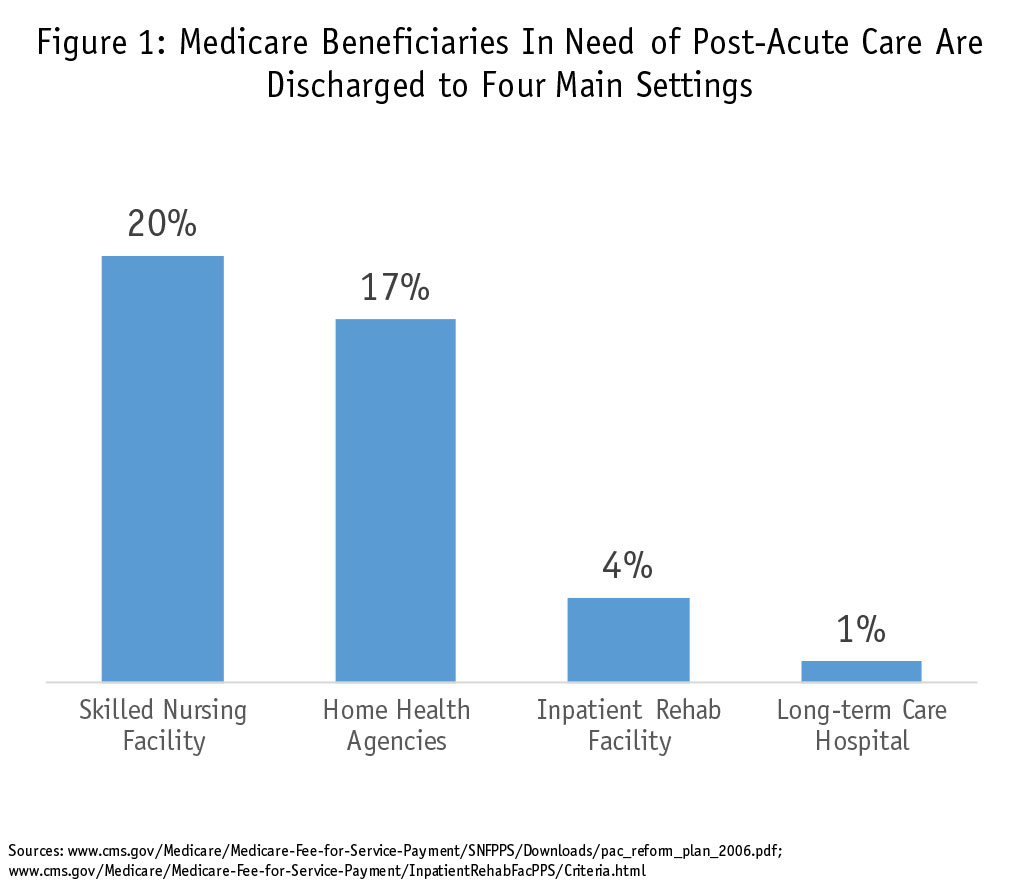
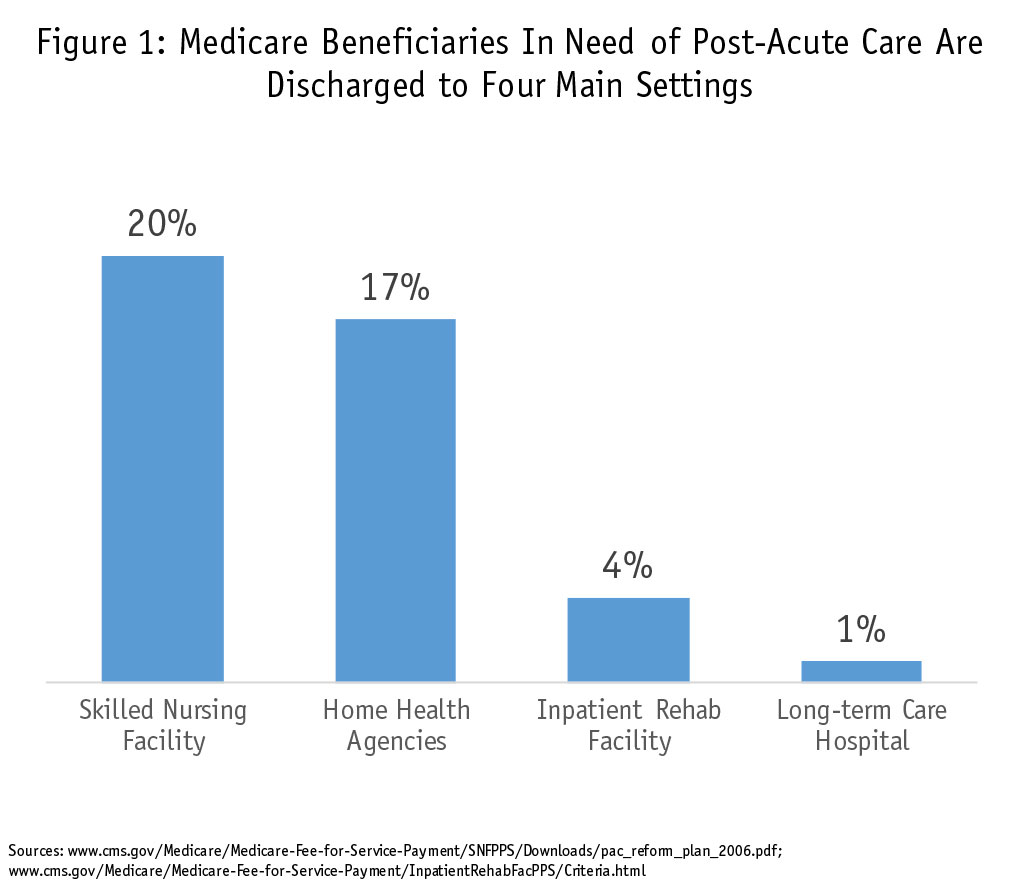
First, the use and impact of PAC utilization is quite sizeable. According to the 2016 Deloitte Health Policy Brief “Medicare Changes in Post-Acute Care Payment,” in 2013, nearly half of all Medicare beneficiaries were discharged to a post-acute facility. Those discharged to post-acute facilities went to four main post-acute settings, as pictured in the chart in Figure 1.2
That same year, the Institute of Medicine’s Committee on Geographic Variation analyzed Medicare post-acute care spending in 2007 through 2009 by PAC sites including skilled nursing facilities (SNFs), home health agencies, hospices, long-term acute care hospitals and in-patient rehab facilities (IRFs). The goal was to determine the extent to which variation in post-acute care spending contributes to variation in total, all-cause Medicare spending. The result? Forty percent of all variation in Medicare spending is explained by variation in the utilization of post-acute care services.3 To illustrate this point, for the average stroke patient, Medicare may spend $13,344 on home health care services, $33,266 in a SNF or $40,881 in an IRF.1
In short, bundled payments and other value-based payment models are accelerating hospitals’ need for greater visibility and control over post-acute care.
Marketing research implications: If your product impacts a patient beyond an acute setting, you must gain intimate understanding of the competitive advantages or disadvantages of that impact. If your product does not impact patients in post-acute setting, you may seek to determine if there are next-generation products that can. It will be these types of solutions that edge out the competition moving forward, particularly when they can demonstrate an evidence-based approach to informing or improving the patient’s post-acute care path.
Sticking with the example of the advanced wound-management device, it would be critical to understand the utilization of your product outside of the hospital. Is your product so complex that skilled nurses or clinicians are necessary to operate it – requiring a SNF stay for that reason alone? Or is your product designed to support effective use directly by the patient in the home? Historically, a product message focusing on optimizing the post-acute care journey may have fallen to the bottom on the priority list. These days, that competitive differentiator may just be the ticket to gain traction in an established market.
How the relationships are evolving
In today’s value-based care world, it’s important to use market research techniques that allow you to truly understand not only the evolving priorities of each stakeholder in this quickly changing health care environment but also how the relationships among stakeholders are evolving both within and outside of the hospital. This will help you identify the right key targets and approach them with relevant competitive differentiators based on their priorities.
REFERENCES
1 American College of Healthcare Executives 2015survey of top issues facing hospitals. www.ache.org/pubs/research/ceoissues.cfm
2 “Medicare Changes in Post-Acute Care Payment.”Deloitte Center for Health Solutions and Deloitte Center for RegulatoryStrategies, 2016.
3 Institute of Medicine (2013) Interim Report of the Committee onGeographic Variation in Health Care Spending and Promotion of High-Value HealthCare: Preliminary Committee Observations. Retrieved June 3, 2013.