

••• health care research
Seniors want to be social

Researchers at Case Western Reserve University looked at responses from about 388,000 patients aged 65 and older nationally at walk-in ambulatory care clinics with the aim of improving patient care and health outcomes by better understanding their preferences and goals.
The clinics want to align a care plan to what matters most to the patient, says Nicholas Schiltz, an assistant professor at Case Western Reserve’s Frances Payne Bolton School of Nursing who co-led the research. So, if priorities are independence or being engaged in activities, they may tailor the medications to reduce the risk of falls or they may prescribe mobility aids.
Independence (17%) and family togetherness (10.5%) were the other most-cited things that mattered most to the seniors.
The study, “Patient-centered priorities for older adults in ambulatory care,” published by JAMA Network Open, used electronic health records from a national network of walk-in ambulatory care clinics – about 900 clinics in 35 states.
••• urban planning research
If you build it, they will play
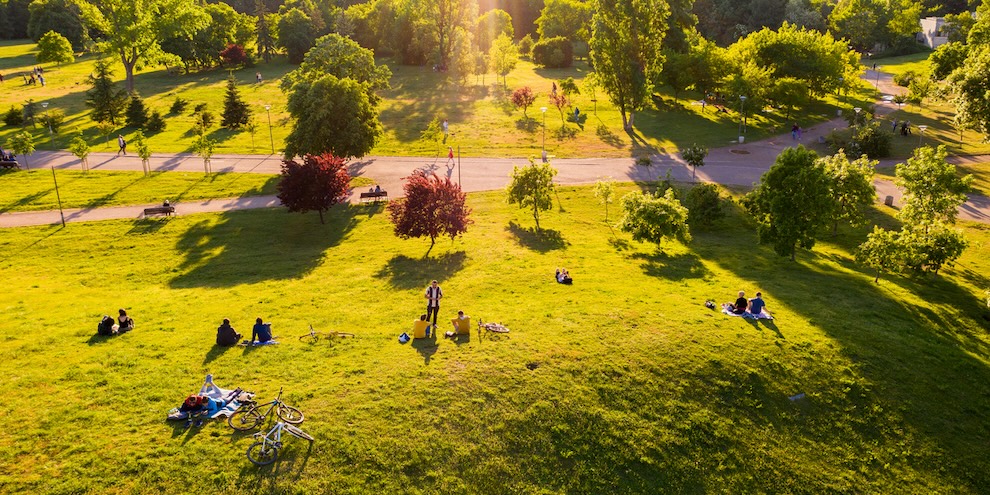
The amount a town or city invests in sports-related infrastructure may impact how active the people who live there are, according to new University of Georgia research. Well-designed, aesthetically pleasing urban environments, the study found, affect how likely residents will be to engage in sports.
Researchers from the UGA Mary Frances Early College of Education said this could signal ways communities can make direct improvements on how healthy its citizens are.
For the study, “Staying active in cities: Dimensions of urban built environment and mass sport participation,” the researchers surveyed hundreds of urban planners and public health experts, as well as citizens in areas where recent urban sports investments were made. They found that cities with formal, informal or adapted urban sports spaces caused people who lived in them to be more likely to participate in sports.
Those spaces could look like sports complexes with basketball, tennis or swimming pools; stadiums for team play; or even marked trails and waterways for walking or kayaking. No matter their form, there are certain characteristics that lead to healthy outcomes. Among all age groups, 18 to 55, 80% of respondents agreed on the following as necessary for spaces to have: availability, accessibility, design, safety and affordability.