
By Jane Frost CBE, Chief Executive >> MRS (Market Research Society)
You don’t need me to tell you that we live in uncertain times. These days, economic and political flux is the unavoidable context for all our conversations – from international relations right down to summer holidays and olive oil – and we should acknowledge that businesses are facing some of the greatest obstacles to progress of recent times.
But even before June 2016, growth was becoming increasingly hard to achieve in the global marketplace. Far from the rates of growth experienced in the 1950s and 1960s, in the five years to 2017 the top 700 global businesses saw profits contract by 25%. And, with data showing the returns on incremental innovation are slowing, companies can no longer rely on small variations to products or services to deliver profit increases.
It can be no coincidence that this flattening of economic growth runs parallel to a fundamental shift in the value of businesses. In 2019, most of a corporation’s financial value lies in its corporate, customer and brand equity – a far less tangible asset than factories and equipment. Businesses are less reliant on physical capital but these intangible assets are more vulnerable to external changes in conditions and their value can shrink surprisingly quickly – just ask Kraft Heinz.
There are exceptions, of course, and there will always be pockets of growth in even the toughest environments. The companies that identify them under these conditions tend to be better attuned to evolving social patterns, to how markets are responding and being reshaped.
Businesses can now lease assets rather than owning them. Digital platforms and networks have replaced infrastructure, while making it easier to find and acquire customers. The growth of the service economy and the experience economy has put customer interaction at the heart of any offer; it is no longer about the what but the how – and sometimes it is only about the how.
Some businesses have already responded to this radical restructuring of markets and we’ve seen chief customer officer roles created at businesses like Virgin Atlantic while growth officers have replaced sales and marketing positions at others. All businesses are trying, in these times of tough competition and narrowing margins, to find any competitive advantage.
I do not mean to come across as pessimistic – far from it, in fact. As with all change, challenges bring opportunities, and I believe this evolving landscape presents a real chance for insight teams to position themselves at the heart of their organizations and establish their work as business-critical.
Businesses are acquiring data at a rapid rate (more data than they know what to do with) from a broader and more varied range of sources – but data alone is not enough. Intelligence is the greatest tool available for harnessing these untapped assets, if we can effectively demonstrate the role of insight in driving financial performance. To do this, insight team leaders must be able to speak to their CFOs in language they will relate to and understand.
Many CEOs are trumpeting commitments to “customer centricity” – but few can define it. Here is another opportunity for our sector – but only if we can create the intellectual framework to build a sustained value proposition for ourselves.
Throughout my career as a marketing and strategy director at large private and public sector organizations I was continually met by the same questions: How do we demonstrate the value of marketing to senior decision makers? When budgets are being negotiated and resources allocated, how do we make the business case for our department?
These conversations are, of course, much harder to have the further you sit from your CFO and finance department. Research from earlier this year showed that insight and finance teams are not well aligned:
- Only 24% reported they have a close working relationship with their finance colleagues.
- Only 19% felt colleagues view the money the insight team spends as an investment, not a cost.
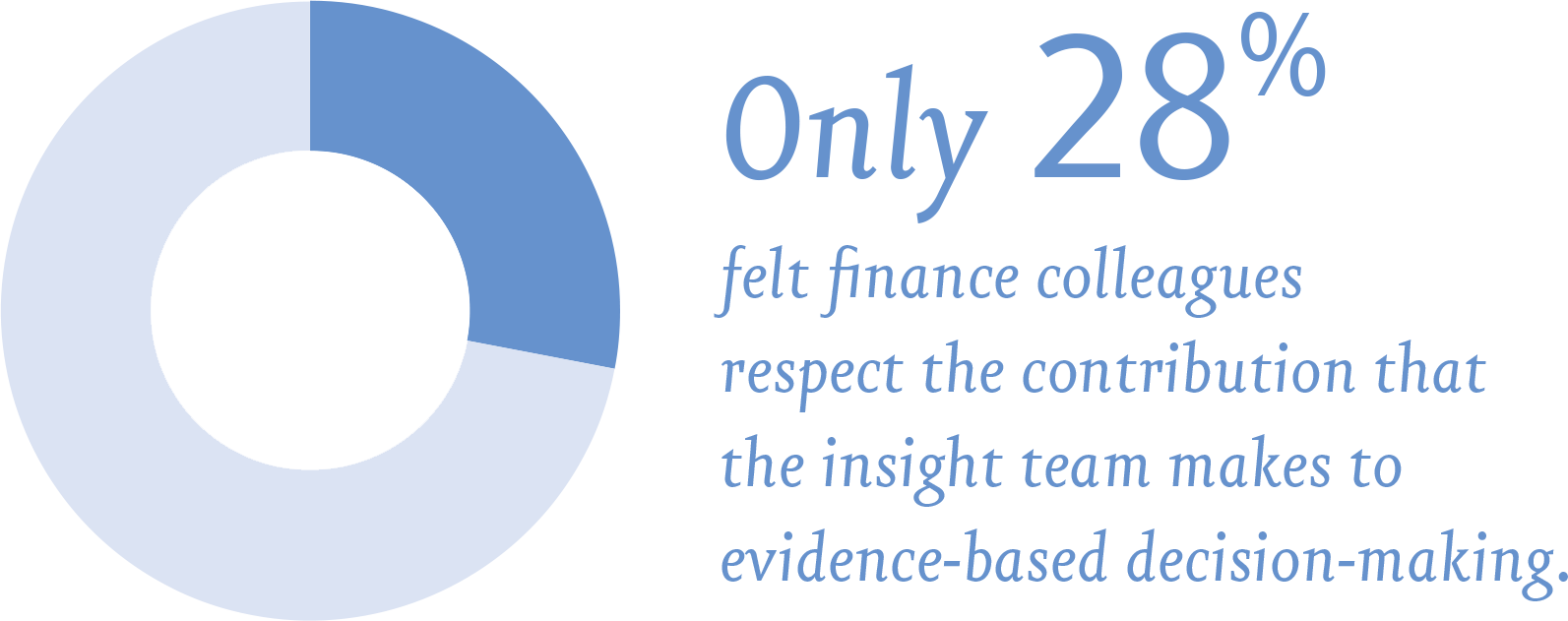
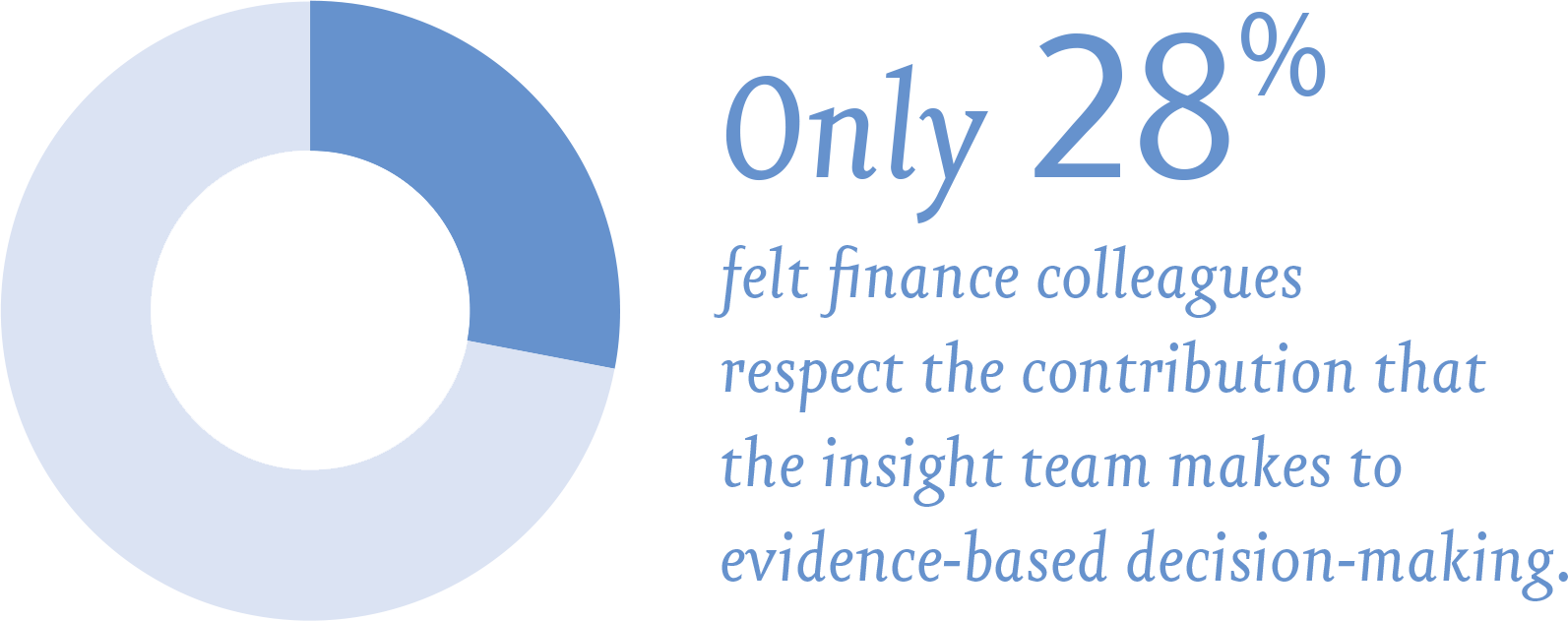
- And perhaps most worryingly, only 28% felt finance colleagues respect the contribution that the insight team makes to evidence-based decision-making.
This is where Intelligence CapitalTM comes in. MRS worked with agency and client-side organizations to plug this gap and provide companies with a framework that puts research, insight and data analytics center stage in business strategy and reframes how we seek investment in the function.
Intelligence CapitalTM is made up of three elements: structural intelligence, activation intelligence and human intelligence. Structural intelligence represents the sum of what the business knows about its markets, its performance, its customers and the wider business context. Activation intelligence includes market initiatives and experiments designed to capture innovation and growth opportunities. Human intelligence connects these together by identifying new insights and applying them to markets.
In our technology-led world, people retain a vital role in delivering business success, and human intelligence is critical to bringing all other elements together. Machines cannot articulate the business question or develop hypotheses about where to look for opportunity. While machines can run analytics to uncover insight, they cannot apply the insight to the business question or act on it. And data in and of itself is not forward-looking; it is only the interpretation and application of that insight that turns it into foresight.
In this context, the quality of a company’s human intelligence will impact its trajectory as much as (if not more than) the volume and quality of data it holds.
We must be clear: Human intelligence cannot – and should not – be measured by grades and degrees alone. As the sector that provides insight and evidence, we have long worked to be representative of the changing world around us and understand the importance of reflecting the society we interrogate. Varied backgrounds, lifestyles and experiences broaden the knowledge base and expertise of an organization, and several cross-industry studies have shown that diverse workspaces deliver on the bottom line – further incentive to invest in people.
Developing an Intelligence CapitalTM asset and having a C-suite conversation needs talent. We’re giving companies the tools to develop this. MRS has implemented the most comprehensive set of inclusion and diversity policies of any market research sector in the world. Our Manifesto for Opportunity requires CEOs to commit to creating safer and more representative workplaces – by publishing their pay statistics annually, working towards government targets for women and people from ethnic minorities at board level and improving recruitment practices.
Attracting the best talent from all walks of life is the basis of our reputation as an industry and its perception as an aspirational career choice. It is another product of our unsettled times that our sector has been back on the front page recently through the auspices of political polling – frustrating when it accounts for only 3% of our industry’s work. As a result, we’ve found ourselves in conversations with the House of Lords Select Committee about opinion polls and the Financial Conduct Authority regarding the use of private polling by hedge funds. Maintaining standards and best practices is imperative for attracting the best people from around the world.
The key is for all three elements of Intelligence CapitalTM – structural, activation and human – to work together. The successful application of Intelligence CapitalTM creates new value in four ways: unlocking revenue streams, strengthening brand value, increasing speed to market and generating efficiencies. Crucially, it will help companies find that elusive growth.
And how to make it sustainable? Not every employee or team can be proficient in translating data directly into profit – and we shouldn’t expect that to ever be the case. But all of us have the ability to ask questions, to interrogate outcomes and imbed intelligence into our processes and ways of working.
An intelligent culture is one that keeps asking “why” and expects data and insight to integrate and underpin decision-making. It requires us to create learning organizations and demands the development of empathy as well as the empowerment of people within businesses. Frightening? Possibly. A challenge? Certainly. But one we must collectively rise to. Working together, we can change the nature of our business conversations.