
Penn State launches an online presence
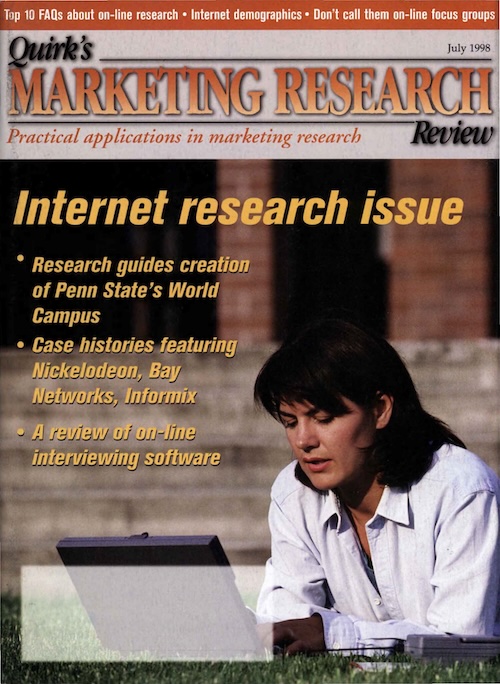
We’re familiar with virtual education courses, but in 1998, Penn State’s World Campus launch required research to ensure it would be successful. With non-traditional students – classified as those over 25 who did not live on a college campus – being a click away from online college courses, Penn State began to develop a strategy to compete for them.
The article “Turning to a virtual campus for a real education,” explained that before launching an online program, organizers had to determine customer demand, faculty readiness, the technical readiness of the audience, program pricing, program reputation and more. Its goal was to develop three programs for January 1998 and at least three programs for fall 1998.
Throughout its six-phase research strategy, Penn State conducted electronic and telephone surveys and in-depth personal interviews and found that that 82% of independent learners were seeking convenience of study, 53% were seeking a Penn State education, 85% has access to technology and 43% received some form of reimbursement from their employers.
Penn State used a wide range of research processes to polish its World Campus offerings. It established that marketing research would help expand its programs and degrees in the future and anticipated the internet to drastically change the online education space.
These burning internet questions remain hot today
The article “The top 10 FAQs about online research,” answered pressing questions regarding conducting marketing research via the internet. Questions included: How do you recruit people for these surveys? How can you make sure that the person you invite is the one taking the interview? What kinds of security issues do you have to worry about when conducting online interviews?
Many are still with us, all these years later, though with their own modern twists. (No one had to deal with bot farms and AI back then!)
The answers, while obviously of their time, offered readers helpful insights and reassured them that online research was ultimately a good thing. Author Bill MacElroy explained how to navigate recruitment using databases or by telephone for more sensitive research studies. MacElroy also explained what cookies were and how they’re used in and outside of the research industry.
PC usage, ownership in 1998
Forrester Research’s 1998 study predicted that the number of households that shop and invest online would double from 5% to 10% by the end of the year. It also predicted that internet and PC access would broaden to include low-income households instead of only the “high-income, technology-optimistic elite.” According to the Survey Monitor entry titled “Study predicts e-commerce to double by end of 1998,” 43% of households owned at least one PC and 25% of North Americans were online in 1998.