
Editor’s note: Tim Veitengruber is a director in the energy division of research firm Market Strategies International, Detroit, Mich. This is an edited version of a post that originally appeared here under the title, “Utilities must evolve for next gen energy users.”
It’s going to be hard to wow next-gen energy users. They are more socially conscious and not nearly as loyal or trusting as their parents and grandparents when it comes to products, services and brands. And more than ever before, the technology people use and the content they engage with really defines them as individuals and members of a larger social community. The platform for the future of the electricity industry is taking shape now, and it’s squarely focused on how utilities adapt, evolve and transform to meet the expectations placed on their doorstep by Millennials and even Generation Z. Is your brand ready?
As a colleague in our Telecommunications division wrote just a few years ago, Millennials are the first generation to have grown up entirely with the Internet at their fingertips. They are smartphone aficionados, meaning that if there isn’t an app for them to get what they want in an instant, then they may not even pay attention. They are also content junkies, expecting brands to present them with lightning fast, relevant, valuable and reliable information in a visually appealing and easy-to-digest format.
Cool, convenient, cheap and …When it comes to gearing products and services to consumers these days, I have read that it comes down to three key things: cool, convenient and cheap. I propose adding another criterion – cooperative. For example, companies need to personalize content and information and make it shareable with others for it to have the desired effect for all those involved – the desired effect being that a company will become a trusted source of information by making it easier for customers to understand how their actions and activities impact their bottom line. Only then may customers be motivated enough to share their learnings and experiences with their own social networks.
The need to understand what drives younger consumers has led to increasingly cool and valuable tools that improve our lives, entertain us and help us communicate more effectively. I’m not a Millennial (I have two children who are in Generation Z), but I would be lost without my apps. I very rarely interact with any of my service providers’ employees and almost exclusively rely on their apps and Web sites to pay my bills and address questions or problems. When it comes to my energy utility specifically, I probably spend about one minute each month managing my bill via its app, so over a year’s time (barring any service interruptions), I’m spending no more than 15 minutes interacting with them. That doesn’t give my utility much opportunity to tell me about products and services that could improve my life, help me save money or become more energy efficient. In fact, based on the findings of our Residential Utility Trusted Brand & Customer Engagement study, about 60 percent of customers nationally are interested in online tools to help you proactively manage energy usage, but only 25 percent of customers are aware of their utility offering this type of option.
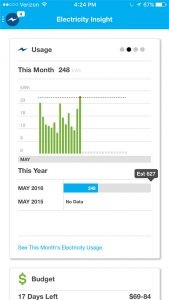
Apps, apps and more appsI recently noticed a pop-up on my Pandora music player for a new app from my local energy provider. I was curious, so I loaded it on my phone. The primary selling point is that it goes beyond billing payment and outage reporting to provide me with insights about my family’s energy usage, including the ability to compare current and past usage, set high usage alerts and budgets, complete energy saving challenges and access other useful information on how to save energy. After playing around with it for a bit and introducing it to my family (not surprisingly, my kids thought it was pretty interesting), I can envision a time when we regularly spend time looking at trend graphics of our household’s daily, weekly and monthly usage of energy.

Following the blueprint for marketing to Millennials, the information seems cool and convenient, and it is cheap since the app is free, but does it meet the cooperative criterion? Let’s see. It offers personalized energy usage and push text notifications (that can be shared with others) to help customers manage against their targets. The app, which has been downloaded by more than 50,000 customers, is helping people actively save on their energy usage based on online feedback, social media posts and sharing. Given those points, the app certainly qualifies as cooperative. These kinds of apps, along with the proliferation of advanced digital meters, may someday allow utilities and customers to accomplish far more working together than they have been able to previously, particularly when it comes to the personalization and sharing of useful and valuable information.
To be truly cooperative, energy utilities will need to fully leverage multi-channel communications to identify and proactively inform consumers of what they can expect from these advancements – including the short- and long-term benefits that will improve the overall customer experience and make our lives better. So, there is a lot of work to do in meeting consumer demand. As someone who has personally checked off a couple of boxes in the engagement process already, energy utilities need to provide the necessary platform to answer, “Now what?”