
Q&A with Gary Rudman
Editor’s note: Nancy Cox is the founder of Research Story Consulting and former CPG corporate researcher. Her work and play include words, sketchpads, cooking (not baking) and the occasional sock puppet.
Passions, hobbies, healthy distractions and even guilty pleasures – discover how the research community plays and how that plays out in their work life. In the Venn diagram of work and play, what happens when they overlap? Research colleagues share their work and play stories in this interview series by Nancy Cox.
Hello Gary Rudman, President, GTR Consulting
What’s the play in your life?
I recently had a conversation with a very busy, hardworking acquaintance about what we did when we’re not working. He sighed then said his friends have convinced him to play golf a few times. When he asked me what I did, I blanched a bit as my list is quite long – a daily workout, improv comedy, the same weekly poker group for 20 years and then there’s “The FLY.”
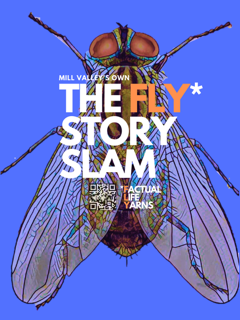
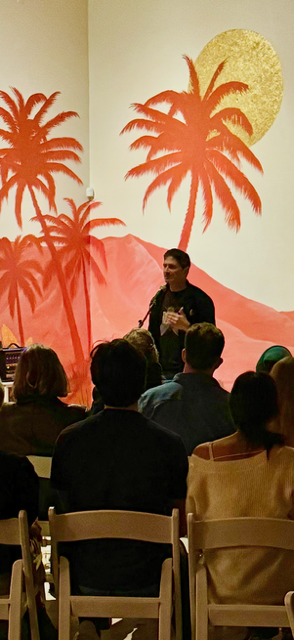
I’m the host/organizer; I promote the events, vet and prepare the storytellers plus I tell a story every time. I come up with each month’s theme. The themes are important as they provide a through line for each event. Themes have included: Miracles, Nick of Time, Out of Bounds, Disguised, Lost, Busted, Leap of Faith, Unexpected, Choices, Bending the Rules, Family Matters, Shared Experiences, Not Quite, Yikes! We sold out our 2025 Valentine’s Day with the theme, Almost.
Miracles was our first theme, a great theme as we heard some really out-there stories. My Miracle story was how I delivered my youngest daughter on the floor in our house – the midwife didn’t make it in time. We heard a story from someone who survived a plane crash. Someone who fell off a boat in the middle of nowhere and to survive had to stop the unmanned circling boat. Someone else had run away from home then lived in a cabinet in a department store for week with no one discovering them. Our audience also participates with the theme – at the beginning of the show everyone writes down a couple of sentences related to the theme. Later in the show, I read some of those.
“The FLY” has reinforced the importance of story basics: the storyteller needs a very clear beginning, middle and end to tell a compelling story. One way we help achieve these story basics, is by projecting five key words on the wall during their story. These five words are anchor points in their story. The projected words help the audience know where they are in the story, keep the storyteller on track and alert me, the host, to storyteller drift. Six minutes in, only on word number two – I’m thinking oh no! and giving the storyteller some cues to begin to wrap up.
The end is critical. The audience needs that cue to know the story’s over. The end needs to tie up everything with a bow, although there are different ways to end strongly. Strong endings include a little joke that hits the key notes, calling back on something said before, how the experience changed them or what they learned. When I work with storytellers, I tell them that if they are going to share a moral, focus on how the experience changed them or what they learned. Rather than tell the audience how they can change or learn from it. That emphasis keeps it a story vs. a Toastmasters presentation or TED talk.
How has your play influenced your research work?
“The FLY” brings in some of my work skills and it’s also helped my work skills. For example, it’s important for me to set the storytellers up for success just as I set up my research respondents and clients for success. I used to put storytellers on the program just because they wanted to tell a story. Now, I vet all the storytellers. They tell me their story first, I share some notes and depending on how polished they are, we may talk again. I’ve learned how to say “no, your story’s not ready yet.” Said respectfully, because these are personal stories and people are already being brave to do this.
One way that I coach the storytellers for success is after our initial call/feedback they need to write down or type up their story then put it away. Next, for a week, they need to tell the story aloud without looking at the document. I do this myself, telling my story aloud repeatedly to my dog during our 25-minute walk. I realize which point would be better where, or this part of the story makes sense with another part. What I should say last. Working the story out but not memorizing or it comes off as too rehearsed. The test of a compelling story? It feels like telling a story at a party where everyone leans in and listens. This is also the feeling of a solid research debrief, and a great report is one that tells a compelling story!
A good story also has one through line that runs through the story vs. including every possible tangent. For the theme Shared Experiences, I initially thought my story was how my dad and I bonded by watching war movies together including a war in space – Star Wars. As I practiced, I realized the point of the story was how cool my strait-laced dad was. I started the story telling about how amazing but uncool my dad was. I still talked about watching war movies together, but I focused on “The Great Escape” starring Steve McQueen, who was cool. My story continued with the day my dad came to me and just said, “Obi Wan Kenobi.” He wouldn’t tell me what it meant but he knew because he had seen Star Wars pre-release. Then he took me to see the movie, where, in amazement, I learned who Obi Wan was while sharing a special and memorable moment with my father. The story progression focused on coolness – I thought my dad was amazing but uncool, Steve McQueen was cool, this Star Wars experience emphasized how cool my dad actually was. I ended with “on that day, my dad was the coolest guy in the galaxy.”
What would you tell readers who want to know more about your area of play?
The most important thing of any activity is that it’s scheduled. Otherwise, you talk about doing it when you can, months go by, and nothing happens. My 20-year poker group that I started? It’s every Wednesday, every week. When we first started, our wives might say “where are you going?” Then, “you’re doing that again?” Now, it’s “you have Wednesday poker, so we need to schedule around that.” It’s a commitment. I have flown in from London and gone directly to poker.
Realize you can also change the rules. Unlike “The Moth,” “The FLY” doesn’t have strict time limits. “The FLY” is not a competition unlike some storytelling events. Instead, I do a drawing for a t-shirt every time. A little thing like that can make a big impact – one of our regulars was very excited to win!
For any group activities, it’s about wanting that community or group experience enough to be the initiator and continue as the organizer. You’ve got to make it happen because often without you, it just won’t.