Editor’s note: Nancy Cox is the founder of Research Story Consulting and former CPG corporate researcher. Her work and play include words, sketchpads, cooking (not baking) and the occasional sock puppet.
Passions, hobbies, healthy distractions and even guilty pleasures – discover how the research community plays and how that plays out in their work life. In the Venn diagram of work and play, what happens when they overlap? Research colleagues share their work and play stories in this interview series by Nancy Cox.
Hello to Cynthia Tello, Founder, Smarketing Consulting and Research
What is the “play” in your life?
I love traveling. I’ve always had this interest in the world. As a young child, I collected coins and stamps from other places. People lived different lives than mine and I wanted to learn about that! When I was (a) little older, I had the opportunity to travel as part of the Mexican national synchronized swimming team. Our competitions took us everywhere – to Japan, to Australia, places that were not as easy to travel to as they are now. Beyond visiting other countries, we interacted with teams from many countries. I observed very apparent differences – the way they trained, their personalities. I remember the Japanese supporting their team by very quietly clapping as they were self-conscious about not disturbing other people while we, as Mexicans, were very loud in expressing our support.
In my early twenties, I traveled to Egypt, Israel and Jordan by myself – which was quite unusual back then. I visited one city first with a member of the Jewish community then the next day with a member of the Arab community. They both gave me different perspectives of the city and its challenges. It was the same place, but it was like looking at two different cities because I was looking at it through their eyes. Both of which were different than my perspective.
My goal when I travel is to immerse myself in the culture as much as possible. While I do start with a general itinerary, being naturally curious, a researcher and, especially, a moderator, I find it easy to talk to strangers. People will tell and show you things that aren’t in books or on the internet. Opportunities to immerse myself just happen.
In 2024, I went to India with girlfriends. We traveled with an agency; however, we had a local guide which still allowed me to see things through her eyes. Yes, we visited well-known places, but we also had immersive experiences. For example, we celebrated Diwali at a local individual’s home with their family. We celebrated this important festival in a very traditional way. Completely different than if we had celebrated Diwali at a hotel or resort. We also had a cooking class with a local lady at her home.
I love India. I love the diversity of different religions and ethnicities. Like all countries, India has its challenges but the fact that such a highly populated and highly diverse country can live in peace is an inspiring example.
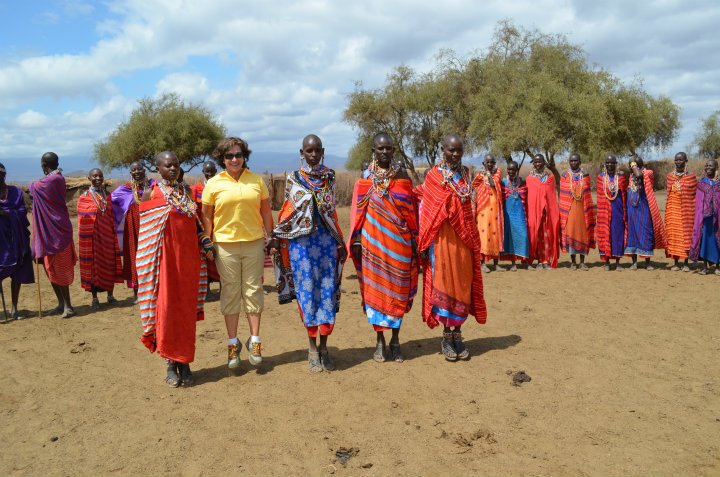
Africa also made an impression on me. When I went in 2010 cellphones were not our way of life. I went to Masai Mara and felt that I had traveled to a place when things were the same as 2,000 years ago. I was in the middle of nowhere familiar. It was a unique feeling that I have not found anywhere else. A communion with nature and life without technology.
Technology has helped and changed travel. Yes, technology has made travel easier and more convenient. But I miss that time when you got off the plane and your life was completely different. Nothing to do with the life you had when boarding the plane. Now some of this magic is gone; you get off the plane, you turn on your phone and you’re plugged right back into your everyday life.
Globalization and technology also mean that differences are not so evident, as say 25 years ago. But the differences are still there. You can find the local flavor even at the Starbucks. I do think the big brand companies that do well, they find the little nuggets. How can they topicalize their brand for the locals? So that the local population feels seen. Not just another market to sell more coffee to.
How has your play influenced your research work?
Travel is a reminder to go into research with a completely open mind. Endless curiosity. Endless questions. To know what’s in their minds. How they make sense of things. Why they do the things they do. Why they are the way they are. The same value of being seen and heard that is critical to research. Especially when you do research with a minority population, a lot of your participants feel they are invisible even in the places that they live in. That their contributions to the society are not seen and thus not valued.
As researcher, you always have to emphasize that their opinions are valuable. That you are there to learn from them. They can feel free to share because it’s a safe environment the researcher has created for them. As researchers, we offer the possibility to feel heard. To listen to their truths. To recognize who they are, the way they have to navigate the world and what they are contributing to society. Everyone should walk out of a focus group or an interview with the sense, “Someone listened to me. I am important. What I have to say is valuable.”
Also, consider what you already know about the culture. On one hand, knowing that culture, such as the Hispanic culture, allows you to see things that are not obvious to other people. You look at things that are often overlooked. You understand things differently because you already have context.
On the other hand, when you don’t know anything about the culture, practice having the curiosity of a traveler. People are people. Some values might look different in different parts of the world but with an open mind, you’ll see how the values are universal. I think love is universal. I think the desire for justice and equality is universal. The desire to be seen for what you contribute to society. The right to be who you are, as long as you do no harm to anybody else. The essence of these values is universal, it’s how they are expressed that are different.
What would you tell readers who want to know more about your area of play?
I would tell researchers to bring their ethnographic curiosity to travel – it’s likely that most do already. Talk to local people. Ask all the questions you would want to ask just like when you’re moderating. I know this can be harder in an unfamiliar place or if you’re naturally introverted. But you will be pleasantly surprised how openly people will share – it all goes back to people wanting to be heard.
Ask what sites you should not miss. Tell them you have three places you want to go but you only have time for two, and ask them their opinion about which to see and why. Then ask one more follow-up question, you really want to get a feel for their place, what local places should you go to? Typically, you learn about restaurants.
Eating where the locals eat gives you so much about the culture with the bonus of good food that is often more affordable. I also get the anthropological aspect. I don’t even have to ask questions. I can just observe. Who is there? How are they dressed? How are people interacting with each other? How do they eat their food? All that is culture playing out. You can go further and have a conversation in the restaurant by asking the people at the next table, “What is that dish? It looks good!” That often opens up a conversation. Again, people are very generous in response to genuine interest.
Safe topics that work like our research warmups are soccer teams and music. Soccer teams are always good since soccer is so popular in many cultures. Music is a big part of people’s cultures. Ask them who is singing what they are listening to while in transportation or a restaurant. These are safer topics that will generate openness. Then people may open up about other topics – what’s happening locally in politics or religions, other local situations. That can lead to deeper conversations.