
Editor’s note: Jon Berry is a vice president and consultant at research firm GfK Consumer Life,New York, N.Y. This is an edited version of a post that originally appeared here under the title, “Three consumer forces propelling change in health and wellness.”
Rescue a dog, rescue yourself. Take a digital Sabbath. Exercise: it’s good for the brain. Know your farmer. Go local. Consumer wisdom seems to be continually refreshing these days in health and wellness, with a growing focus on holistic health.

New research from GfK Consumer Life, which I recently presented, suggests the opportunities and challenges will only increase in the coming years.
The forces driving changeBeyond trends you’ve heard of, like changing demographics and the cost of health care, these changes are being propelled by three distinct forces you probably weren’t aware of that we see in our research:
- A motivated consumer. To say consumers today are involved in health and wellness is an understatement. Good health is Number 1 in Americans’ definition of “the good life.” Health is the Number 1 thing they would change in their lives. Two in three consumers actively look for products and services that help them lead a healthy life. Three of their four top priorities for self-improvement involve their health.
- Shifting values. Consumer values are moving with a force that we have not seen in almost a decade. The values coming to the forefront are the kind that accelerate change. Among the three rising most: creativity – +8 ranks globally and +11 ranks in the U.S. since 2011 among 50 tracked values; open-mindedness – +8 ranks globally and +7 ranks in the U.S. since 2011; and knowledge – +5 ranks globally and +4 ranks in the U.S. The bottom line: Consumers are looking for smart, creative solutions to help them live a healthy life.
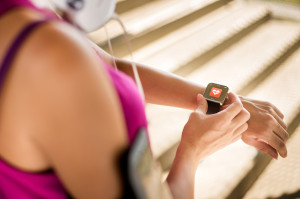
- Hunger for innovation. Across categories we see consumers gravitating to new ideas in health and wellness. Some are reactions to the marketplace status quo – for example, six in 10 consumers worry that antibacterial products kill good bacteria as well as bad. Others are technological: our latest surveys show that interest in fitness brands and apps continues to grow despite their well-documented problems, like data reliability (e.g. my fitness app recently mapped me running across the Central Park reservoir).
The most intriguing shifts we see, though, are in attitudes. For trend researchers, these are stop-in-our-tracks, light-bulb moments. When attitudes shift, desires emerge. The result is white space for new products for the next three, five, 10 years and beyond.
Consumers aging differentlyWe’re seeing this kind of space opening now in aging. It’s not just that populations are aging –more than one in five Americans (67 million people) are now 60 or older, and that will grow in the next 20 years to 27 percent (99 million). People are aging differently. Increasingly, consumers see aging as an individual experience. Growing numbers reject the notion you can put an age on when “old” begins, saying it “varies too much.” Large numbers are turning away from the idea that you have to look as young as possible.
Most intriguing, they’re becoming students of aging. Three in four Americans tell us they want to age better than their parents and learn from their mistakes. Half tell us they’re buying products that will help them in their health or appearance as they get older.
And here’s the interesting thing. It’s not just older consumers. More than eight in 10 Millennials feel our culture is “obsessed” with looking young; 73 percent hope to age better than their parents; and 46 percent are buying products to age smarter.
Consumers, in sum, are motivated. They’re looking for smart, creative innovation. How will you respond?