


According to a press release by BlitzResults, discounts advertised for Black Friday are often based on the manufacturers' suggested retail price or are even fantasy sums.
"These sales prices are actually never paid and this applies in particular to the electronics sector," says Tim Lilling, researcher at BlitzResults.com. "The use of these prices as a reference point is misleading for customers and is used to imply extreme discounts. The research shows that discounts are in reality almost 50 percent less when compared to a non-reduced offer from another retailer."
In addition, shipping costs, fees, minimum order requirements or discount structures often shrink the originally promised high double-digit savings.
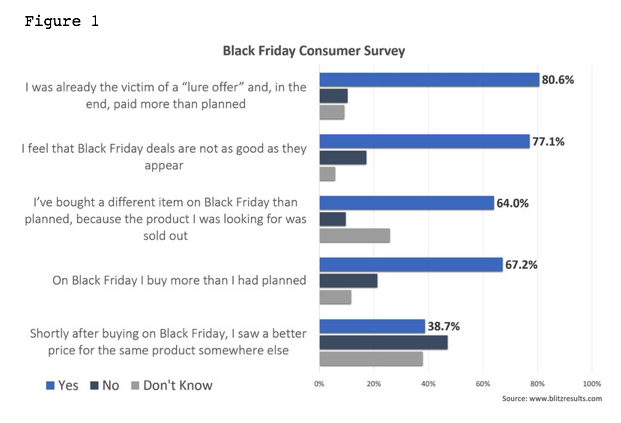
Here is a breakdown of the study results as shown in the release:
- The company tracked prices of more than 100 tech gadgets such as tablets, cameras and large household appliances over the period of one year on major online shops in the U.S. While consumers have the impression that prices are slashed to a historic low level for Black Friday, only 48 percent of these products are cheaper than at some other time during the year (54 products).
- Eighty-one percent of all customers surveyed state that they already been victim of a "lure offer," ending up buying more expensive items than planned.
- Sixty-seven percent of all customers say they ended up buying more things then they had initially planned to buy.
- Sixty-four percent of all customers say that they bought a different item because the product they were looking for was already sold out.