
SPONSORED CONTENT

By John Papadakis, Founder and CEO, Pollfish
The COVID-19 pandemic has caused a dramatic shift in the way companies operate. The healthy research budgets from businesses and corporations of every size shifted dramatically overnight. Many were forced to slash their market research budgets. The entire industry saw a projected 25% reduction in revenue last year. This has sadly resulted in furloughs and layoffs.

This should not come as a shock to anyone working in the market research industry. But what may come as a shock is how corporations ultimately coped with reduced research budgets at a time when market research was going to be more important than ever.
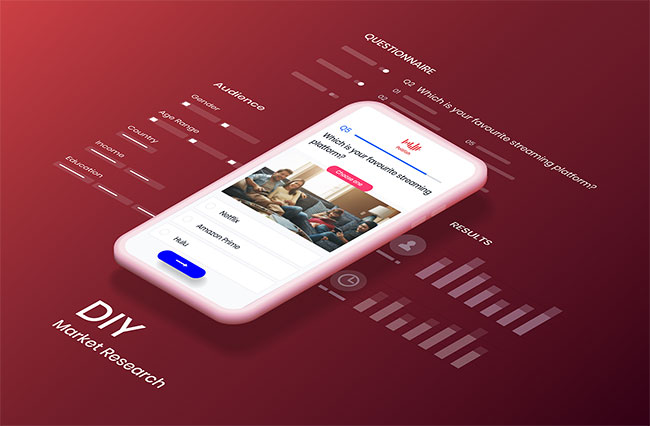
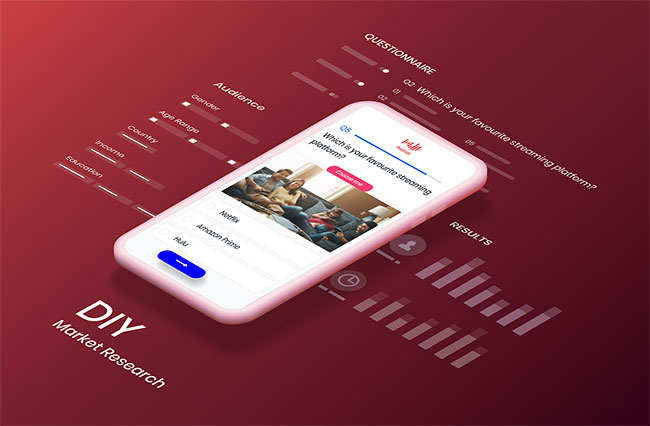
When dealing with a once-in-a-century occurrence, past market insights go out the window. The unique nature of the pandemic meant companies needed a fresh look at their customers and needed to challenge many of their long-held assumptions. With the need for new consumer insights within a drastically reduced budget, businesses large and small turned to DIY market research companies to help them bring their research teams in-house.
We know this because we are one such market research company.
At Pollfish, not only did we not see a downturn over the last nine months, but we’ve actually grown. I say this not to gloat but to offer a compelling, first-person account of the state of the DIY market research industry and to make a prediction about where the market research field is headed in 2021 and beyond.
When the dust settles on the pandemic, the market research industry will look a lot more DIY than it did before and there are very good reasons for that.
Why COVID forced a shift to in-house market research
COVID-19 has impacted nearly every aspect of the global economy. Things like travel, in-person retail, sporting events, concerts, personal get-togethers and even our schools and corporate office culture suddenly shifted. A lot has been written about the impact of this last point on the future of the workforce. Make no mistake, the remote work experiment has shown that there’s truly no going back to a geographically limiting, in-person way of working. But remote work wasn’t invented by the pandemic. It had grown slowly over many years. When COVID struck, it was at a point of maturity where it could capitalize on the situation. For many businesses, it has been considered a savior that allowed them to weather an incredibly unpredictable economic storm.
DIY market research forged a similar path. Its growth didn’t happen in a vacuum. As our own growth over the last years shows, it has become a viable and useful way to bring market research in-house. At Pollfish, we’ve iterated and improved our offerings consistently in order to compete with more traditional market research companies. By the time the pandemic hit, we’d carved out a healthy portion of the research market and were poised to make robust gains in the coming years. Like the remote-work industry, we’d reached a level of maturity that allowed us to step into a much larger role once the pandemic made it a necessity.
What this means for 2021 and beyond
But past performance is no guarantee of future results. It would be easy to point to the remarkable circumstances in which we are currently living to explain – and explain away – the long-term impact of DIY market research tools. Frankly, that would be a mistake.
It was no fluke that DIY companies were positioned perfectly to step in when the pandemic put so many others in our industry out. Any assumptions about a return to the past once the pandemic has subsided ignore the many benefits companies are enjoying thanks to DIY research solutions.
An agile approach to market research
Self-serve market research is inherently more agile than more traditional approaches. Rather than conduct several major, expensive and comprehensive market research studies over the year, users of DIY tools can make near-constant queries of their customers. This fast, easy and ultimately cost-effective approach also creates a clearer picture of consumer sentiment that can be tested and retested just as easily.
To accomplish this, the DIY market has had to innovate new, cutting-edge research methods that are more adaptable to changes in consumer behavior as well as the changing needs of corporations. This means using technology to reach respondents in a more organic way, ensuring randomness and the required representative sample.
Businesses can be more flexible
With access to iterative data, consumer sentiment can be discovered much more quickly. This allows decision makers to remain flexible to the needs of their consumers and provide more opportunity to anticipate the direction certain trends are heading. The result is a richer universe of data in which companies can determine the insights they need. This is something that will increase in importance.
Better in-house analysis teams
Data teams have swelled over the last decade with companies large and small seeing the benefits of high-quality data analysis that can be done in-house. For high-functioning data teams to succeed they need access to large amounts of reliable data. They also need the flexibility to quickly change parameters and test hypotheses in real time. DIY market research tools give them just that, making them capable of determining customer sentiment at a scale and pace that couldn’t be fully realized until now.
Putting research into the hands of decision makers
The last reason DIY market research is here to stay is the broad access to data that these tools allow. The barriers to entry are lowered significantly with DIY tools. Trained data scientists aren’t the only ones who can analyze and understand market sentiments. DIY tools are so easy to use that the very decision makers themselves can use them. The ease, speed and reliability of these tools make fast changes to market conditions possible. The emergence of DIY tools allow for a broader range of people with more diverse backgrounds and skill sets to take part in reliable market research gathering. The expertise and viewpoints can lead to insights that may have been previously missed.
A realistic assessment
While it is true that DIY solutions require certain investments to maximize their impact, the long-term benefits far outweigh any of the costs. The more team members that are taking part in market research, the more training will be required to collect and analyze those findings. This takes time and money. It means companies will have to change their approach to market research in fundamental ways. For instance, DIY market research is best used when it is iterative, which means more frequent querying of consumer sentiment. This can sometimes make for confusing data and analysts need to understand how to tease the truth from the noise in the numbers. None of this is new, mind you. What is new is who is doing it and the speed and scale with which it is happening.
There’s no mistaking that traditional market research techniques have their place in a post-COVID market research industry. But DIY alternatives, with their speed, scale and broader access to data, will continue to be an important part of the landscape. We believe that these tools will make up a much greater share of the market research budgets across all industries. Those investments in time, human capital and resources spent in the short-term were smart investments that will continue paying dividends long into the future.
COVID-19 didn’t invent the adoption of DIY market research but it did accelerate it. The benefits of this approach to acquiring consumer sentiment that companies saw in 2020 will make it a steady force for years to come.
www.pollfish.com
1-646-820-1238