
Editor’s note: Marisa Skwiat is insights associate at San Francisco-based insights and strategy firm Ignite 360.
President Biden’s declaration that Americans could enjoy small barbecues and celebrations on July 4 was met with a dissonant mix of disbelief and relief (along with a healthy dose of criticism from across the aisle). What will that feel like, let alone look like? Are we ready to hug our loved ones again?
Turns out, it depends.
Let’s go back to fall 2020, before Starbucks even poured the first pumpkin spice latte of the season. As part of our Navigating to a New Normal study, we asked survey respondents what they thought the holidays would be like. Not surprising for the middle of a pandemic, 68% of respondents mentioned the holidays “would not be the same” and 71% said they would not be able to enjoy the holidays as much. With such strong convictions already established one might ask, how could they be so sure the holidays would be less enjoyable? Were they accurate in their predictions? And what does that mean for the future?
How could they be so sure?
No one can be sure of what the future holds, but we know exactly what we have been missing. Whether it’s a wedding, birthday, July 4, Christmas, Thanksgiving or Easter, at the heart of any celebration or gathering is family and friends – those cherished connections we use to create and reinforce traditions. These traditions help to form the very foundation of a family, offering generations the opportunity to connect and create a shared identity. The shared identity that comes from family, whether that be biological or chosen, provides confidence and security. Without even realizing, a holiday dinner at Grandma’s – the smell of her cooking, the feeling of her lace tablecloth, the beeping of her oven timer – invokes something deeper inside.
We can use the power of our senses to almost transport us right back to that dinner. It would be difficult to find someone not familiar with our basic five senses – touch, taste, smell, sight and hearing. But what about the other senses? Professor Emeritus in Psychiatry at the University of California at San Diego Saul Levine shares our four core inner senses known as the “Four Bs.” Being, belonging, believing and benevolence also play a poignant role in why traditions are so important for our well-being.
- Being: “Appreciating ourselves, our strengths and feeling grounded in our core identity.” Immersing ourselves in family, friends and the familiar helps us understand who we are as an individual.
- Belonging: “Our personal comfort in knowing we are an integral part of a group(s), where we are respected and appreciated.” Learning how traditions started and why they were established help to solidify our place in a group.
- Believing: “A set of ‘higher’ principles and values by which we lead our lives, which can be religious or secular rules of ethical behavior.” Connecting with others can help us to better establish the tenants by which we want to lead and carry on in our own traditions.
- Benevolence: “The extent to which we enhance the lives of others, especially family and friends.” The oldest members of our families are not looking to pass along treasured recipes but also their legacy and wisdom.
Experiencing the holidays
In speaking with 16 American adults from ages 21-71 we began to notice traditions (and the lack thereof) during the pandemic elicited a few striking reactions. Some felt threatened that their traditions were being taken away.
Lusi, 65, grandmother of eight in Chicago, wasn’t ready to let that happen. "No, not Thanksgiving. You're not gonna take that away from us."
Others felt the pandemic would not allow them to fully experience the holidays. Marco, 21, of California told us, “It's not really like that big for me this year, at least because – I mean, it's not really the whole thing. Thanksgiving is supposed to be like – when you're supposed to be with all your family.”
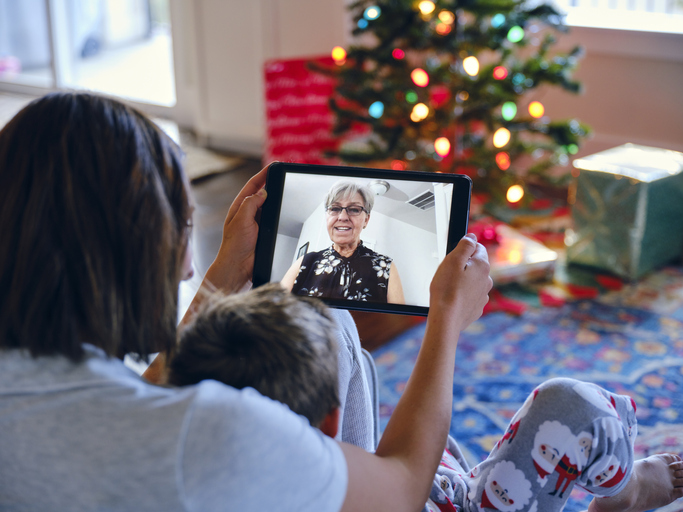
“Go ahead, I’ll wait!” respondents would prefer to create a holiday with all the traditions and people they have come to appreciate and enjoy. This could even mean having a big turkey dinner on a July afternoon. Dajon, 22, of Arizona doesn’t feel the need to celebrate the holiday on the actual day. “I understand why everybody wants to celebrate on the day of just because it's traditional, I personally don't necessarily need to celebrate the holiday on the holiday.”
The “go big and stay home” contingent are looking to take the opposite approach. These respondents are decorating, early, often and on a much larger scale. They are looking to fill the void left by family and friend gatherings with all the holiday spirit they can muster. Jennifer, 41, South Carolina, admitted to us just how much extra holiday spirit she tried to elicit with her décor. “Oh, this is like 300% more than I've ever done.”

https://app.reduct.video/e/go-big--stay-home--c7daac2dcc-8d5b6b560af29a5f8330
Looking to the future
The Four Bs allow us to better understand just how much we need and want traditions as part of our lives. They also offer companies the opportunity to help customers keep their traditions and values alive until we can celebrate together again.
1. Being: People are looking for opportunities to enhance themselves and their spirits. Those “go big and stay home” folks, and many more like them, are just looking for opportunities to celebrate. General Mills started “National Cereal Day” with the added bonus of raising money for childhood hunger. We are living in that hashtag culture that posts everything, like #donutday and #711day. This a great time to celebrate all those little holidays and create new ones!
2. Belonging: People are searching for new and better ways to forge connections and build a sense of belonging. Despite various platforms available for connecting, they have yet to find a system to replicate the intimacy of true in-person interactions. This could be a great opportunity for the online platforms of the world to pair with companies like Drizly or Escape the Crate to create packaged online experiences.
3. Believing: Just like the principles and values we keep for ourselves, people are looking for opportunities to support companies that follow the same suit of values. Movements to support local business and eateries are booming. One of these local restaurants could be the location for the next family gathering.
Beyond our personal celebrations are also less celebrated ones that are even more important. Now is the time to celebrate inclusion. It’s difficult to forget the spot aired in the fourth-quarter of the 2019 Super Bowl that was awarded the Brand Experience & Activation Grand Prix at Cannes Lions. Opportunities to showcase a company’s principles through advertising and even packaging will be even more enticing to consumers as they look to be a part of the change they want to see in the post-pandemic world.
4. Benevolence: This time has been eye opening for most. People have taken the time to realize who and what is important in their lives. They are looking for products and experiences that will help them celebrate those connections. Diet Coke’s new “Drink what your mama gave ya” campaign is a great example of that. Part of a much larger initiative called “Drink It Up,” they have decided to use their brand presence to show support for the unsung heroes of the world, including mothers!
It’s easy to focus on what we missed this year, but consumers are still finding ways to experience and satisfy the Four Bs. Here are five steps for your brand or business to take to show up and help your consumers celebrate.
- Map: Make a 2x2 grid and place the 4Bs – one in each box – along with the written definition of each.
- Place: Identify which B your category exists in (it may be more than one) as well as where your brand and your competitors play.
- Elaborate: What is it about your brand that makes it a fit to that B?
- Prioritize: Make the hard decision and select the B that fits best with your brand equities and values.
- Strategize: How can your brand build on its link to the best B to build that connection in the eyes of the consumer?
Read more about how to help your brand or business navigate the new normal: