
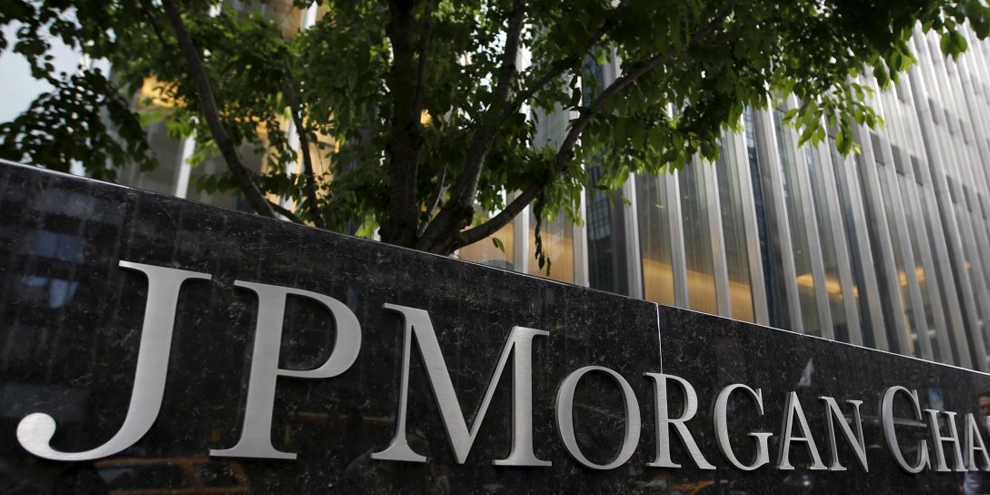
Chase ads hit the wall
Wall Street Journal writer Suzanne Vranica profiled another unconventional advertising campaign in a February 21 article. An ad agency hired by a commercial-banking unit of J.P. Morgan Chase installed 90 two-foot-long stickers around outlets in the Indianapolis International Airport’s departure lounges and eating areas in February. The decals were emblazoned with Chase’s name and logo with messages such as: “This outlet works. Now you can too.” Also highlighted were either the e-mail address or a local phone number for Chase’s commercial-banking unit, which targets businesses doing between $10 million and $500 million in annual revenue.
Chase hopes the decals will be spotted by businesspeople passing through the Indianapolis airport, many of whom kill time waiting for their plane by working on a laptop computer plugged into a wall outlet. Others use outlets to charge cellphones. Chase is in talks to expand the program to other midsize airports around the country.
Spending on nontraditional venues - plane interiors, ski lifts and food trays at sports stadiums - is expected to outstrip traditional venues this year, according to the Outdoor Advertising Association. It projects spending on nontraditional outdoor ads will rise 10 percent to $346.5 million, while traditional venue spending will rise 8 percent to nearly $6.5 billion.
“You not only have to come up with creative solutions but invent unique places to put them,” said Scott Montgomery, principal at Bradley & Montgomery, the Indianapolis ad firm that designed the campaign.
Chase is paying about $65,000 for the ads to appear for a year. For that money, it also gets four months of signage on in-terminal monitors that post flight information.
“Chase Finds a New Outlet for Plugs,” Wall Street Journal, February 21, 2006
Are these ads a new window of opportunity?
The January 12 issue of Ad Age featured a tidbit about media agency MindShare’s use of window-cleaning gondolas as an advertising vehicle. MindShare in Japan appropriated space on the window side of cleaning platforms for Northwest Airlines to promote its new seats in world business class that allow passengers to recline by as much as 176 degrees. The creative, prepared by Ogilvy, asked, “Does your seat recline all the way down to 176 degrees?”
Northwest is the third-largest air carrier in Japan and the largest international airline operating in the country and it needed to boost its business passengers. The MindShare platforms were seen on a number of office buildings in the Otemachi and Akasaka areas of Tokyo, selected on the basis of their occupants. Tenants included Cisco and NTT DoCoMo.
The new medium - a first for Japan - enabled Northwest Airlines to intrude on an executive’s working day, an environment that’s relatively ad free, and surprise them, thus making the ad more memorable. After all, how many business executives wouldn’t want an office chair that could recline to 176 degrees, particularly after a big lunch?
“Window Washers Promote Northwest Airlines,” Advertising Age, January 12, 2006
Mums are the word for word-of-mouth
Gary Silverman of the Financial Times reported on Procter & Gamble’s effort to enlist British mothers to help word-of-mouth marketing campaigns. P&G feels that a mother who is motivated to talk about a product sets off a chain reaction that will eventually involve 1,000 mothers in the discussion. At the start of the decade, it assumed that such a conversation would only involve 200 mothers. “I think it is largely because of the availability of technology. In the past, you had to go to the park and find another mom and tell her. Now they go into a chat room or copy an e-mail to a list of friends,” said Gianni Ciserani, P&G managing director for the U.K. and Ireland.
Fearing that TV ads are losing their punch, P&G is becoming more interested in finding ways to compare the impact of different marketing activities. In working with a Cyprus company called Integration, P&G has found that word-of-mouth is gaining influence at a faster rate in Europe than most other marketing tools.
People in the U.K. are five times more likely than consumers in other parts of the Europe to call a company to express their views, Ciserani said. “We can confirm that U.K. consumers, and therefore U.K. mums, are the most vocal in expressing their happiness or disappointment with brands and companies. They talk to plenty of people once they have a positive or negative experience,” he said.
P&G is employing targeted marketing efforts in the U.K. that focus on winning the affection of what it calls ambassadors - people to whom other people pay attention. One example of this approach has been on display in cities around the U.K. It’s an experiential tour that gives visitors a chance to learn about how babies sleep. The exhibit is sponsored by P&G’s Pampers diaper brand, which has been trying to forge connections with mothers by helping them with childcare issues. “We look at things through the eyes of a baby,” said Paris Kafantaris, P&G’s vice president for baby care in western Europe. “The whole idea is how the baby is developing when it sleeps at night.”
Another way P&G targets ambassadors, Ciserani said, involves collaboration with retailers. Before launching a product, the company asks them what kind of consumers might be interested in the product - an approach that works well in the U.K. because of data collected in club-card programs. It then sends a letter and samples of the product to consumers in the hope they will like P&G’s wares and talk about them, becoming ambassadors.
“Marketers Talking To Mother, ” Financial Times, February 18, 2006