
Editor’s note: Crispin Boon is a research director in the packaging and design team at Marketing Sciences Unlimited, U.K. This is an edited version of a post that originally appeared here under the title, “The power of packaging – it’s all a load of rubbish!”
Simon Ellis, Chief Executive of the U.K. Recycling Association, criticized the design industry and challenged it to work harder to move away from the “Pringles factor” i.e., where packaging uses several different materials – some which may be recyclable and some which may not – but in combination make it harder for recycling machines to separate.
The challenge is fair – yet the issue is not new.
In 2016, celebrity chef Hugh Fearnley-Whittingstall highlighted how the U.K. threw away an estimated 2.5 billion coffee cups every year – with many consumers mistakenly placing their used containers into the recycling bin in the belief that their paper cup was a green choice. It wasn’t.
The result? Much of this packaging simply ends up in landfill sites – prompting coffee shop brands such as Costa to trial reCUP paper cups in a bid to boost recycling rates and address the problem.
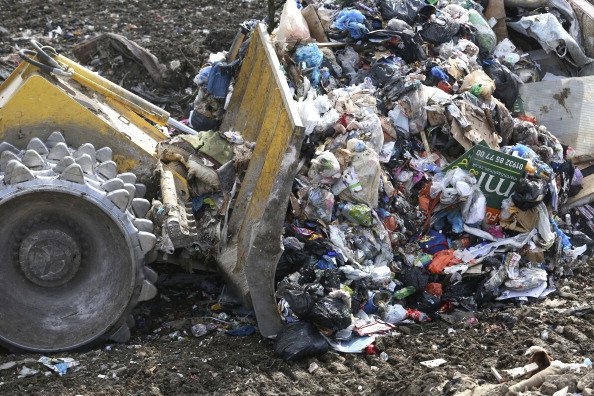
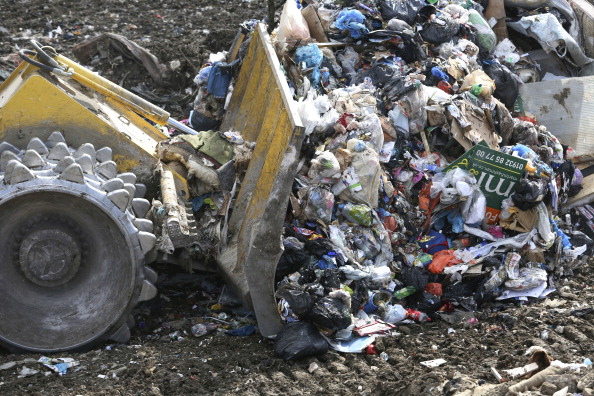
And the problem is indeed a sizeable one. According to the Department for Environment, Food and Rural Affairs, in 2014 the U.K. produced 11.4 million tons of packaging waste, of which just 7.3 million tons was recycled or recovered. There is clearly room for improvement.
While in this instance Pringles has been singled out for direct criticism, in truth the challenge to manufacturers of producing packaging that is desirable, functional and kind to the environment is an industry-wide issue that goes beyond individual brands. It affects everything from everyday cleaning spray bottles and black plastic food trays to premium products such as whisky packaging.
Understandably the manufacturers have been quick to defend their products.
A spokesperson for Pringles pointed out how the iconic tube was specifically designed to help protect the contents and minimize the risk of the chips being crushed in transit. Similarly, the re-sealable lid means a longer shelf-life for the product and so helps to minimize food waste.
This whole debate raises an interesting issue. Sometimes, apparently wasteful packaging has been deliberately designed for a very specific functional reason – but that reason may not always be obvious to consumers.
For example, the air contained within a packet of chips is not necessarily the manufacturer trying to cheat the public. Instead the use of an insert gas such as nitrogen helps to prevent the food spoiling too quickly as well as protecting the contents from potential damage or rough handling while in transit.
Similarly, a manufacturer may seek to reduce its carbon footprint by reducing the weight of a glass container – a laudable objective. Yet while this may seem like the right thing to do, it may damage the brand and be a sub-optimal decision if the reason for the pack change is misunderstood by the public – and instead consumers perceive that the packaging now somehow feels less premium as it is lighter, which in turn means they begin to doubt the quality of the contents.
The packaging puzzle
These simple examples highlight the complexity of getting the packaging puzzle right – and how by simply removing one single element of a pack design may have unintended consequences.
The most successful packs typically need to deliver and perform on many different levels.
Wherever you sit on the great packaging debate, there is clearly a delicate balance to be struck with any design. The ideal package needs to be simultaneously attractive, stand-out and communicate key brand messages – while at the same time combining functional benefits with environmental considerations.
In their defense, manufacturers have been taking this environmental challenge seriously with plenty of innovation over recent years – as witnessed by the launch of everything from compressed aerosol deodorant cans to the prevalence of instant coffee pouch refills.
So, what of the future?
Arguably with the rise of the Internet of Things the challenges facing manufacturers to meet their environmental responsibilities will become even greater as packaging gets smart – raising further questions about the recycling feasibility of everyday products.
For example, The Guardian recently reported how in the run-up to this year’s Super Bowl, U.S. snack company Frito-Lay launched a limited run of microchipped bags of tortilla chips capable of sensing alcohol on a user’s breath and, if instructed, called them an Uber taxi home!
A world of intelligent packaging is not a world of science fiction – it is here today and its usage is gathering pace – predicted to be worth $52 billion by 2025.
For manufacturers, the potential benefits and appeal of smart packaging are easy to see – with the lure of a better integrated and more efficient supply chain. For consumers, there is the potential convenience and simplicity of your ready-meal pack telling your oven how to cook at the correct setting. In theory, it all sounds great!
Yet for the environment, the question remains: What happens when you throw away that packaging – and all those smart chips and electronic packaging tags enter the recycling chain? The technology may be new but the challenge to manufacturers will remain the same as it does today with a tube of Pringles. How will we balance the potentially competing needs of packaging appeal and functionality – with environmental and social responsibility.