The hidden gaps in green research
Editor’s note: Geetika Chhatwal is content writer at market research agency Kadence International, Las Vegas.
Green marketing no longer guarantees consumer loyalty. In the U.S. and UK, buyers scrutinize every claim, expecting brands to prove, not just promote, their sustainability credentials.
Consumers aren’t just rewarding eco-friendly claims; they’re dissecting them. They’re asking what “carbon neutral” actually means. They’re questioning who verifies supply chain ethics. They’re wondering why every product on the shelf seems to carry a green label but so few offer proof.
Brands face a paradox: racing to showcase their sustainable credentials while navigating a consumer base that trusts less and demands more. The real risk isn’t falling short; it’s misreading what sustainability signals consumers actually believe.
Recent findings from Kadence International’s study, “The Green Brand,” revealed how fragile consumer trust can be in two of the world’s most vocal sustainability markets. What brands think is “green” often isn’t what buyers seek. And getting it wrong is more than just a missed opportunity; it’s a credibility crisis waiting to happen.
Mistake No. 1: Assuming sustainability means the same to everyone
For consumers in Western markets, sustainability isn’t a single idea. It’s a layered expectation shaped by politics, economics and personal values.
In the UK, sustainability has become tightly linked to transparency. British consumers are more likely to expect brands to substantiate claims with third-party certifications or detailed disclosures. Greenwashing is not just frowned upon; it’s actively challenged by regulators and the public.
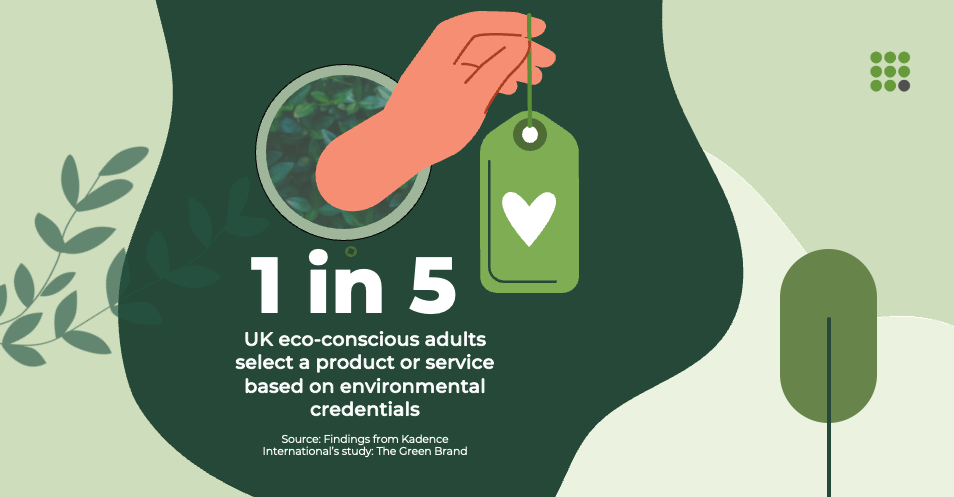
Kadence International’s UK findings show that even among eco-conscious adults, only one in five regularly base their product or service decisions on environmental credentials. This underscores the disconnect between broad values and everyday consumer action and highlights how personal definitions of “sustainability” can vary sharply.
In the U.S., the picture is more fragmented. Sentiments around sustainability differ by generation, region and political context. A recycled material claim might resonate on the West coast but feel hollow in areas where labor practices carry more weight than carbon offsets.
Even among consumers who identify as sustainability-driven, definitions diverge. Some equate it with reducing environmental impact, while others emphasize local sourcing or minimizing waste. There was little consensus on which signals reflect real commitment.
Treating “green” as a universal concept often leads brands to deploy broad strategies that miss the mark, eroding trust before it’s even earned.
Mistake No. 2: Misplaced confidence in eco-labels and certifications
Eco-labels once served as credibility markers. Today, they’re just as likely to trigger suspicion.
Kadence International’s research found that fewer than half of U.S. and UK consumers fully trust a brand’s sustainability claims unless those claims are independently verified. Labels like "carbon neutral," "responsibly sourced" and "eco-friendly" no longer carry automatic authority. Without third-party validation, consumers are more likely to question than believe.
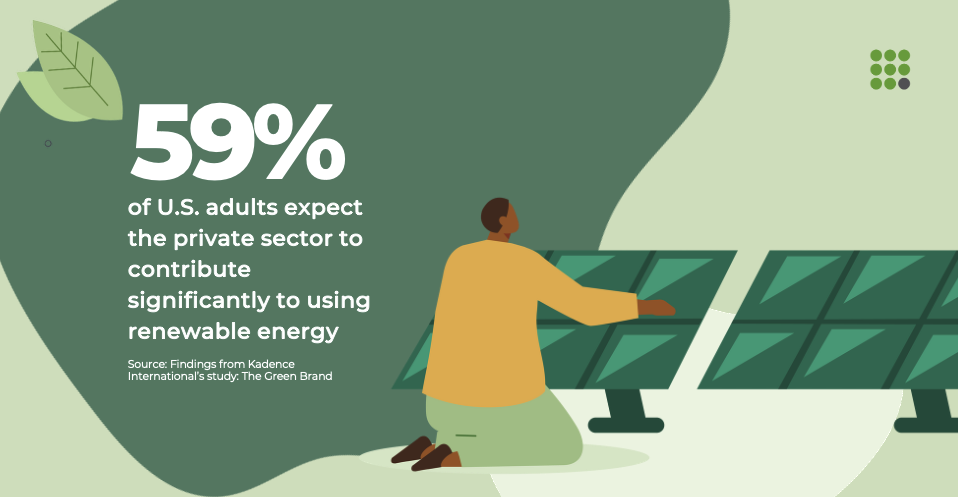
In the U.S., nearly one in five adults say they seldom or never recycle or reuse materials, a behavior gap that undercuts the assumption that sustainability claims alone will drive action. At the same time, 59% of U.S. adults believe the private sector should play a significant role in advancing renewable energy, signaling a rising expectation that brands take the lead on sustainability, not just talk about it.
While certifications still influence purchase decisions, their impact depends heavily on context. UK consumers tend to trust government-backed or widely recognized certifications. In contrast, younger U.S. consumers often do their own research before accepting a claim as credible.
When every product carries a sustainability badge, trust erodes. Consumers default to skepticism, and research that focuses only on awareness or recognition may overlook the deeper doubts shaping real behavior.
Mistake No. 3: Measuring consumer intent, not behavior
Consumers say sustainability matters. But what they say doesn’t always match what they do.
Kadence International’s study uncovered a clear say–do gap in both the U.S. and UK. While most respondents say sustainability is important, far fewer follow through when faced with higher costs or reduced convenience.
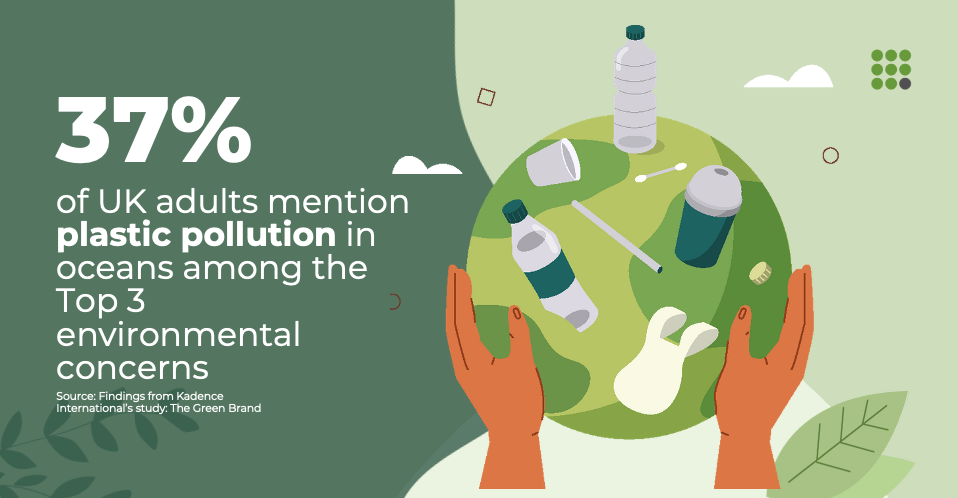
In the UK, 37% of consumers list plastic pollution as one of their Top 3 environmental concerns. Yet this concern doesn’t always translate into action on the shelf.
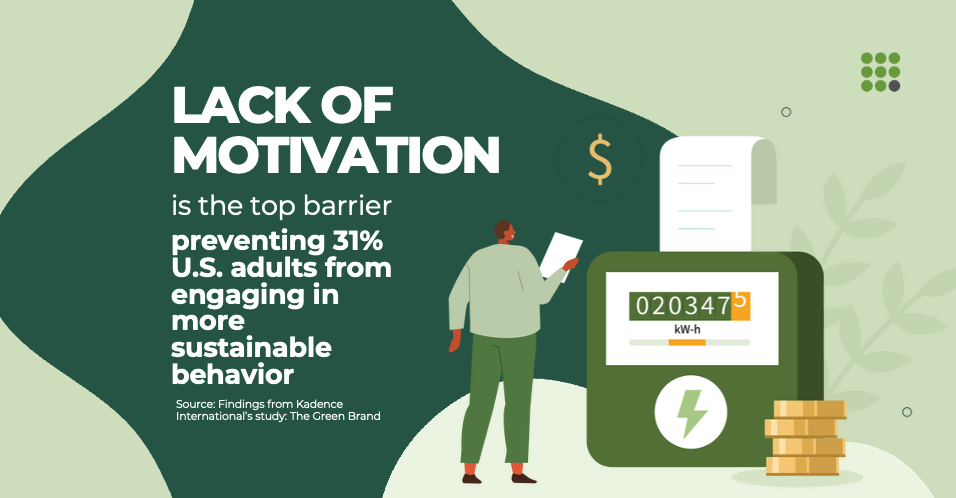
In the U.S., 31% of adults cite lack of motivation as the top barrier to engaging in sustainable behavior, despite expressing strong concern for environmental issues. This tension is especially pronounced among Gen Z. While they demand ethics and environmental responsibility, financial pressure often drives their final choices.
When researchers rely on attitudinal data alone, they risk overestimating sustainability’s influence at the point of purchase. This disconnect is where product failures and brand disillusionment begin.
When asked whether they value sustainability, most consumers will say yes. However, when forced to choose between a lower price and faster delivery, their priorities shift.
Misreading sustainability sentiment doesn’t just lead to ineffective messaging. It can result in product flops, eroded loyalty and reputational fallout, especially with younger audiences who expect brands to align with stated values.
How researchers can sharpen sustainability studies
Sharper sustainability research starts by discarding assumptions and focusing on clarity, context and consumer friction.
First, language must be localized. Words like “ethical,” “eco-friendly” and “sustainable” hold different meanings across regions and markets. Researchers must uncover these nuances before attempting to measure their impact.
Second, stated preferences are insufficient. Incorporating trade-off exercises, behavioral experiments or passive tracking can reveal how consumers actually prioritize sustainability alongside price, brand loyalty and convenience.
Third, segmentation is essential. Sustainability expectations differ not just by geography but by age, income and belief system. Research that treats consumers as a homogeneous group risks missing the most actionable insights.
Finally, studies must measure trust, not just awareness. Recognition of an eco-label means little if the consumer doesn’t believe it. In markets increasingly wary of greenwashing, perceived credibility is the true variable of influence.
Robust sustainability research must move beyond surface sentiment. It should capture doubt, hesitation and tension – the forces that shape what consumers truly value when it matters most.
Sustainability is no longer judged by presence. It is judged by proof.
Brands are no longer given the benefit of the doubt. Trust must be earned through transparency, backed by credible research and refined through ongoing listening. Failing to capture this shift threatens not just the success of a campaign but also the trust a brand has built. Grounded insights aren’t a bonus. They’re the new baseline for credibility.