Editor’s note: Nancy Cox is the founder of Research Story Consulting and former CPG corporate researcher. Her work and play include words, sketchpads, cooking (not baking) and the occasional sock puppet.
Passions, hobbies, healthy distractions and even guilty pleasures – discover how the research community plays and how that plays out in their work life. In the Venn diagram of work and play, what happens when they overlap? Research colleagues share their work and play stories in this interview series by Nancy Cox.
Hello Joseph Wylie, Director, Global Supply, Reach Collective
What is the “play” in your life?
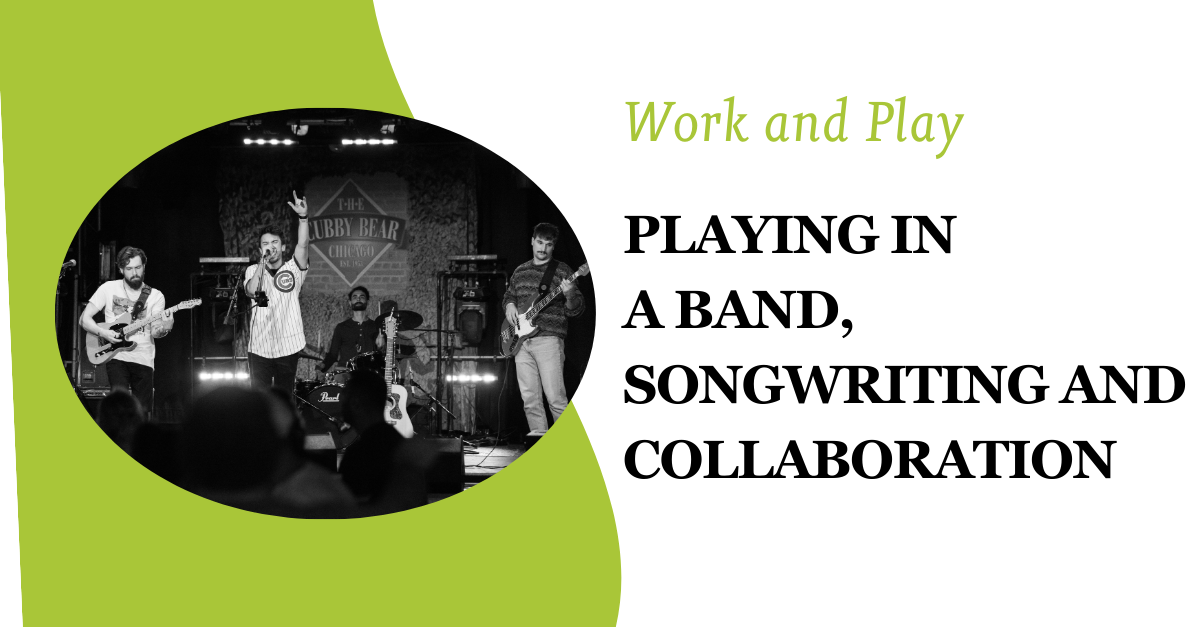
My biggest play is making music. I’m in a Chicago-area band called JOPECO. Our name is very “creative” –the first two letters of each our first names. We came up with around 50 names, using JOPECO as a placeholder. Now after some gigs, we’ve kept JOPECO. Our band has an early Maroon 5 vibe. I’m on rhythm guitar and vocals playing with a lead guitarist, drummer and bassist. We’ve been playing together since May of 2024.
For our first gigs, we did covers, songs other bands have recorded, that we each wanted to play. We all grew up with totally different musical experiences so, at first, it was a mishmash of styles. But exploring these varied songs allowed us to find similarities and differences. This was essential to discovering what our sound was. Now we create music in our own style, our preferred genre and where we fit in a particular genre.
We’ve written three songs, and a bunch of in development half-songs, in our pop-rock/alternative-rock realm. We take turns writing the lyrics, coming up with chord progressions, riffs to throw in here and there, and what melody comes forth for each song. This is the first time I’ve written original music with a group. Before, I’d only ever written on my own to create my solo EP [check it out]. I discovered my personal individual style over years and years of singing; creating a style has come faster with the band.
I am fascinated with all the human voice can do. I love really distinct sounding voices. Right now, I’m listening to Teddy Swims; his song “Lose Control” has been on the radio a lot. His voice is raspy, and you can hear a little bit of his Georgia accent. There’s power and soul in his voice; he can riff and run with his voice in ways that I’m very jealous of. I’m also a fan of Bruno Mars, who has a very clean and crisp voice. I have a very poppy, boy-band voice myself, so I gravitate toward that style of voice.
I’ve made music since I was in middle school and kept it as some facet of my entire life whether it’s trombone, guitar, piano, drums, singing. I was in musicals and plays throughout high school. I sang in an a cappella group in college. I’ve always loved entertaining people. My musical goal is to make people feel something. Sadness, happiness, excitement. I love watching people’s expressions change as I’m playing. At a recent gig there was a little eight-year-old dancing next to me. That’s the feeling I want everyone to experience when listening to my music.
How has your play influenced your research work?
Working with people, whether it’s a band or any industry, you have to understand people’s work styles. The empathy we extend when asking people about their opinion is just as important with our teammates. At a broad level, empathy is the mutual understanding of what we’re trying to create. Empathy is also as tactical as knowing people’s working hours or what messaging platforms that teammates prefer. Teams, Zoom, Slack – I use them all!
When I was producing my EP, I had to look at everything at a very granular level for vocals and every instrument on every song. Setting the blend, setting pitch corrections. Research is very much the same. Being particular, even when it feels monotonous going through data sets multiple times, to deliver the highest quality data possible. That’s what I’m trying to do with music. When laying down a new track, that’s working with data. Comparing dozens of tracks, finding patterns and identifying which ones make the most sense.
The feeling I get from creating a satisfying chord or chord progression is the same feeling that I experience when I see a strong correlation among data. This beautiful “ah this makes sense” understanding. Or thinking of rhythm, rhythm is when I have sample quality under control. Especially when I’m working with a partner, two different variables working together that are synchronous. Always making adjustments and enhancements so we can find that perfect rhythm.
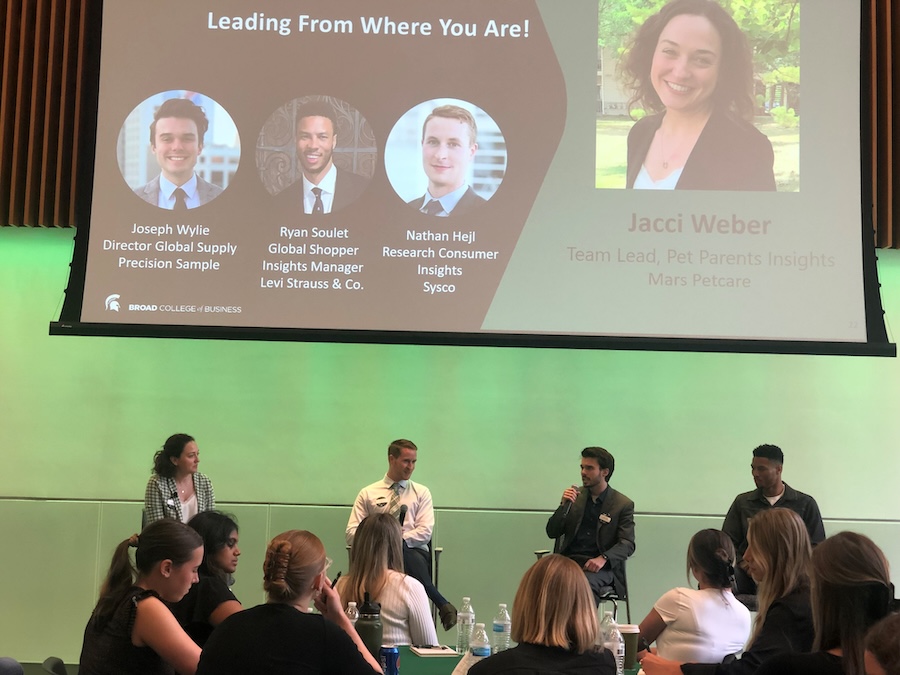
I would caution that performing music and giving business presentations are two very different things, at least for me. In the research industry, I have guest lectured; I’ve been part of a conference panel. That requires a different type of practice than my music. However, both benefit from practice and some breathing exercises. But at least for me, presentations and music require different mental preparation.
What would you tell readers who want to know more about your area of play?
My first advice would be not to do what I did. I messed around with several instruments and I’m not excellent at any. If I were to go back in time, I would find one like the guitar and dedicate practice time to get really good.
If you’re into vocals, go to karaoke. Sing what you’re into and sing a variety of styles. Doing karaoke will get you used to being on stage. Do you even like performing in front of people? I love karaoke for that reason. My love of performing started when I was growing up with little in-home karaoke machines.
If you want to be part of a band, there are what I call “dating apps” for musicians. I found my current band on a site called BandMix, another site is Vampr. Start with your location, and you’ll be matched with other musicians based on genre, instrument, level of expertise, how many shows you’ve done in the past.
Regardless of what stage you are at in your music, if you appear confident that’s 70 to 80% of being successful. If you’re having fun, your audience will have fun too.