
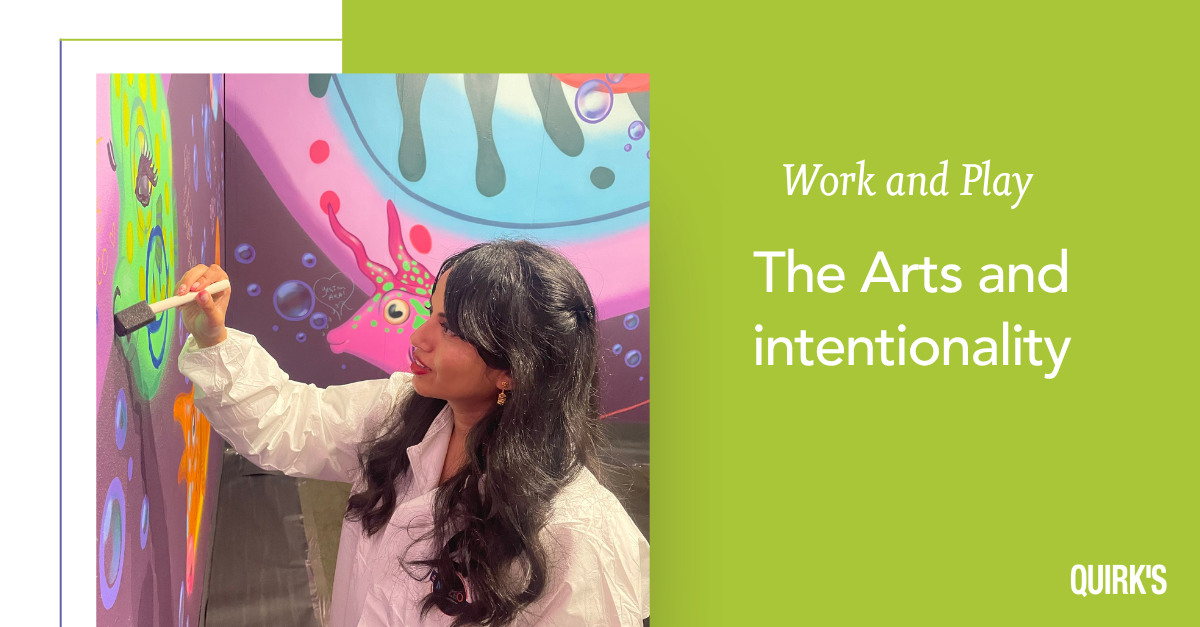
Q&A with Maya Kantak
Editor’s note: Nancy Cox is the founder/principal at Research Story Consulting, LLC, Kansas City, Mo., with over 30 years of experience in effective writing and research methodologies. She holds a Master of Liberal Arts in business admin and management, and a Bachelor of Science in journalism. Find Cox on LinkedIn.
Passions, hobbies, healthy distractions and even guilty pleasures – discover how the research community plays and how that plays out in their work life. In the Venn diagram of work and play, what happens when they overlap? Research colleagues share their work and play stories in this interview series by Nancy Cox.
Hello Maya Kantak, Lead, Consumer UX Research, Rocket Mortgage
What is the “play” in your life?
Being involved in the arts in many different ways is the play that gives me joy. “Art” can include so many experiences. A play or musical where I can appreciate and observe. Interacting or engaging with art museums, galleries or art festivals. Exploring a new medium in a class or drawing on my own. I can be the artist, or I can support other artists – it all contributes to my “play.”
Living in SoCal, I’m surrounded by so many amazing ways to engage in the arts. I’m doing some sort of arts activity at least once a week and often twice a week. Even when I travel, I’ll see if there’s a show or an art festival in that area. And I just love museums – I even got married in a museum last year!
I especially love connecting with others over art. Being exposed to the same art, really taking it in, sharing the experience then being able to talk about it. Sometimes if I do something on my own and really like it, I’ll bring someone along and go back. Living close by art centers and theaters allows me to experience things multiple times. Last year, for example, my husband and I went to a show on opening night. We liked it so much we brought my mom back with us to closing night.
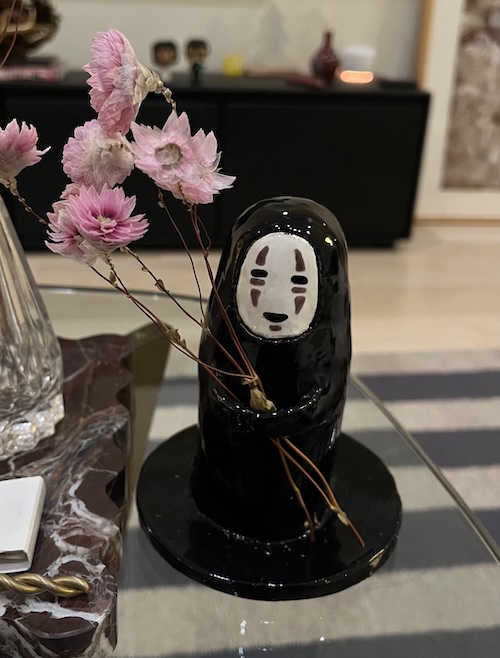
Another time, a friend commented that she wanted to do more physical, hands-on artwork. I realized that my local art center offered ceramics classes, and now sharing this class with friends has become a big part of that experience. Shared planning, shared growing, shared exposure to new things. It’s all a communal influence.
No matter the experience, I appreciate that art pulls you into a world that’s different and separate from your day to day. With a play, it’s the joy of experiencing the story, feeling like you’re part of it – there’s a sense of immersion and intentional world building. In ceramics, the “world” is that small thing you’re building in itself. Regardless of the form, the environment naturally invites your presence into a world brought to life by someone’s creativity.
How has your play influenced your research work?
In my research career, I’ve worked across multiple distinct industries: automotive, restaurant/hospitality, entertainment, tech. I’ve been one of multiple researchers on an established team and I’ve built new, dedicated research and insights functions from the ground up. These varied experiences have made me a big believer in treating everything like a learning opportunity and bringing learnings from one area into another. Which absolutely includes bringing a seemingly unrelated learning from the arts into my insights work!
One of the most meaningful lessons I’ve learned comes from my recent dabblings in ceramics. I’ve always been a huge perfectionist – I think the research industry tends to reward that early on. And I have a lot of perfectionist control in my other art forms of drawing and painting. But ceramics has forced me to take a step back from that. To adopt my teacher’s philosophy of “nothing is precious.”
I’ve had so many ceramics’ surprises from bad, “let’s just throw it out,” to good – realizing I can use my creation in a way I didn’t initially expect. For example, a vase shrunk so much more during the firing process than I had anticipated. Now it’s my napkin holder! What might have felt like a failure turned into a creative pivot. That flexibility translates directly into research. Not every study unfolds perfectly. Sometimes constraints – time, budget, shifting stakeholder needs – require you to adapt and find value in unexpected places.
Ceramics also forced me to think about how much time I want to spend on a piece. In research, there’s a time for a quick, sharp topline that gets the key insights out there and there’s a time for a more comprehensive, polished narrative. Knowing the difference is part of the craft.
Another seemingly unrelated learning comes from experiencing someone else’s art. For example, you might not think you’re exercising your creative muscle being in the audience of a show. But you are, simply by being present. Noticing the story nuance in a stage production – what’s in the foreground, what’s in the background, how tension builds, how the story resolves. Our field requires that same type of creativity. We’re constantly storytelling with our data, deciding what to highlight and how to frame it. And engaging with the arts exercises that creative muscle.
I’m known as the “PowerPoint Queen” at nearly every company I’ve worked at – something I actually take a lot of pride in. I credit that in part to being interested in making insights visually compelling and clear. Never underestimate the power of the visual and nuance to help people understand the data better – and more importantly, how to act on it!
Finally, I’m very big on intentionality and the arts have only accentuated this! Habit builds my baseline of “once a week I’m going to do something” – my intentionality takes me beyond that habit, to stretch, experience and grow. Researchers also must be very intentional, to not just rely on our good habits. Being intentional with respondents, with the client or stakeholder, and with the stories we tell – who is the audience? How are we showing up for them?
For me, my play, isn’t separate from my work. It sharpens the very muscles I rely on as a researcher: creativity, adaptability, storytelling and intentional presence.
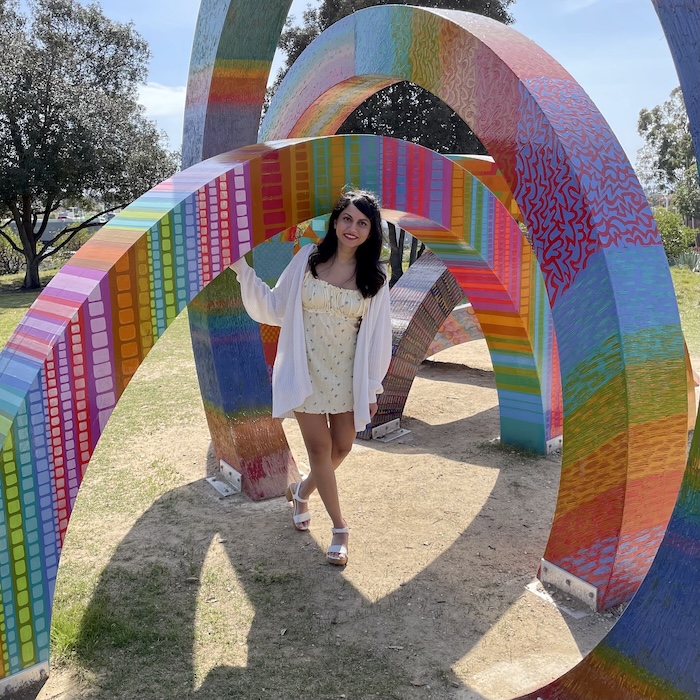
What would you tell researchers who want to know more about your area of play?
Start with what’s around you! What theaters, museums, art experiences are 30 minutes – or less – away? Pick a few to regularly watch their schedule or sign up for their newsletters, social media, etc. I keep closely informed with my local art community center through the schedule it puts up at the beginning of the year, but I also watch for pop-up shows – you just never know!
Another pro-tip: When you go to a play or musical, take a close look at the booklet, program or playbill. They often highlight other area theaters. That’s how I found a tiny little theater one city over from me that I didn’t even know existed. I’ve made this a habit to look first at the back of a play or show booklet – that’s often where I find the next thing I’m going to.
In insight terms, I’m using the snowball effect. You can, too! Start with one thing and it will naturally lead to another. The arts community is very inclusive – one theater will highlight others in its booklet, galleries or events often crossover from one museum to another. Not only may you discover more than one new spot nearby, you may also find a show or exhibit or even a class that zeroes in on your specific interests. Once you get started, you’ll find that your arts’ connections easily snowball!