

SPONSORED CONTENT

Kimberly Marsh
Co-Founder, SVP, QualQuant Signals

Phone: 973-204-0514
 What do you see as the biggest challenge for today’s researchers and how has your firm attempted to tackle it?
I see the greatest market shift as being able to deliver a high level of research rigor very quickly. This impacts every researcher, client, corporate executive, firm and decision – it’s a widespread industry pain point that occurs every single day!
This challenge is often overcome through technological developments that are brought into the market. In the past the research industry experienced a shift from CATI interviewing to online data collection and mobile methodologies. Tomorrow we will be thinking about integration challenges such as big data and AI. Today it is the demand for a quicker turnaround of projects. The true challenge is to provide a quicker turnaround that does not require our clients to sacrifice any area of the project.
Saving time in research is the backbone of our organization. In fact, it’s why we exist – our products and our brainpower work toward finding new ways to shorten timelines. So how do we tackle it?
We’ve designed something called efficiency techniques (ETs) – whitespace landscaping, reverse open-end coding, hybrid qual/quant question types, etc. – that aim to remove all natural stops from the project process.
To give an example: Our hybrid questions collect qual organic consumer expressions that are quantitatively voted on. Our patented algorithm performs momentum checks and amplifies which stimulus has the most potential for market reach and success.
All ETs work together within one methodology/one study for the same cost. Our clients do not need to pare down, limit or make uncomfortable accommodations for their study scope in any way. In some cases, upon close of fielding, we can deliver final results within three to four days.
Jeffrey I. Goldstein
President, ACUPOLL Precision Research, Inc.

513-943-0020
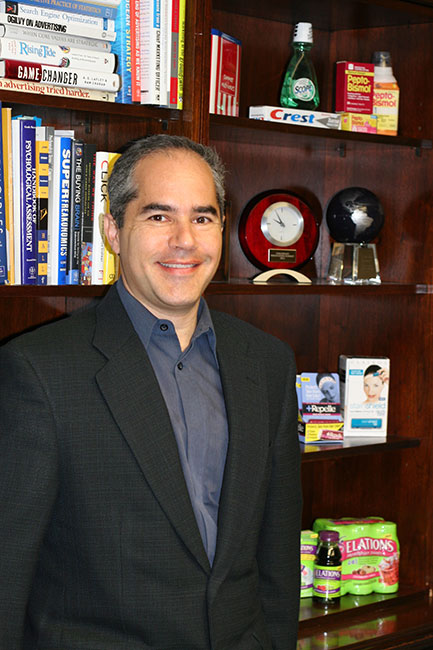 Are 95 percent of decisions non-conscious or is that fake news?
Professor Gerald Zaltman appears to be the origin of this claim many years ago, which he recently acknowledged to me is an estimate, since it isn’t measurable. Non-conscious influences are clearly important. Yet, is it really reasonable to assume that conscious thinking influences the same 5 percent of decisions when grabbing a candy bar vs. choosing a cold medicine or computer? It’s critical to capture both conscious and non-conscious measures (and to have proof of predictability, using tools like Spark MCR™, featured in the Innovative Products and Services section in this issue).