
How to authentically approach sustainability
Editor’s note: This is an edited version of an article that originally appeared under the title “New Getty Images Report Finds Consumers Still Care About Sustainability and Expect Businesses to Lead.”
Getty Images released Sustainability at the Crossroads, the latest report from its VisualGPS global insights platform mapping out the latest consumer sentiment around sustainability and offering actionable insights and data‑driven guidance to help brands communicate CSR commitments with authenticity, clarity and impact in a rapidly evolving media landscape (full report here).
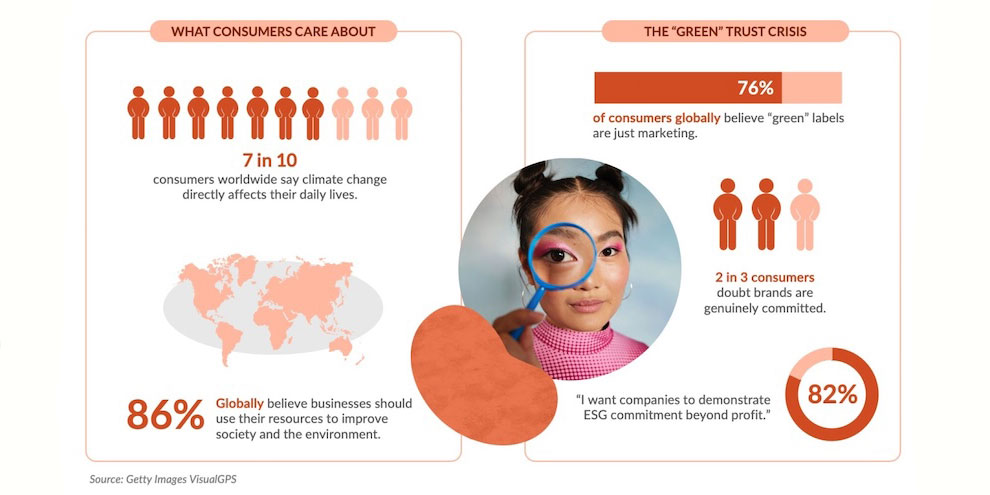
Sixty-nine percent of consumers worldwide recognize the direct impact climate change currently has on their daily lives and the issue is becoming an increasingly personal reality. Amid this growing awareness, and as the issue takes center stage in public discourse, some brands and organizations are treading carefully in how they communicate their efforts or if they do so at all. A response aligned with the trend of “greenhushing.”
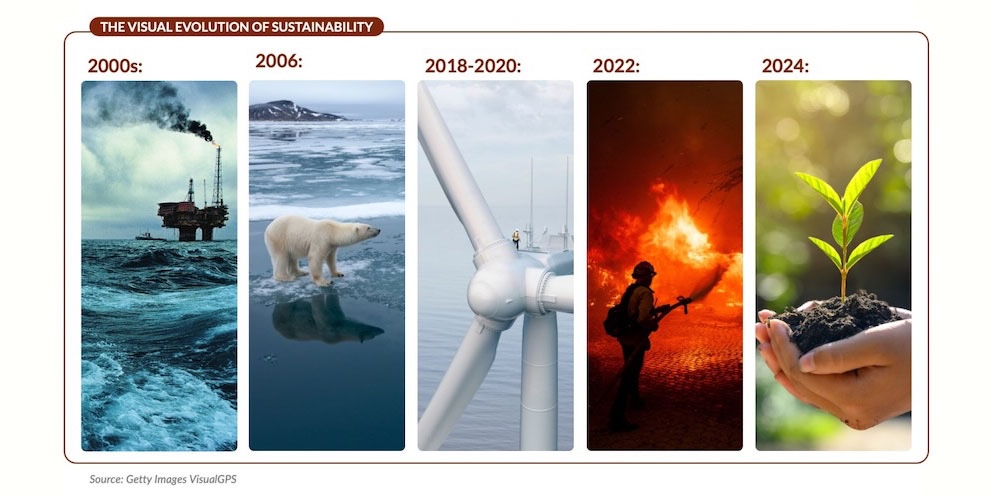
Visual analysis in the report traces this evolution: From symbolic imagery like polar bears in 2006, to stark, real‑world depictions of climate effects such as floods, fires and displacement around 2018-2022. More recently, the trend has shifted from clarity to conceptual representation, with brands adopting abstract visuals signaling sustainability without making direct claims. However, research suggests that staying silent may carry its own risks: Nearly nine in 10 consumers worldwide believe businesses should use their resources to improve society and the environment.
At the same time, skepticism is rising as 76% of consumers worldwide question the credibility of brands’ environmental claims, and two out of three globally doubt that companies are genuinely committed to sustainability. As pressure builds around accountability, the report underscores the need for brands to communicate with clarity, backing up ESG strategies with visual storytelling that is authentic and aligned with real‑world impact.
As climate risk becomes increasingly tied to business risk, the report supports brand leaders, marketers and communicators in aligning their visual narratives with their strategic sustainability goals. The following are key insights from the report.
Valuing authenticity over perfection
Eighty-one percent of consumers want to see visuals that show how the environment is being affected as a direct result of climate change, favoring transparent and realistic imagery that shows both progress and challenges over idealized or symbolic depictions.
Balancing eco‑anxiety with eco‑optimism
Seventy-eight percent want to see how things are improving – whether through individual, corporate or policy‑driven action. Powerful storytelling should blend impactful imagery with tangible actions, showing both environmental challenges and proactive solutions.
The potential of new tech: Can AI positively affect environmental impact?
Eighty-three percent of consumers believe AI could positively impact the climate crisis within the next five years. However, concerns about AI’s carbon footprint are real. Only 41% see AI as having a positive impact on energy efficiency. As generative AI continues to grow, its environmental impact should be considered when visualizing technology. Brands can leverage visuals that have a deep focus on the benefits and real‑world impact of all technological innovation to inspire trust and drive engagement.
Increasing the accessibility of sustainability
Eighty-one percent want to see images and videos that reflect how people have been personally affected – especially those in the communities most affected. Inspire action with relatable visuals that highlight simple, everyday habits, reinforcing that sustainable choices can seamlessly fit into daily life for all.
Show integration, not isolation
Seventy-five percent of consumers want to see visuals showing how companies and governments are addressing climate change, not just in isolated campaigns. Show sustainability as a core brand value. Companies that seamlessly embed sustainability into their identity – through product design, messaging and customer experience, when backed by honest, unambiguous visuals, will foster deeper emotional connections and lasting trust with consumers.
Methodology
Data for the Sustainability at the Crossroads report was gathered in partnership with MarketCast through global VisualGPS consumer surveys conducted between July 2022 and July 2024. The research included adults 18+, with survey sample sizes ranging from 5,300 to 7,000 respondents. The research covered 25 countries including Australia, Brazil, France, Germany, Italy, Japan, Spain, Singapore, the U.K., U.S. and others.