

Families on average have spent 42 percent more on back to school over the past 10 years.
“As seen over the last 13 years, spending on ‘back to school’ has consistently fluctuated based on children’s needs each year, and it’s unlikely most families would need to restock and replenish apparel, electronics and supplies every year,” said NRF President and CEO Matthew Shay. “Parents this summer will inventory their children’s school supplies and decide what is needed and what can be reused, which just makes good budgeting sense for families with growing children.
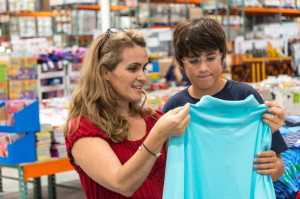
For those who have to restock what their children need for school, 92.7 percent will purchase new apparel, spending an average of $217.82, though most (94.1 percent) will head out for new school supplies, spending an average of $97.74; families will also spend $117.56 on new shoes.
In 2014, 58.3 percent of parents said they would buy electronics for their school-age children, and planned to spend an average of $212.35 – one of the highest amounts seen in the survey’s history. Having less of a need for electronics this year, however, families said they would decrease their spending on gadgets for their children and will spend an average of $197.24.
Survey results point to a more confident consumer when it comes to spending and the impact of the economy. The survey found 76.4 percent of families with school-age children say they will change their spending because of the economy, the lowest in the seven years NRF has been tracking it and down from 81.1 percent last year.
Fashion-forward teens and tweens know just how to get mom and dad’s attention when it comes to new school gear to make their friends stop and stare. According to the survey, 86.4 percent of school shoppers say their children will influence one-quarter or more of their back-to-school purchases. And for the smaller purchases, children plan to chip in some of their own money; teens will dole out $33.27, and pre-teens will spend an average $17.57.
“Heading into the second half of the year, we are optimistic that economic growth and consumer spending will improve after a shaky first half of the year,” said Shay.
Omnichannel offerings desired by shoppers
For the first time, NRF asked about shoppers’ intentions to use retailers’ omnichannel offerings; of those planning to shop online, nearly half say they will take advantage of retailers’ buy online, pick up in store or ship to store options, and 17.3 percent will look for expedited shipping offers. 92.1 percent will take advantage of retailers’ free shipping offers.
Separated by age, Millennials are much more likely to use these channels: Two-thirds of 18-24- and 25-34-year-olds will use a buy online, pick up in store or ship to store option (65.7 percent and 65 percent respectively), and 15.4 percent of 25-to-34-year-olds will use a reserve online option, much higher than the 9.1 percent of average adults who plan to do so. Additionally, 23 percent of 18-to-24-year-olds will use same-day delivery, significantly more than the 10.2 percent of average adults.
College shoppers spending less in 2015
As seen in NRF’s Back-to-School Survey, college shoppers and their families will also spend slightly less this year after investing in electronics and supplies in 2014. According to NRF’s 2015 Back-to-College Spending Survey, families with children in college and college students will spend an average of $899.18, down slightly from $916.48 last year. Total spending is expected to reach $43.1 billion.*
Trendy Millennials have changed how they view the decor needs for their traditionally less-than-appealing dorm rooms, and this year spending on matching bed sets, curtains, bath linens and other home goods will top any previous year. According to the survey, half (51.3 percent) of college shoppers will purchase dorm or apartment furnishings and will spend an average $126.30, up 30 percent from $96.70 last year and the most since NRF began tracking it in 2007.
Total spending for K-12 and college is expected to reach $68 billion.*
About the survey
NRF’s 2015 Back-to-School and Back-to-College spending Surveys were designed to gauge consumer behavior and shopping trends related to back-to-school spending and back-to-college spending. The surveys were conducted for NRF by Prosper Insights & Analytics. The poll of 6,500 consumers was conducted June 30-July 8, 2015.The consumer polls have a margin of error of plus or minus 1.2 percentage points.
*The total spending figure is an extrapolation of U.S. adults 18 and older.