
Editor’s note: Erik Olson is the vice president and senior qualitative research consultant at Market Strategies International, Conn. This is an edited version of a post that originally appeared here under the title “Shopper technologies come of age.”
Intercepting or tagging along with consumers as they chase through the store on a shopping trip has been the go-to methodology for us “in-the-moment” researchers for decades. For the most part, it’s still a good way to build insight about shopping behaviors through observation, inference and discussion.
But in this age of “retail activation,” also known as generating immediate sales transactions, casual interpretations aren’t good enough. We need better ways of getting closer to shoppers’ decision making at the point-of-sale, seeing shelves through their eyes, knowing which visual features have the greatest impact and understanding what triggers their moments of truth. Here is a breakdown of two of the more promising innovations: instant micro surveys and eye-tracking glasses.
Instant micro surveys
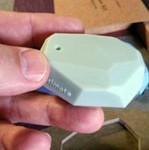
A year ago, Apple introduced iBeacon technology to help 
For the first time, this allows shoppers to:
- instantly share an opinion,
- rate a shopping experience,
- take a picture of the offer or pack design that is catching their eye or
- record a snap video about that particular moment of truth for our research team to analyze.
Respondents need not wait for an interview following the shopping trip nor try to reconstruct the experience in a focus group or online bulletin board. They capture their attitude and action immediately while they are standing directly in front of the shelf we’re most interested in discussing.
Importantly, shoppers opt in to the research for a small incentive, like a free gallon of milk. The devices don’t track users and they don’t push content to annoy shoppers. Shoppers collaborate because we create a benefit-reinforced incentive rather than offering a 10 cent coupon which presents little relevance and virtually no value (like so many mobile surveys offered today).
We are currently working with vendors that have deployed a network of iBeacons in retail locations across several metro areas, and the deployment is growing each day. We’re also testing individual iBeacon placements in single stores to supplement other micro-qualitative and quantitative research activities in the market. The methodology is delivering insights fresh, fast and hot!
Eye-tracking glasses
We have known for many years that shoppers don’t have insight into what they do or don’t want, and they don’t know what motivates them to buy. Even with sophisticated shoppers, relying on qualitative data from “shop arounds” and post-shop interviews can be misleading.
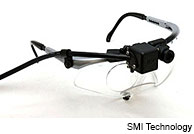
Early eye-tracking glasses were clunky and obstructed respondents’ peripheral vision. But the latest versions of the glasses are lightweight, less obtrusive and allow researchers to “watch” shopper interactions from the front of the store. They let us literally get inside shoppers’ heads and peer through their eyes as they shop. We no longer have to rely on rationalizations about what they did – we can see respondents’ fast-thinking behaviors in action.
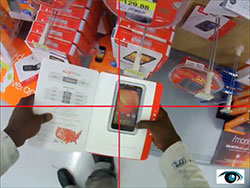
Eye-tracking glasses use miniature video cameras to fixate on a shopper’s pupil then superimpose a target over streaming video precisely where the shopper’s eyes look. The optical alignment is so fine that the researcher can distinguish whether the shopper is looking at the brand name, sub-brand or ingredients on a chewing gum label or whether they are searching for a familiar brand name or a great price as they approach the shelf.
Typically researchers interview shoppers prior to the study about their immediate goals and expectations. The researcher fits and calibrates the glasses and then the respondent shops as they normally would. The research team watches streaming video of the shopper’s gaze as she moves through the aisles and makes purchase choices. A debrief afterward gives the team preliminary information, but the analysis of the eye movements of all the shoppers in the study delivers detailed metrics on viewing, holding and reading activities in the shopping process.
The true value of eye tracking is the data gathered that can support the real decision-making brand marketers must do. Too often, old qualitative eye tracking studies only went halfway and provided cookie-cutter analytics and heat maps like the ones shown below which simply show what the majority of shoppers looked at on this sample display (red is the greatest area of focus).

Consider some of the following metrics we now generate using advanced analytics such as clustering and factor analysis enabled with proper data collection:
- How products in the consideration set funnel to purchase or, more importantly, how to disrupt a product in the consideration set to get your brand in the shopping cart;
- exactly what shoppers notice, evaluate, select and buy – and why;

- which element of the message, placement, design or marketing mix influenced the purchase decision;
- how stimuli placed in the shopping environment drive shopper attitudes toward their favorite brand (see example below of quantifying the impact of shelf placement);

- what competitive brands have done to steal your share and which of their brands may be vulnerable to your attack; and
- which features of displays, signs, POS, packages, shelves or price tags actually drive performance.