
A global view of AI adoption and trust
Editor’s note: Richard Colwell is president of WIN International Association.
Global brands and marketers must continue working to understand how consumers are emotionally and behaviorally responding to the rise of artificial intelligence.
Spanning insights from over 32,000 respondents across 40 countries, the WIN World AI Index maps adoption and reveals latent tensions, cultural fault lines and strategic whitespace for brands seeking relevance in an AI-shaped world.
AI in the Western world: Maintaining trust
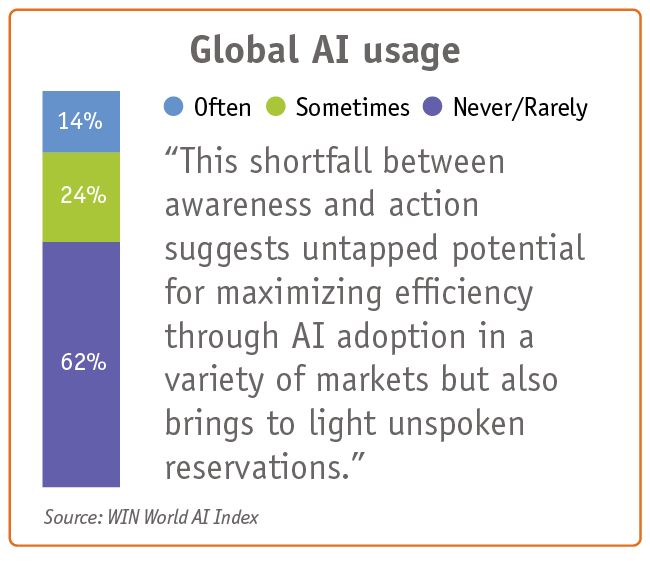
Report findings confirm that globally, 62% of consumers report never or rarely using AI, while only 14% engage frequently. This shortfall between awareness and action suggests untapped potential for maximizing efficiency through AI adoption in a variety of markets but also brings to light unspoken reservations.
While usability scores are relatively healthy across the world, trust and comfort in AI lag significantly behind, especially in the Western world. For marketers, this represents a clear need to build transparency and reassurance into messaging when AI features play a part in the brand offering. For example, maintaining authenticity and retaining human oversight is key. It suggests people may respond poorly to AI-generated research, marketing or advertising, based on their concerns around trust and misinformation, which can then affect how consumers perceive brands. Building trust and retaining real human connections are essential to brand success.
In Europe, we've seen a lower adoption paired with high skepticism, driven largely by fears around misinformation. The Americas are ahead in usage but carry heavier emotional baggage with job displacement and data misuse as some of their top concerns. These sentiments echo the cautionary voices in Western tech discourse like Geoffrey Hinton’s striking 10% extinction warning and even words of caution from the CEO’s of OpenAI, Google DeepMind and more who signed the 2025 Centre for AI Safety Statement. For brands, AI integration must walk a fine line by offering utility while leading with empathy.
AI in Africa-MENA and APAC: Accessibility, age and gender disparity
On the other side of the world, Africa-MENA stands out not just for its modest usage rates but for the emotional ease with which consumers engage AI. Despite structural limitations, like limited access to tech, this region scored highest in comfort. This paradox hints at resilience and an audience willing to leap forward, provided tools are accessible and intuitive. Brands eyeing expansion here should prioritize mobile-first designs in line with mobile connectivity initiatives aimed to improve access to tech within the region. They must also remain culturally attuned to onboarding progression.
Alternatively, APAC dominates this index, with India leading in usage and China topping acceptance, among those based in the main cities, where the research in those countries was conducted.
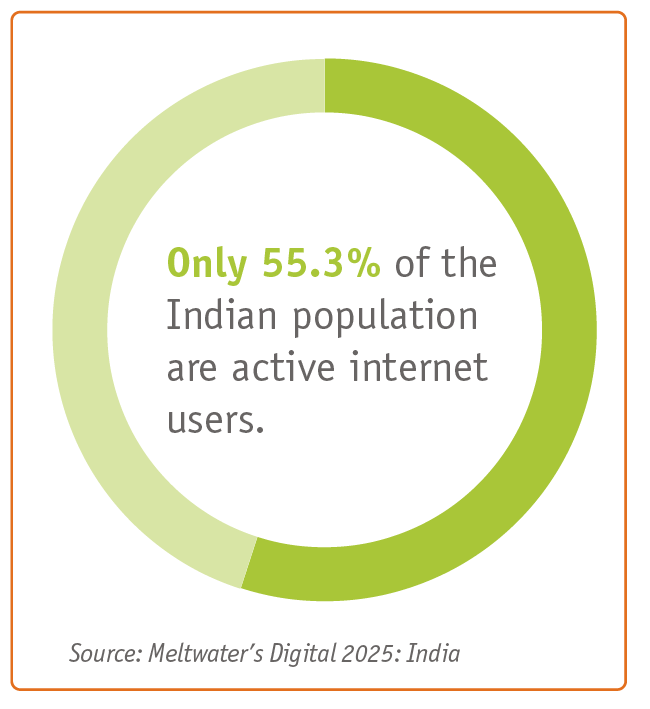
This is, of course, with the caveat that internet users in the more rural areas have not been accounted for in this study. We have to consider that only 55.3% of the Indian population are active internet users and that the country is known for having a mobile-first digital economy, with most users accessing the internet from a mobile device.
According to the GSM Association, adults in rural areas are 29% less likely to use mobile internet than those in urban areas across LMICs, due to key barriers like affordability of mobile handsets or digital literacy and other lifestyle requirements. That said, it’s safe to say that, as a whole, India is a hugely progressive country and ready to embrace new technologies head-on, especially once barriers to adoption are removed.
Notably, APAC flips the gender narrative with women outpacing men in AI engagement across China, India, Thailand and Australia. This presents a rare learning moment of how inclusive tech education and product design can shift demographics.
For global brands, this isn’t just a regional anomaly, it’s a road map for gender equity in tech–driven storytelling. It serves as an important reminder that gender equity isn’t a sidebar to innovation, but a central narrative. Brands have the power and responsibility to ensure women’s stories aren't just featured but structurally embedded in how content is created, personalized and amplified.
Equally, across markets, age reveals a striking contrast. Younger consumers embrace AI with fluency and optimism, while older groups hover periphery. In places like the U.K., this divide is especially wide. The implication for marketers? Tailored education and tone are vital points for consideration. Overcoming digital alienation could unlock powerful new segments, if handled with sensitivity and relevance.
Using data to track and shape AI adoption trends
Overall, AI usage and acceptance will not stand still – it’s an always-evolving picture, shaped by emotion, culture and context. For insight teams and brand-side researchers, the next steps are clear. It's time to go beyond surface demographics and segment deeply by psychology that reveals trust levels, comfort zones and emotional resonance. Layer qualitative tools over raw metrics to decode not just how often people use AI, but also whether they do or don’t – and why.
Marketing strategies should position AI features as human-centric solutions, framed by empathy rather than novelty. Internally, teams need to be educated on global adoption dynamics before crafting outward facing messages. And above all, researchers should treat the index as a living framework, one to revisit annually to monitor shifting sentiment, regional nuance and generational shifts.
AI may be the technology, but humanity is the context, and brands that embrace both will be the ones that thrive in tomorrow’s trust economy.
Access the full report at AI readiness at the WIN World AI Index site (registration required).