
The cost of biometric verification in consumer research
Editor’s note: Mario X. Carrasco is co-founder of ThinkNow, a Burbank, Calif.-based market research firm.
Data quality remains one of the most critical issues facing the market research industry today. It underpins every insight we deliver and every recommendation clients act upon. When data quality falters, confidence in research erodes, decision-making weakens and the credibility of our industry suffers. In that sense, the focus on improving data quality is both necessary and justified.
However, as new solutions emerge, it is essential that we examine not only whether they reduce fraud, but whether they preserve something equally important: representativeness.
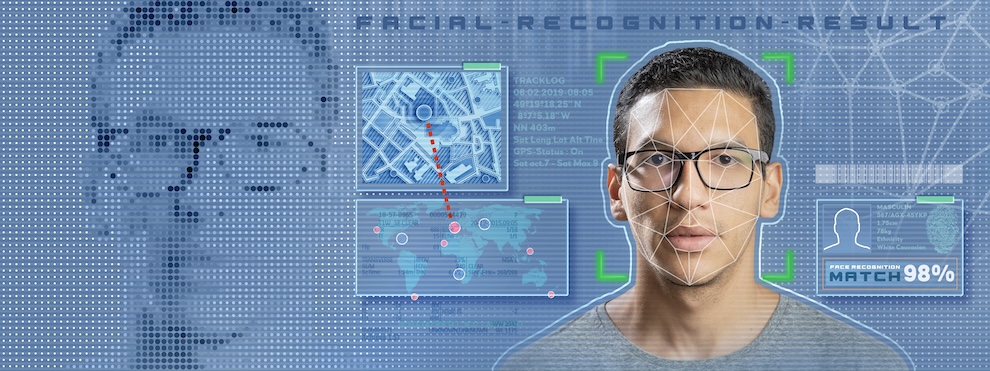
One of the fastest-growing approaches to data quality control is biometric ID verification. On its surface, the logic is compelling. By requiring respondents to submit a government-issued ID and a live photo, biometric verification promises to confirm that participants are real people and prevent duplication. For buyers increasingly concerned about bots, professional respondents and bad actors, this approach feels decisive and reassuring.
But data quality is not simply about verifying identity. It is about accurately reflecting the population you are trying to understand. And this is where biometric verification introduces a serious and often overlooked problem.
Why biometric verification is not inclusive
The United States is more diverse than it has ever been, not only ethnically and racially, but also in levels of institutional trust, privacy sensitivity, technology comfort and lived experience. When research methodologies assume a uniform willingness to provide biometric or government-linked data, they risk systematically excluding key populations.
Consider Hispanic and Latino communities. While the majority of Latinos in the United States are citizens or legal residents, many live in a social context shaped by heightened immigration enforcement and public discourse around surveillance. Multiple studies show that even U.S.-born Latinos report increased anxiety about sharing personal information that feels traceable or connected to government systems. Asking for a driver’s license or passport, regardless of privacy assurances, can prompt hesitation or refusal to participate. The result is not better data, but underrepresentation.
This dynamic is not unique to Latino respondents.
Black Americans, informed by a long history of surveillance and misuse of personal data, often express higher levels of skepticism toward identity verification systems. Older adults may struggle with the technical aspects of biometric submission or feel uncomfortable with camera-based verification. Lower-income respondents may lack current identification or worry about how their data could be used. Gen Z respondents, particularly those who are privacy conscious, increasingly resist facial recognition technology altogether. Even many non-Hispanic white respondents report growing distrust of institutions and data collection practices.
When these groups disproportionately opt out, the sample becomes cleaner but less representative. Fraud may be reduced, but so is diversity. In a country where cultural nuance, language and lived experience drive consumer behavior, this trade-off is not trivial. It fundamentally alters the story the data tells.
This does not mean biometric verification has no place in market research. In certain contexts, such as high-incentive studies, identity validation audits or narrowly defined panels with established trust, biometric tools can add value. The problem arises when they are positioned as a universal solution.
There is no single fix for data quality. And there should not be.
Understanding inclusive approaches to data quality
More inclusive approaches to data quality recognize that different risks require different controls, applied thoughtfully and proportionally. High-quality research is best achieved through layered systems that balance fraud prevention with accessibility. These systems may include behavioral analytics, attention checks, response pattern analysis, device fingerprinting, IP monitoring, targeted verification at critical moments and ongoing panel engagement strategies that build trust over time.
Equally important is designing research experiences that respect respondent concerns. Clear communication about why data is collected, how it is protected and what is optional matters. Offering multiple paths to participation, rather than a single high-friction gate, helps ensure that diverse voices are not filtered out before the survey even begins.
Data quality and inclusivity are not opposing goals. In fact, they depend on one another. A dataset that excludes entire segments of the population may be technically clean, but it is analytically flawed. True quality lies in capturing reality as it exists, not as it is easiest to measure.
As the U.S. continues to diversify, the market research industry must evolve accordingly. The future of data quality will not be defined by the strictest verification tool, but by the smartest combination of methods that protect integrity without sacrificing representation.
Better data is not just about fewer bad actors. It is about hearing from the full range of people whose behaviors, attitudes and decisions shape the market. That is how research remains relevant, trusted and valuable in a changing America.