
From AI-moderated research to automated reporting, this edition explores how leaders across the marketing research industry are defining the future of insights. Discover the latest strategies, tools and thinking from six firms helping brands stay ahead in a changing landscape in this curated collection of sponsored content.
Deep Human Insights. Stronger Signals for Marketing Decisions.
 This post describes how market research is moving beyond the old tradeoff between speed and quality. Modern brands need research that delivers fast answers without losing depth, rigor or strategic value.
You will learn how strategic solutions are built for this new era: combining technology, behavioral science and human interpretation to uncover deeper consumer motivations quickly and at scale.
Essential perspective for organizations seeking to integrate profound human understanding with the rapid efficiency and scale of advanced technology.
94% Say Research Matters. Only 27% Act on It.
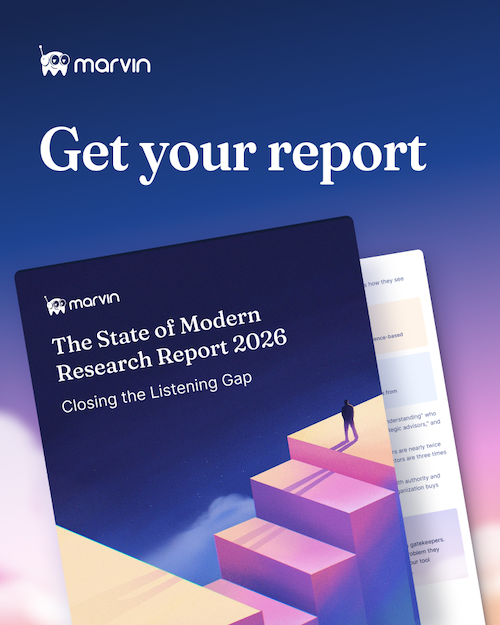 Most organizations say they listen to customers. So why don't customer insights consistently shape business decisions? Based on a survey of 309 researchers and decision makers, our new report, “The State of Modern Research 2026,” explores the operational gaps, workflow challenges and AI opportunities behind the listening gap.
Key findings:
- 73% of leaders say research review is formal. Only 37% of practitioners agree.
- Research has scaled. The supporting systems haven't kept up.
- Most researchers use AI, but few are getting the most from it.
- Organizations want democratized research. But they don't choose tools everyone can use.
How to Build AI Workflows Researchers Can Trust
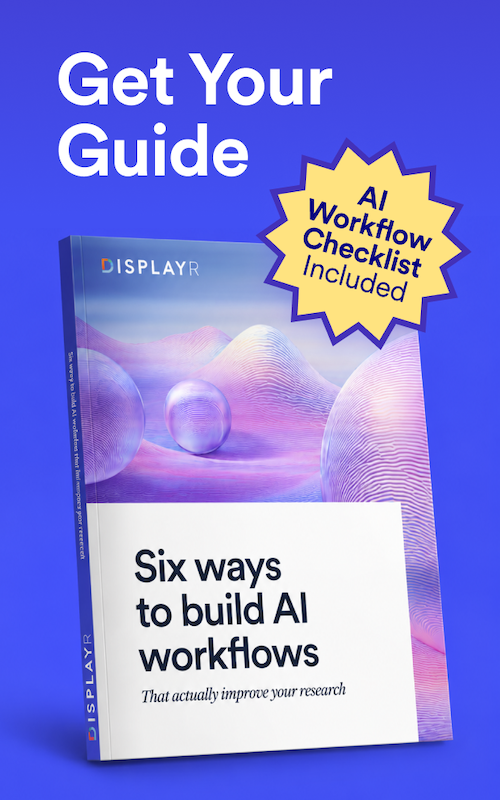 AI is making research faster but faster does not always mean better.
In this practical white paper, Displayr shows how research, DP and automation teams can build AI workflows that are precise, reusable and easy to verify.
You’ll learn:
- Why most AI workflows fail.
- How to encode expert research knowledge into repeatable workflows.
- When to trust the model and when to design around it.
- Why traceability is essential for research quality.
- Three workflow types your team can start with first.
The Ultimate Guide to AI-Moderated Research, From 0-1
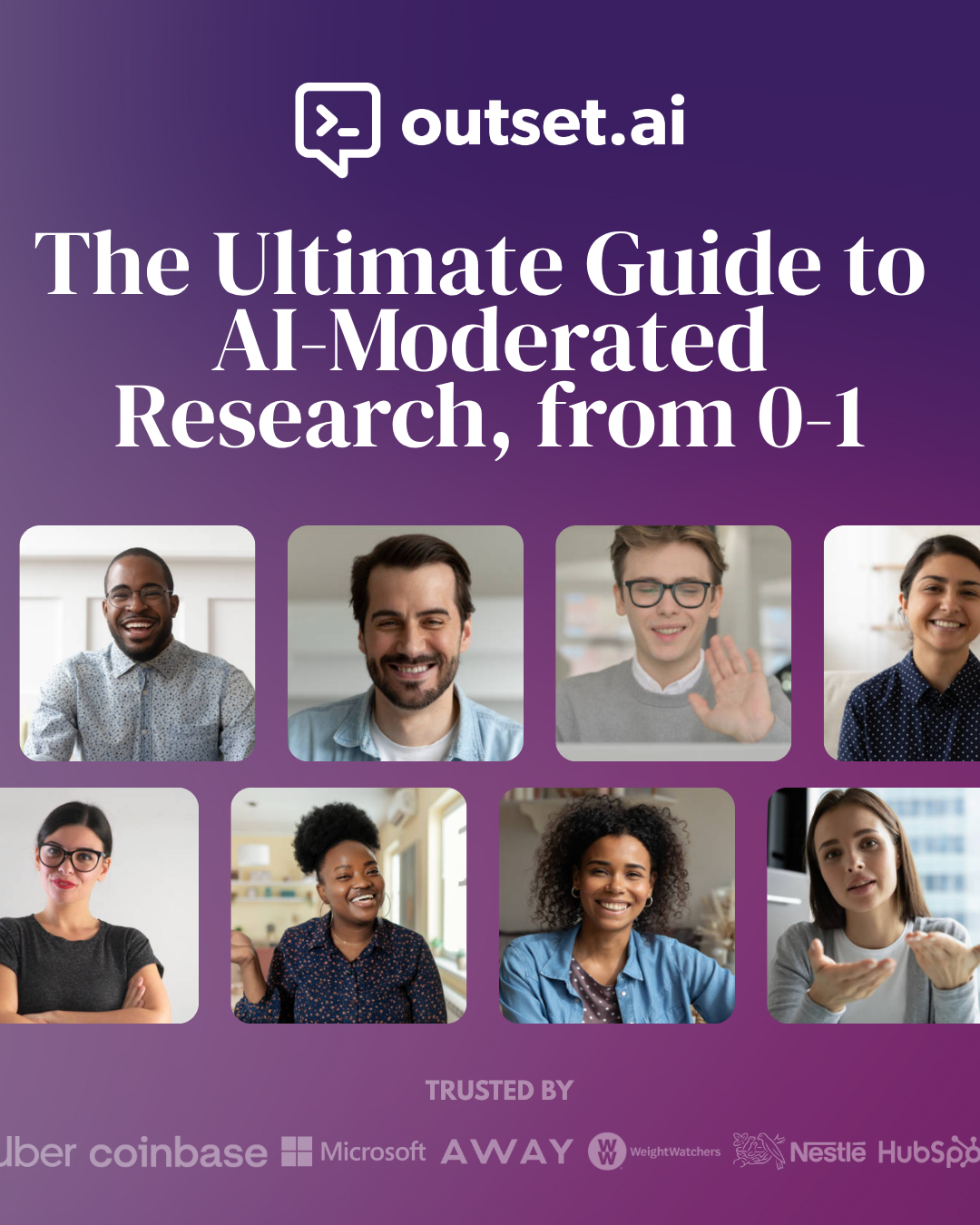 AI fatigue is real. So instead of more hype, here's something useful: Outset's Ultimate Guide to AI-Moderated Research, from 0-1 is built for researchers who want straight answers about where AI moderation actually fits – and how to get started. Inside:
- What AI moderation actually is (and isn't).
- How to design your first study.
- When to use it vs. traditional methods.
- What results look like in practice.
- How to evaluate it on your own terms.
Research Agents, Built for Your Workflow
 AI is already embedded in research workflows, but its role is evolving. Research agents represent the next step – moving from single-task tools to systems that support the multi-step research processes. Streamline setup, validating, computing, reporting and refining – cutting production time, strengthening insight clarity and delivering decision-ready stories 50% faster.
Key capabilities:
- Slide analysis: Assess clarity instantly.
- Faster reviews: Speed up delivery cycles.
- Automated reporting: Cut production time from days to minutes.
Most AI Tools Aren't Built for Complex Qual Studies
 General-purpose AI tools like ChatGPT, Claude or NotebookLM offer real value for exploratory analysis.
They reach their limits in complex qualitative studies: unreliable quote attribution, inaccurate speaker diarization in focus groups, challenges handling rotated interview guides and domain-specific terminology, as well as summaries that diverge from source material.
Specialized formats like car clinics and folder tests are out of reach. Precision, traceability and nuance matter – right down to the single decisive statement in complex datasets.
The award-winning startup xelper combines AI, methodological expertise and a human in the loop to scale qualitative analysis without compromising quality.