
For brands, the constant pressure to find new customers no doubt competes with the equally important work of satisfying current ones. But what happens when a new group of users doesn’t neatly mesh with the longtime faithful? That’s one of the questions driving the new book “The Growth Dilemma: Managing Your Brand When Different Customers Want Different Things” (Harvard Business Review Press).
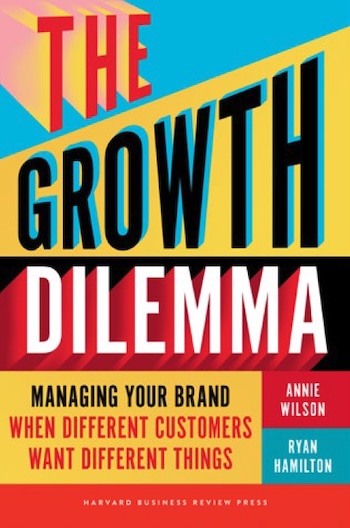
In it, Annie Wilson, a senior lecturer of marketing at the Wharton School of Business, and Ryan Hamilton, an associate professor of marketing at Emory University’s Goizueta Business School, explore the idea of segment relationship management – the act of examining and managing how various customer segments “create and destroy value for a brand’s users because of how they relate to one another.”
A rubric of four customer relationship types – Separate Communities, Connected Communities, Incompatible Segments and Leader-Follower Segments – is used as framework for exploring a host of corporate triumphs and failures at dealing with harmonious and conflicting segments.
For example, Separate Communities – which, as the name implies, are groups who want different things from a brand and are unaffected by the existence of others – are sometimes serendipitous. LEGO, for instance, discovered and then somewhat grudgingly acknowledged the existence of AFOLs (adult fans of LEGO) who love the building bricks as much as kids do. Others spring from more concerted efforts after new groups are identified for targeting, like food and beverage container brand Stanley marketing to on-the-go moms with its bicep-straining Quencher bottles.
There’s more to it than just discovering that these groups are out there. You then have to look at how (and if!) they coexist and what that means for your brand and its marketing. Do you gently ignore the differing customer types? Do you playfully play them off of each other? Do you slam them together and hope for the best?
The answers to those questions, as the book so entertainingly explains across myriad examples, are almost never the same from brand to brand. Work-boot maker Timberland was initially unsure how to react when rappers and hip-hop artists started wearing and rapping about its footwear. How would the company’s core construction worker segment react to and feel about that? Turns out, the two groups can peacefully coexist and Timberland maintains separate social media accounts for each and also markets and advertises differently to each.
But things don’t always go so smoothly and so a main theme here is conflict – what happens when your brand or its customer groups (new or old) or the cultural zeitgeist are suddenly at odds? Some of the book’s most useful portions are about avoiding and escaping conflict and one key is answering questions such as: Where do your brands sit in the relationship rubric? Are you trapped between seemingly disparate user segments? Are you at risk of alienating your core customer in pursuit of a shiny new group of buyers?
The perils of not answering them are illustrated in the book’s instructive, if somewhat harrowing, recaps of brand and marketing disasters like Ron Johnson’s destruction of JCPenney by disappointing both the bargain-hunting middle-aged women who long formed its core audience and the trendy, label-conscious shoppers whose interest he was desperate to capture.
For researchers, of course, the challenge is figuring out which tools can get the brand the guidance it needs in order to navigate potentially dangerous waters. But as the book shows, if you’re able to uncover or foster new customer segments, it doesn’t have to matter (and in fact it may be beneficial!) if they are incongruous or incompatible with your existing consumers. A deft approach to marketing and advertising – hopefully fueled by data and insights – can make two dissonant notes come together to make beautiful music.