
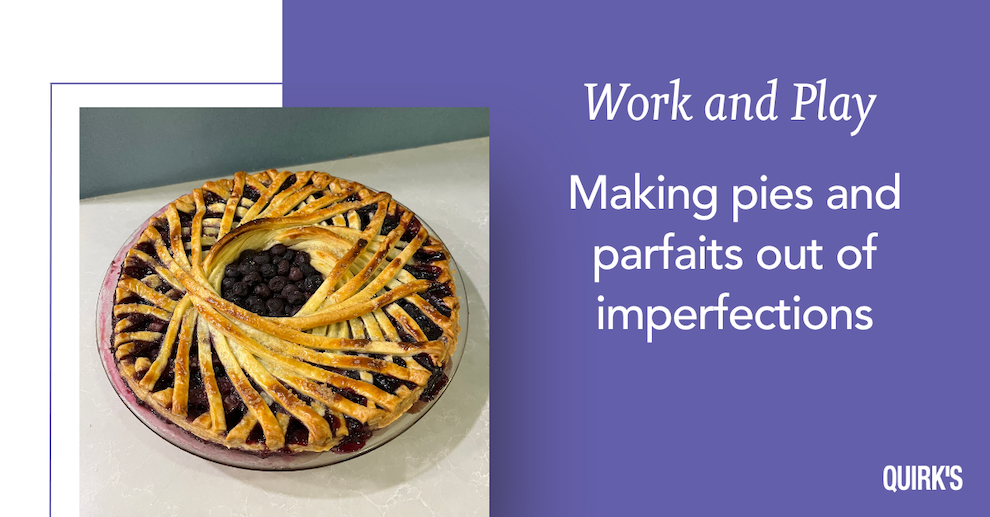
Q&A with Lauren Isaacson
Editor’s note: Nancy Cox is the founder/principal at Research Story Consulting, LLC, Kansas City, Mo., with over 30 years of experience in effective writing and research methodologies. She holds a Master of Liberal Arts in business admin and management, and a Bachelor of Science in journalism. Find Cox on LinkedIn.
Lauren Isaacson, market and user experience research consultant at Curio Research, is the 2026 winner of the QRCA Impact Award. Currently, Isaacson is the Vancouver-Metro Chair of the Insights Association Canada Chapter as well as host of the bi-monthly Vancouver Research Professionals Meetup. She was the 2023-2024 QRCA President. Isaacson holds an MBA in business management from Pepperdine Graziadio Business School and a Bachelor of Science from Colorado State University.
In this ongoing series with research thought leaders, discover how the research community plays and how that plays out in their work life. In the Venn diagram of work and play, what happens when they overlap?
Hello Lauren Isaacson, Market and User Experience Research Consultant at Curio Research
What is the play in your life?
I’m a pie maker. I started making pies when I first came to Canada and needed a way to occupy myself until I could work officially. I made a lot of pies! There was a lot of trial and error in my pie making and I’m still learning.
Now I make pies when we entertain. Last year, my husband and I started hosting dinners for friends about once every two months. Food is my husband’s love language! He plans and prepares the dinners, and I make the pies. This is our way to build connections. Over food and pie.
Of course, the crust is incredibly important. I first used my mother-in-law’s lard-based recipe. That crust was fine, but after experimenting my go-to recipe is now an all-butter crust. Always unsalted butter, as the consistency is different than salted butter. It makes a difference! I also whisk an egg yolk into the recipe’s ice water to make the dough extra pliable. Recently, I learned from an expert’s video that flaky pie crust comes from folding. Like the folds in a croissant. After blending then shaping my dough into two balls, I press and fold, press and fold until I get the right consistency to roll out my dough.
I don’t want to add to the mystery of pie dough. I use regular all-purpose flour and regular sugar. A pastry blender is my only special tool – they’re easy to find. I use this blender to mix by hand as it’s almost impossible to overmix. It’s also a little bit more of a workout, you’ve got to get your shoulder in there. But everyone has their own technique. Using a hand mixer or a food processor is fine. Maybe you have arthritis, and you can’t mix by hand. Use the tool that works for you.
How has your play influenced your research work?
I’d be stretching it if I said pie making has influenced my work! Of course, there’s similarities like timing. When we host our dinners, I can’t be in the kitchen when my husband is in the kitchen, so I need to get everything done before he gets in there. Often, I do some prep the night before, then a little more that morning. Then I can still serve a warm and fresh pie.
There’s teamwork. I plan my pie to complement my husband’s menu. And he’s helped me with flavor combinations. Once, I wanted to zip up a cherry pie I was making for Canada Day, July 1. My husband happened to be out of town, but he had a ready answer when I called. He had me look up cherries in a favorite book, “The Flavor Bible” – this book describes flavors that work well together. He’s quite good at riffing on the “Bible’s” suggestions, and came up with goat cheese, orange and cherries. The taste profile was quite good.
But mostly pie making is its own thing separate from work. Yes, I do have “maker of pies” on my LinkedIn profile. This once prompted someone to ask me, “Do you mean you make pie charts?” No, I make the delicious kind of pie.
What would you tell readers who want to know more about your area of play?
If you’re making your first pie, go to your local farmer’s fair or market. Take a bite of the fruit. If you like the taste, you’re probably going to like that taste in a pie. You get the best flavor from your fruit if you buy locally in season. Also, it’s less expensive. If you’re buying apples in the summer, you’re likely paying for shipping those apples from New Zealand. You may also get a story – I learned that the Ambrosia apple variety was developed here in British Columbia. You may learn about fruit that is specific to where you live. Farmers also know tips like how to freeze summer blueberries for the winter. For crust, I would start with an all-butter crust recipe.
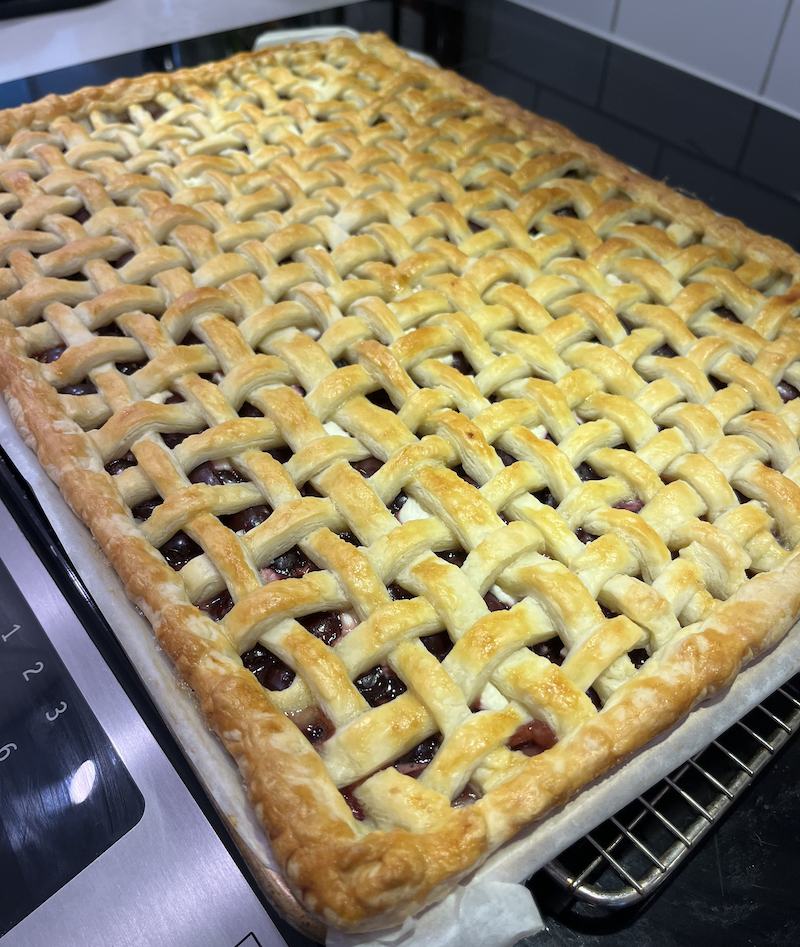
If you want to level up your pie game, there are intricate lattices and filling arrangements. I’ve started to go beyond the standard grid lattice myself. I used a round cookie cutter to make circles for my top crust. Then I simply laid those circles all over the top of my filling. You can do almost anything with your top crust as long as it partially covers the pie and has some spaces to vent. Internet sleuthing will turn up many people showing how to do interesting lattices such as Piometry.
If you feel you’re in a flavor rut, bring together some flavors from another recipe you enjoy – even one that’s not a dessert. Or be inspired by the flavors you enjoy at a restaurant. Like adding rosemary to an apple pie. That’s delicious.
My best tip? Even a failed pie is delicious. One Thanksgiving, I didn’t temper the cranberry curd long enough for my pie. It never set. My sister tasted it and proclaimed, “Still delicious! Just mix it all together, we’re having parfait!” Not a failure. Make it a parfait!