
The trust equation: The formula every market researcher should know
Editor's note: Dave Santee is Founder of True North Market Insights, recognized as a Most Trusted Market Research firm. Named a Top 100 Marketing Leader, he focuses on earning trust and serving clients as a strategic partner rather than a vendor.
Seth Godin once said, “Earn trust, earn trust, earn trust. Then you can worry about the rest.”
That’s not just a memorable line; it is a fundamental truth for anyone working in market research.
In our profession, trust is the difference between insights that drive action and insights that quietly disappear into a shared drive.
Without trust, even the most rigorously designed, expertly executed and beautifully analyzed study is meaningless. If stakeholders don’t trust the researcher, they won’t trust the findings. And if they don’t trust the findings, they won’t act on them.
Trust is the foundation that allows research to influence decisions, shape strategy and create impact.
So, the question becomes: How do we earn it?
And since we are researchers, we appreciate a good formula.
Fortunately, there is one.
The formula for trust
David Maister, in his book “The Trusted Advisor,” offers a simple but powerful framework:
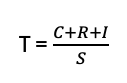
Where:
- T = Trust
- C = Credibility
- R = Reliability
- I = Intimacy
- S = Self-orientation
It is elegant, memorable and highly relevant to the work we do as advisors and insight professionals.
Credibility and reliability are not enough
When researchers think about building trust, we typically start with credibility and reliability:
- Do we have the expertise?
- Do we have the experience?
- Do we deliver high-quality work consistently?
Of course, these matter. But in many ways, credibility and reliability are simply the cost of entry.
In most organizations, technical competence is assumed. Stakeholders expect methodological rigor. They expect accuracy and professionalism.
Credibility and reliability prevent distrust – but on their own, they do not create deep trust.
To become truly influential, we must look further.
Don’t expect accreditation to generate trust
Occasionally, the market research industry debates accreditation and professional certification. The motivation is understandable.
Many researchers feel they are not fully heard. They worry about the rise of DIY research tools. They want business leaders to better appreciate the rigor behind the work. The assumption is that accreditation will elevate trust.
But trust does not come from credentials alone.
Accreditation may be valuable for development and training, but it is not a shortcut to becoming a trusted advisor. Organizations are already full of highly capable researchers whose work is ignored – not because they lack skill, but because they lack influence.
In fact, few CEOs or CMOs ask about the statistical approach used in a study. They assume competence.
Again: cost of entry.
Stakeholder trust increases with intimacy
This is where Maister’s formula becomes especially important.
He includes a dimension that is often overlooked in analytical professions: Intimacy.
Intimacy refers to empathy, authenticity and emotional safety. It reflects the extent to which stakeholders feel they can confide in you, speak openly and trust your intentions.
It is what moves an interaction from a transaction to a relationship.
In B2B research, we have found that intimacy is often highly correlated with loyalty, growth and long-term partnership. Without it, the relationship remains purely transactional – research becomes a service, not guidance.
Expertise alone can undermine trust if it becomes about us
One of the most instructive parts of the equation is the denominator: Self-orientation.
When we focus too heavily on demonstrating our expertise, proving our value or positioning ourselves as the smartest person in the room, we can unintentionally reduce trust.
Trust is not built by making the work about us. It is built by making the work about the client.
Technical excellence is necessary – but trust is inherently emotional. It requires a genuine client-centered orientation.
Competence gets us in the room. Trust makes our insights matter in the room.
Examples of self-orientation (“S”)
The following behaviors increase self-orientation and erode trust:
- We want to look like the expert, so we make it about ourselves.
- We recommend a standardized approach without fully understanding the decision context and the unique needs of the client.
- We rush to methodology instead of listening.
- We prioritize being right over being helpful.
- We take shortcuts because we are overloaded or underbid the work.
These behaviors turn advisory relationships into transactions.
How to overcome self-orientation
To reduce “S” and build trust more effectively:
- Ask thoughtful questions to fully understand the business issue.
- Restate the decision the stakeholder is facing.
- Avoid jumping too quickly into solutions or methods.
- Request background material – and engage with it seriously.
- Keep the trust equation visible as a reminder of what truly matters.
Trust is earned, not claimed.
And as Seth Godin reminds us:
Earn trust. Then you can worry about the rest.