

••• entertainment research
A force of a franchise
Study identifies key aspect of Star Wars fans

Have you ever been the proud owner of an extendable plastic lightsaber? Do you look forward to May 4th with an abnormal amount of excitement? If so, you may belong to the one in four internet users who constitute the Star Wars fan base. According to a GlobalWebIndex article by Tom Morris titled, “The Fandom Menace: Profiling Star Wars’ Influential Fanbase,” the love of the space opera extends across generations and continents, with similar amounts of Star Wars love for Boomers (23%), Gen X (26%), Millennials (23%) and Gen Z (22%). North America is above average when it comes to fans (35%) but APAC (22%), Europe (22%), LatAm (24%) and MEA (25%) are not far behind.
This group seeks adventure in their own lives as well – about three in four say they want to explore the world around them and immerse themselves with different people, cultures and lifestyles. They’re also an ambitious bunch, with two in three saying that they strive to fit as much into their day as possible and push themselves to be the best they can be (73%).
Being involved with a franchise as expansive as Star Wars, it’s not surprising that two-thirds of this group say they’re interested in films/cinema, while one in three see a movie in theaters at least once every two weeks. What are Star Wars fans watching? Films from other sci-fi/fantasy franchises. Fifty-six percent of Star Wars fans are also fans of Marvel movies, as compared to the 36% of all internet users. They keep this lead on other franchises as well, such as Harry Potter (54% to 32%), Spiderman (52% to 32%), X-Men (50% to 27%) and Disney (49% to 33%). While exploring new movies at the theater, Star Wars fans are 44% more likely than the average internet user to discover new brands through ads at the theater.
Star Wars fans are active online and they use the internet as an avenue to voice their opinions – in fact, they are 26% more likely than the average internet user to do so, with 40% of Star Wars fans stating that voicing their opinion is one of their main reasons for using the internet.
As frequent moviegoers, Star Wars fans enjoy discussing films online, with one in four posting their opinion about a film online each month. They also enjoy discussing music (21%), mobile phones (20%) and technology (20%) and are happy to join in discussions relevant to their interests. This speaks to the two in three Star Wars fans who agree that the internet makes them feel closer to people. In fact, this space is a valuable way to make new connections, with about four in 10 using the internet to meet new people and three in 10 using social media for the same reason.
Given that Star Wars fans are adept at connecting with others online, it makes sense that this group is 35% more likely than the average internet user to visit or use community-based platforms like Reddit and Twitch, where open discourse is the norm.
In keeping with Star Wars fans’ active internet life, they are more likely than the average internet user to engage with content relevant to them on social media. In the past month, 35% of this group has watched a consumer review of a product on YouTube and another 36% has posted a comment about a video on the platform. On Twitter, 20% have tweeted a question or comment about a company, brand or product and 23% have tweeted or retweeted a celebrity. This group is also active on Facebook, where 22% have commented about a TV show they’re watching and 26% have posted a comment about a product or brand.
The survey was conducted by GlobalWebIndex and polled 145,271 internet users aged 16-64.
••• health care research
To insure or not insure
Survey examines health insurance habits among Millennials

Millennials are comfortable relying on technology when it comes to their health care. Seventy-nine percent said they would Google an ailment before making an appointment to see a doctor and 63% felt that they should be able to text their doctor directly. Exactly half of respondents have utilized wellness benefits of their health insurance policies.
When it came to ranking priorities, 68% of Millennials rank health insurance over going out to dinner, going on vacation or going to a concert. Paying for health insurance remained a priority over other forms of insurance as well, though followed closely by car insurance. While 51% of Millennials surveyed had life insurance, an impressive 25% of pet-owning respondents also had pet insurance, compared to the average across all ages of 5%.
When it comes to pets, Millennials rethink where health care stands on their priority list – 62% reported that, given the choice to either go to the doctor or take their pet to the vet, they would choose to bring their pet in for medical care rather than seek care for themselves.
The survey was conducted by HealthPocket and polled 1,000 people in the U.S. aged 20-35. The poll was weighted to get representative samples from each state based on population.
••• employee research
Dressed to impress?
The American workplace is becoming increasingly casual
It’s a fashion revolution in the American workplace – according to a study by Randstad US, 33% of respondents said they’d quit their job (or turn down a job offer) if they were required to follow a conservative dress code. While that might sound extreme, casual dress really is becoming the new norm, with 79% of respondents reporting that their current employers’ dress code policy is either business casual (26%), casual (33%) or non-existent (20%).
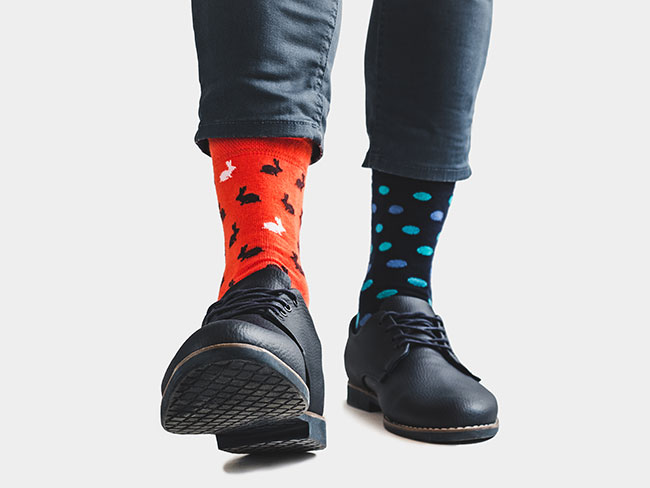
Despite more casual workplaces overall, most people still prefer more conservative attire when interviewing for a job. Sixty-five percent feel it’s important to wear a suit during an interview, regardless of how formal that company’s workplace actually is. In fact, 42% percent say they’d rather be 20 minutes late to an interview than show up looking disheveled or underdressed. Half (50%) of respondents say they will wear business attire from the waist up and casual clothing from the waist down for a video interview.
However, U.S. workers do draw the line for casual dress at some point. Most workers feel ripped jeans (73%) and leggings (56%) are not appropriate workwear, even in a business casual work setting. Fifty percent of respondents believe very high heels (defined in this survey as over three inches) look unprofessional, while 40 percent say the same about open-toed shoes of any kind.
Millennials find themselves at the center of this turning point in workplace dress – 38% of 25-35-year-olds admit they’ve been asked to dress more professionally by their manager or HR and 28% of all respondents say someone else’s clothing at work has made them feel uncomfortable because it was too revealing. However, most (63%) workers aged 18-35 say they prefer dressing up for work as it boosts their confidence and performance, while only 51% of workers aged 35-64 agree. Forty percent of Millennials would rather spill coffee on themselves before a big meeting than show up wearing the same outfit as their boss.
Gender differences exist as well – 74% of men surveyed own a suit, compared to 45% of women. On the flip side, over half (58%) of women say they’ve had to bring a sweater or blanket to work because of their cold office, compared to 30% of men.
The survey was conducted by Research Now on behalf of Randstad US and polled 1,204 employed people between the ages of 18 and 65+ and included a nationally representative sample balanced on age, gender and region.
••• shopper insights
The rise of the gift card
Gift cards are becoming more popular for both the gift giver and receiver
If you’ve ever viewed gift cards as a cop-out present, think again. According to a study by Blackhawk Network, gift cards are the most requested holiday gift item in America – and gift-givers are beginning to catch on, spending 7% more on gift cards during the 2019 holiday season than in 2018.
Digital gift cards also experienced a 4.5% increase, showing that e-gifts are gaining ground despite the popularity of physical gift cards. E-commerce sales during the holiday were up more than 12% and digital gift cards accounted for nearly 20% of holiday gift card sales in 2019. The study found that 23% of surveyed respondents reported receiving digital gift cards.

The popularity of gift cards cannot be overstated; 80% of consumers reported receiving a digital or physical gift card for the 2019 holidays, making the cards a significant source of revenue for retailers. According to Blackhawk Network, about half (52%) of consumers expect to spend as much as $30 more than the value of their gift cards. Additionally, 53% plan to spend these cards within weeks of receiving them to take advantage of holiday sales.
The survey was conducted by Murphy Research on behalf of Blackhawk Network and sampled 3,000 respondents aged 18 and older. Gift card growth findings are based on 2018 and 2019 sales data from Blackhawk Network from over 50,000 merchant locations across the U.S.
••• gen z research
Digital natives and creatives
For Gen Z, technology and creativity go hand in hand

The internet is a creative haven for this cohort, 55% of whom say they that they find social apps and the internet a more creative space than what they experience offline. A generation of digital natives, Gen Z experience a digitally influenced perception and experience of creativity and perhaps this speaks to the fact that creativity for Gen Z often involves more manipulation/alteration than observation/description/replication.
Gen Z find their creative groove in social apps (56%) and half of this cohort (50%) have used AR filters/lenses to enhance a photo or video of themselves or with friends; 43% have enhanced with emojis, 44% with a color filter and 51% with text or a caption.
One in four (27%) of Gen Z have adapted an app or website feature to do something that isn’t typically available (for example, using a picture collage app or an app to add music, separate from the app they were posting with). When asked about digital creative tools, 35% of respondents chose Snapchat creative tools for creating art or editing photos, followed by Instagram (29%), VSCO (8%), Photoshop (23%) and iMovie (12%).
Gen Z find inspiration for creativity in a variety of places, such as social apps (49%), friends and family (44%) and personal experience (40%). This creativity speaks to an emphasis on self-expression within Gen Z. When asked to develop a slogan for their generation, respondents overwhelmingly chose some variation of “be yourself” such as “just be you,” “living our best life,” “do you” and “think for yourself” alongside more slogans aimed at social responsibility such as “save the planet,” “there is no planet b” and “we are the future.”
The study was conducted by the Innovation Group on behalf of Snapchat and polled 1,208 U.S. and U.K Gen Z respondents.