As we prepare for 2026, we want to extend our gratitude to our authors, readers and advertisers. Your contributions and support have made this past year one of exceptional insights.
We’ve curated a selection of our editors’ favorite articles from 2025. It was a challenge to narrow our lists down as we’ve been on the receiving end of so many quality submissions that we were proud to publish!
Editors’ choice articles 2025
(listed in no particular order)
Expanding informed consent in the age of synthetic data and digital twins
By Tracy Tuten, Illuminas: A Radius Company
The promise of synthetic data in market research is dazzling: faster results, lower costs, privacy safeguards and the ability to simulate hard-to-reach audiences. With the rise of generative AI and machine learning, synthetic datasets – designed to mimic real human behavior – are now fueling everything from predictive modeling to segmentation strategy. But behind the sheen of innovation lies a growing ethical blind spot: Are we adequately informing participants how their data will be used to train synthetic models, power simulations and even construct data-driven “digital twins”? Read more.
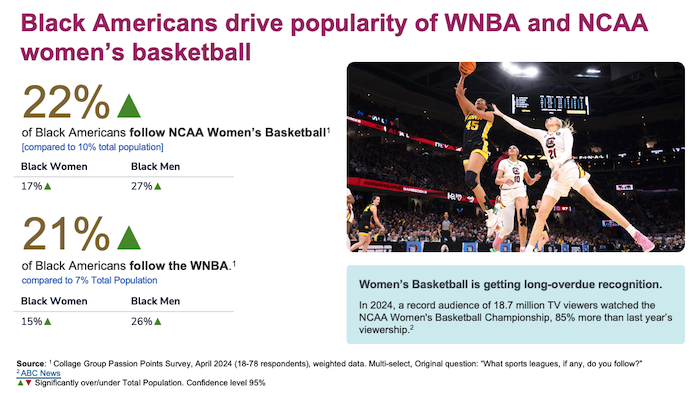
Unlocking opportunities in women’s sports: Growth, fandom and marketing insights
By Elizabeth Jackson, Collage Group
The sports industry is experiencing an unprecedented transformation with the explosive growth of women's sports. No longer confined as a niche, it has blossomed into a thriving sector teeming with unique opportunities for marketers to forge deeper connections with consumers, and for insights professionals to educate stakeholders. The surge in women's sports is not a temporary wave, but a sustainable movement that is restructuring the landscape of the sports industry. Read more.
Consumer shifts: Changing trends and habits in the beverage industry
By Noa Friedman and Natalia Palacio, Environics Research
Alcohol trends have been in the spotlight in recent months as consumers embraced the challenge of going alcohol-free for Dry January and February. We wanted to gain firsthand insights into the key trends shaping the alcohol industry, so we interviewed colleagues about how their drinking habits have changed in recent years.
A surprising trend we heard across all generations – from Gen Z to Boomers – was a growing emphasis on mindful drinking. Read more.
Why periodic brand evaluation is crucial for financial institution growth
By Kimberly Clay, Bancography
To find the truth behind a brand is to ask. You must understand and accept the responses. Once the results are accepted, strategies can be crafted and executed. Hopefully, your brand grows in the direction you want.
There are two groups that comprise the answer to a financial institution’s brand: the prospective client in the target market and the existing customer. Read more.
How Verizon furthered its customer understanding through the integration of market and user research
By John Hunoval, Verizon
Understanding our customers is paramount for driving growth and sustaining engagement. This article explores various strategies employed by researchers within Verizon's insights organization, with a particular focus on the experiences of a hybrid team dedicated to product research. This team's design emphasizes the integration of market and user research to foster product and experience innovation. Read more.
Gen Z’s mental health crisis is real: What research tells us about brand responsibility
By Amanda Kealey and Mariana Olivar, Hall & Partners
Mental health awareness among younger generations, particularly Gen Z, is at an unprecedented high, yet navigating the health care system in the U.S. and accessing adequate mental health support remains a significant challenge. While Gen Z openly discusses mental health, they continue to face disproportionate struggles due to financial instability, environmental pressures, limited access to nutritious food and a health care system that often leaves them behind. Read more.
A comparison of two types of sample
By Megan Copas, 84.51°, and Patrick Coyle, nutpods
Research surveys are an indispensable part of making customer-first decisions; however, hard-to-uncover gaps in research quality can lead businesses down faulty paths. The well-worn mantra "garbage in, garbage out" takes on new significance in research methodology – a truth that's often acknowledged but rarely deeply examined. Imagine the cascading consequences of including respondents in a study who have no genuine connection to the brand or category: each false data point is like a small crack in a foundation, potentially causing an entire strategic structure to crumble. Read more.
Work and Play: Mixed-media collage and seeing what goes together
By Nancy Cox, Research Story Consulting
I’m a mixed-media collage artist, a passion and a hobby. After many years of being away from art, I found art again. When I was about seven years old, I was part of a public-school program where I had the opportunity to learn how to draw, use pastels and all kinds of art supplies. And I had a fantastic middle and high school art teacher; I soaked up everything from her. Then I went to college to get my communications degree, and I didn’t touch art for a very long time. Read more.
From campus to consumer loyalty: How brands can authentically participate in college culture
By Alonzo Bailey and Lauren Goldberg, Collage Group
Every fall, America’s college campuses become cultural epicenters. What might look like a simple game day or reunion is, in fact, a deeply rooted economy of pride, belonging and identity. From fight songs echoing across stadiums to TikTok videos capturing tailgate antics, these rituals connect generations and power billion-dollar ecosystems of emotion and commerce. Read more.
Leveraging patient voices to transform health care provider insights into business impact
By Laura Bayzle and Jeff Whiteside, The Link Group
Health care providers (HCPs) are often a primary lens for understanding treatment landscapes, patient needs and product potential. However, we often see a convergence of issues that can impact the authenticity of the insights collected:
- HCPs are often “frequent fliers,” which can lead to a participant vs. HCP mind-set.Many HCPs participate in research on an almost weekly basis, partly driven by the demand of research.
Five underappreciated benefits of user experience research
By Lisa D. Dance, ServiceEase
User experience (UX) research is often misunderstood because it’s more associated with its qualitative aspects. While UX research can be both qualitative and quantitative, its qualitative methods range from user interviews and observations to usability testing – all providing invaluable, rich data. Researchers gather data by observing and listening to the participants to help understand “the why” behind people’s behaviors and decisions. Read more.
How to create a research project style guide
By Nancy Cox, Research Story Consulting
"Your research was critical to our recent success. Your report ‘speaks our language’ and that really helps!”
What a great in-box message for any researcher to receive! The first sentence says “research goal achieved” and the second sentence reveals a key clue to achieving that goal: The researcher’s writing style matches the stakeholder’s style – it speaks their language. Read more.