
Editor’s note: Bruce Temkin is CX transformist and managing partner at Temkin Group, a Boston-based customer experience research and consulting firm. This is an edited version of a post that originally appeared here under the title, “Customer emotions to health plans differ across age groups.”
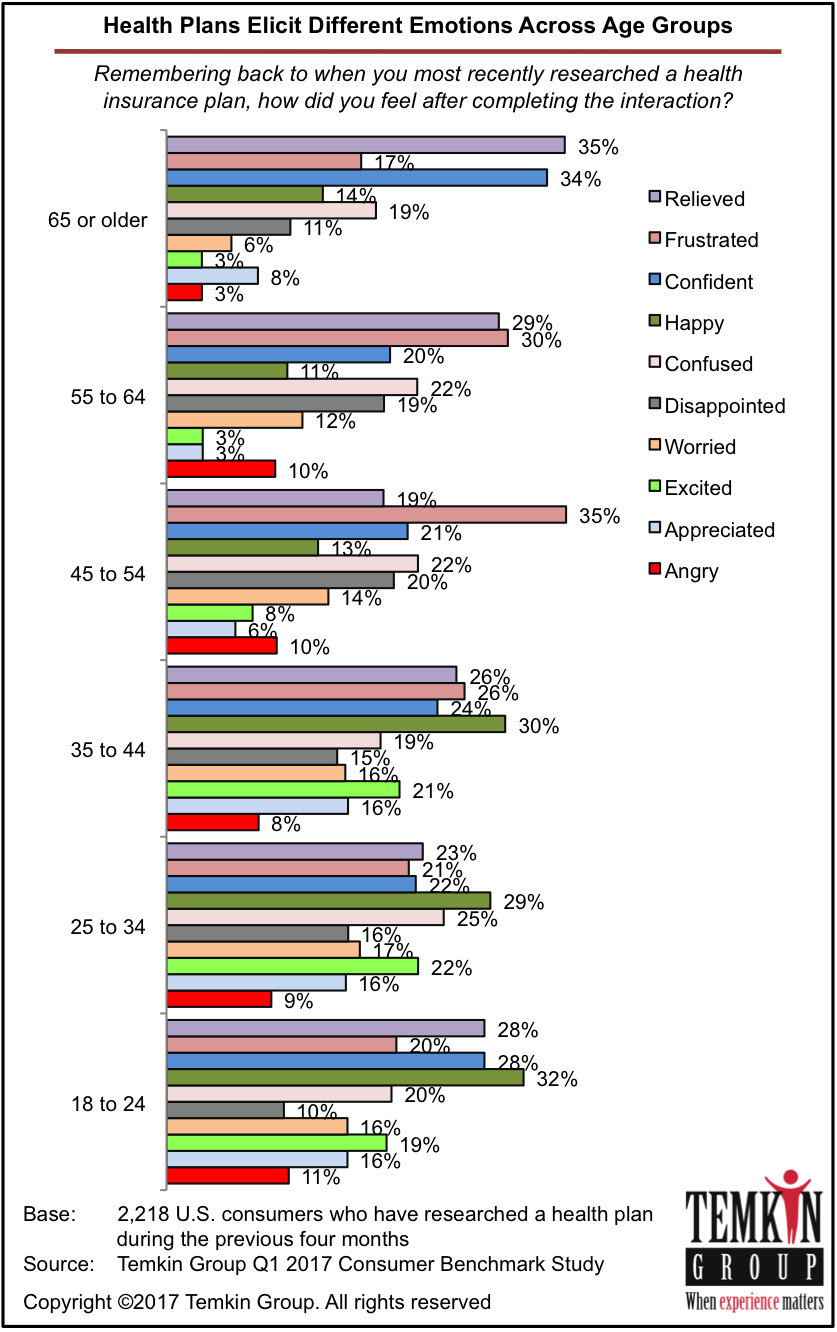
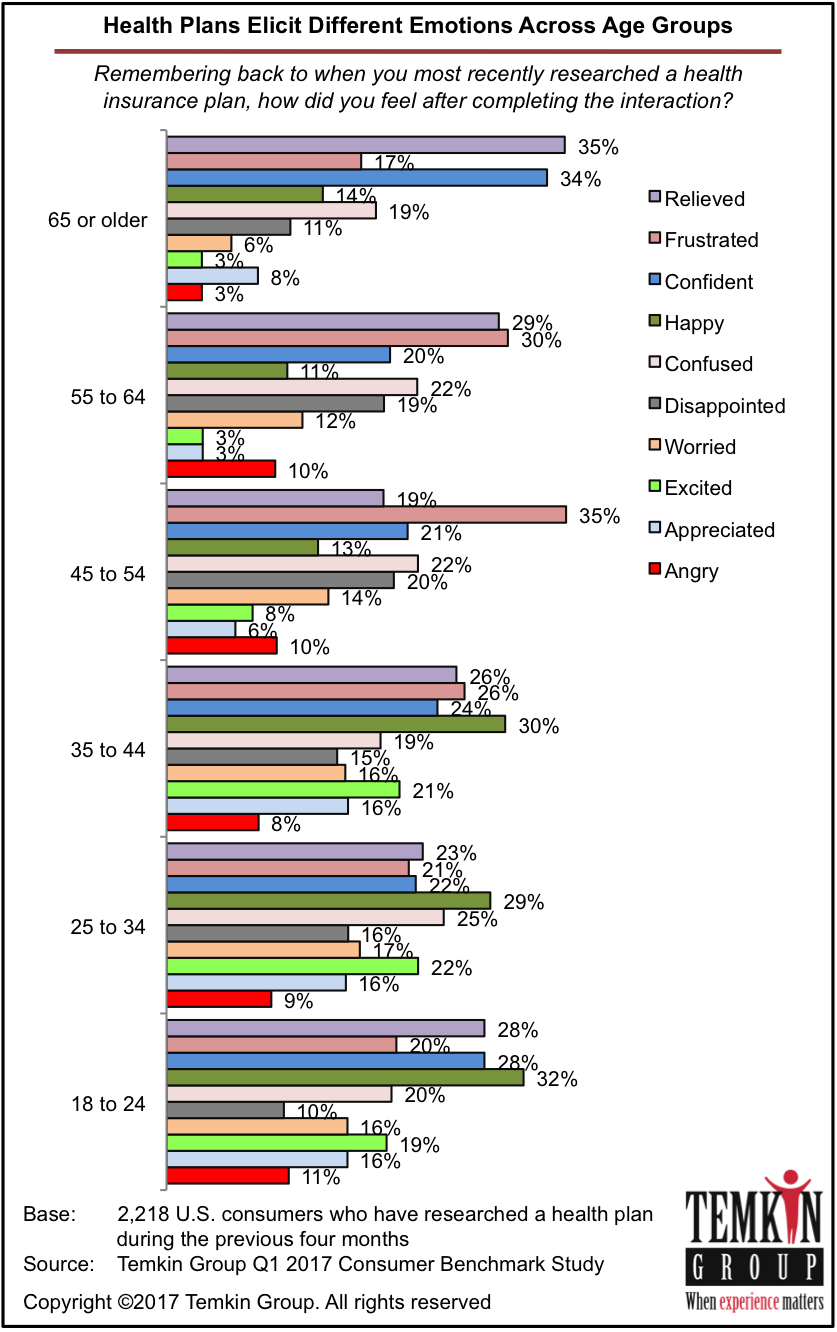
In a recent post, Temkin Group analyzed 10 emotions that consumers feel after completing a number of different interactions. We decided to dig deeper into one of those interactions, researching a health plan. We analyzed the emotional responses across different ages of consumers after that interaction and found that:
- Consumers who are 44-years-old or younger tend to feel happy.
- Consumers who are 45-to-64 years old tend to feel frustrated.
- Consumers who are 65-years-old and older tend to feel relieved.
As you can see in the chart below:
- 18-to-24-year-olds: The most common emotion of the youngest consumers is happiness. This group represents the happiest of any age level. They are also the most likely to feel appreciated (along with 35-to-44-year-olds) and angry.
- 25-to-34-year-olds: This age group is also most likely to feel happy but is also the group that is most likely to feel excited, worried and confused.
- 35-to-44-year-olds: This age group is also most likely to feel happy and is also the most likely (along with the youngsters) to feel appreciated.
- 45-to-54-year-olds: This age group is by far the most likely to feel frustrated and is the most frustrated of any age group. They are also the most likely to feel disappointed.
- 55-to-64-year-olds: This age group is most likely to feel frustrated and is also the age group that is least likely to feel happy or appreciated.
- 65-years-old+: The most common emotion of the oldest consumers is feeling relieved, and they are the most relieved of any consumers. They are also the most likely to feel confident. In addition, they are the least likely to feel angry, excited, confused or frustrated.
Why is this important? Our research shows that emotion is the largest driver of customer loyalty. Companies must not only start talking about emotion but they also need to develop unique approaches for dealing with different emotions across their customer segments.
The bottom line: It’s time to make customer emotion a top priority.