
Editor’s note: Joanna Lepore is global foresight lead, Mars Wrigley, North America.
A foresight podcast covering macro and micro global trends
“Future Imagined” is a foresight podcast dedicated to thinking about themes influencing the future of the consumer goods industry. In it, the newly formed foresight team at Mars Wrigley dives deep into a variety of topics discussed in boardrooms and on Zoom calls around the world:
- Macro trends around technologically enhanced connected living, definitions of wellness and new avenues for immersive enjoyment.
- Micro moments changing consumer behavior during COVID.
- The changing shopping landscape in different parts of the world.
- Youth culture and the transformative will of Gen Z. How business leaders and critical functions like insights and marketing need to evolve.
We discuss the insights, trends and signals that are being spotted every day that are integral to our strategies, but often so overwhelming. And most important, we turn knowledge into understanding.
Each episode is designed to dive deep into a meaty topic to ask why – looking at the context of history and how we got to today, observing the signals of change, bringing the motivations of people to the forefront and projecting out to the potential futures at play. It’s a big task for one small foresight team. But we didn’t do it alone.
In the beginning, when I was reaching out to my industry contacts, I was worried I had pushed the friendships … that PepsiCo would think it’s too risky, that VICE would say it’s too corporate, that IPSOS wouldn’t want to give away their research, that Japan Airlines would think I’m nuts talking about air travel on a confectionery podcast.
But their responses were the opposite. Not only did our media, research agency and industry peers jump at the chance to be part of this, the question I received back from nearly everyone was, “Can we share it with our company too?” So, we made the podcast public.
Creating a fresh, digestible marketing research podcast
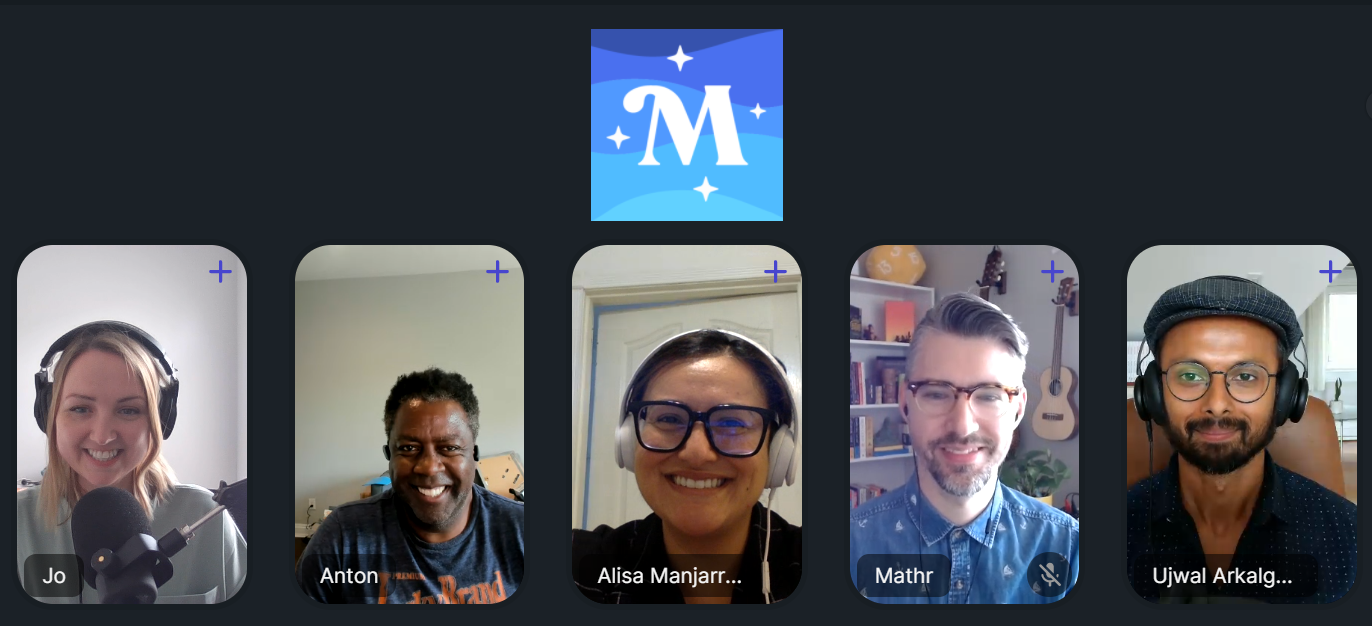
“I’m always hesitant to call something simple. Because to me it’s simple to do a podcast, you just get a bunch of people on the phone and you record them. But the reason that it’s simple is because someone else has done a lot of the heavy lifting.” Chris Albrecht, editor, The Spoon. Future Imagined, Episode 2: “Adaptability.”
Albrecht’s quote above has really stuck in my mind while working on the podcast. It was said in Episode 2 of the “Future Imagined” podcast. Imagine an absolute novice, hosting my second episode of the series, not knowing what exactly about the podcast would be most powerful, but wanting desperately to bring something fresh, digestible and insightful to the global Mars business.
Podcasting and audio media are incredibly popular right now. Spurred on by the pandemic and people (thankfully) taking time away from screens to go for a walk and digest intel while they’re at it.
In 2020, I became addicted to podcasts from research agencies because it was a quick way to keep on top of the latest intel and to hear the conversations of very brainy people. I always came away with a lightbulb moment. For the first time, I was stopping (to write ideas into my phone) more than my dog.
And there’s a lot to choose from – more podcasts launched in 2020 than in 2019. From WIRED to The Economist, from SXSW to Mintel. There is no shortage of great podcasts, and certainly not from the agency side. It’s easy to see why – they showcase research prowess, strategic positioning, their charismatic thought leaders, their local market intel.
But what about client side?
Benefits of collaboration – podcasts from the client-side
When we think about collaboration within the industry we often look to specific one-off projects and campaigns. They show we’re open with our products, services and infrastructures. But what about showing an openness with our knowledge? In insights – often internally as much as externally – we hold our intelligence close to our chest, worrying data will be misconstrued or manipulated.
Client-side researchers often view the intelligence as privileged, paid for in research dollars and employees who digest it into something meaningful. We spend time and money turning our thinking into strategy, something that can be shared with the people in the business who turn it into action. By this point we’re so wedded to the insights we’ve generated that we communicate them in a black and white way. We clearly define them. Worse, sometimes we believe they are definitive.
What we try to do with the podcast is to promote an openness with knowledge. And a keen intent to turn this ‘know’ into ‘imagine’. We put themes from trend reports on the table, we converge on the topics that our marketing partners are thinking about, we talk about what’s keeping up our business leaders at night, we hypothesize divergent futures. We do all of this so that we can progress our thinking on projects, initiatives and strategies. We do it to bring the outside in for ourselves, to be better researchers.
On one of our most popular episodes, “Inside out,” we talk to the redefinition of well-being and self-care on the physical, mental and communal spectrum. To balance the conversation we brought in Philip Ryan, strategic foresight at IPSOS strategy3, Daniel Connor, social strategist from Tik Tok, Osher Hoberman, our very own VP of business development, alongside Jessica Southard, the Mars Inc. lead on corporate foresight. The conversation casually goes from talking about physical movement through social media interaction to mood management in functional foods and moments of happiness on a quiet morning without the kids. I end the episode asking the audience a question, “What kind of future are you able to imagine?”
Creating a collaborative future
Foresight is as much about identifying possible futures as it is about creating the future we want. And we want our entire industry to be better. We know from multitudes of studies that collaboration improves performance and results across many sectors. Why can’t the insights industry do the same with intelligence?
But we didn’t create the podcast with this intention. In fact, we didn’t create it to promote Mars and we didn’t create it thinking it would revolutionize the industry … and let’s be honest we’re still in the early days building our audience. It was simply one team’s effort to share the insights we generate by bringing the outside in.
The show is wrapping up its second season and over the course of the first 12 episodes, Chris Albrecht’s words have stayed with me because he’s right; making a podcast only looks easy. But that’s OK – the easy part should be in the listening.
So please take a listen, share with your peers and stay curious.