

Editor’s note: Sofie Nelen is digital marketer at Survey Anyplace, Belgium.
Writing a strong, convincing survey introduction can be a challenge.
While you know what data you want to collect and how to ask your questions, you also need to make a good first impression that’ll lower the threshold for your audience to start answering questions.
Let’s look at how to build an effective survey introduction that will increase your response rate. Combined, these steps make up a detailed, transparent and honest survey introduction. While it’s good to keep these in mind, I also want to point out that shorter is always better – both in the duration of your entire survey and in the introduction.
Indicate the purpose
Let people know why you’re asking. When you are clear about your purpose you stimulate respondents in their willingness to provide you with answers. You also give them a sense of purpose because now they can help you in your quest to get the most valuable insights.
Simply stating the purpose of your survey will persuade more respondents to complete it. Additionally, sharing results or an outcome from a previous survey makes the intro that much stronger.

Be upfront about privacy
In a world where data is constantly collected everywhere, you’ll notice people are more guarded about sharing what is left of their personal information.
Always be clear about what you plan to do (or not do) with the collected information to ease respondents into answering without reservation.
Be especially clear about anonymity. If respondents aren’t anonymous, share why it’s important for you to know who they are.
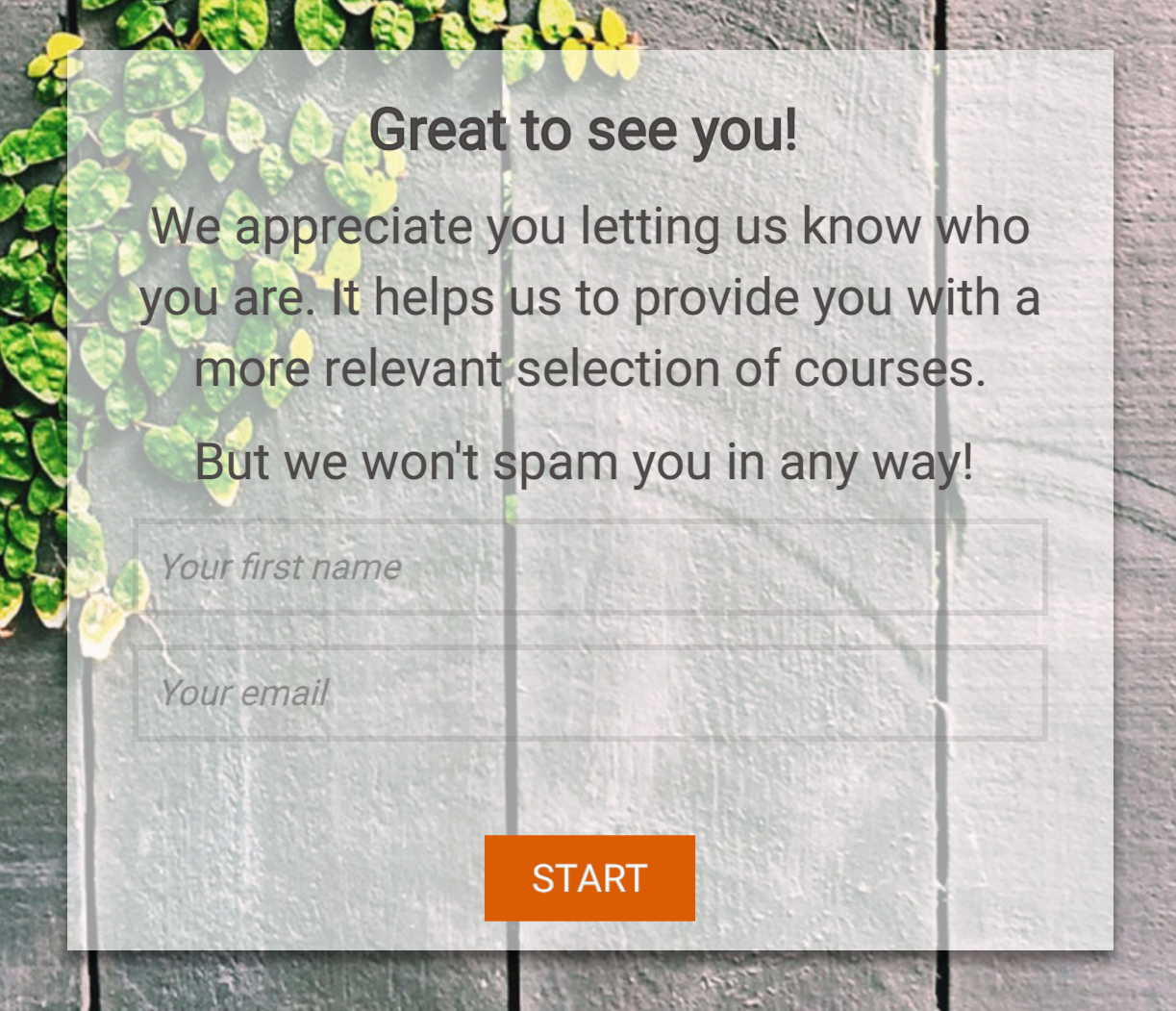
If you plan on reaching out to newly collected e-mails be sure to add an opt-in for this within your survey (not necessary in the introduction – add a checkbox for this on the same page you ask for their e-mail). And always make sure there’s an opt-out in the e-mails you send.
Sometimes a privacy policy or an explanation of what will be done with the data needs more room than an introduction screen. Consider adding a separate page if the privacy policy is quite long or replace it by adding a URL to your privacy policy page.
Explain your target audience
Quickly tell your respondents who your target audience is for this survey and how you believe they fit into it.

It’s simple but will increase the recognition of how they can help you, allowing them to realize the value of their answers.
Share who’s behind the survey
Like any normal conversation, simply introduce yourself! By sharing your company name and perhaps a little bit on what you stand for as an organization you will increase recognition and the willingness to answer questions.

Be honest about the duration of a survey
One of the biggest annoyances when you, as a respondent, commit to answering a survey is finding out that you’ve been tricked into a survey that takes much longer than you anticipated.
Give your respondents a realistic estimate – preferably in seconds – of the time it’ll take to answer your questionnaire. And force yourself to make the survey as short as possible as this will improve completion rates.
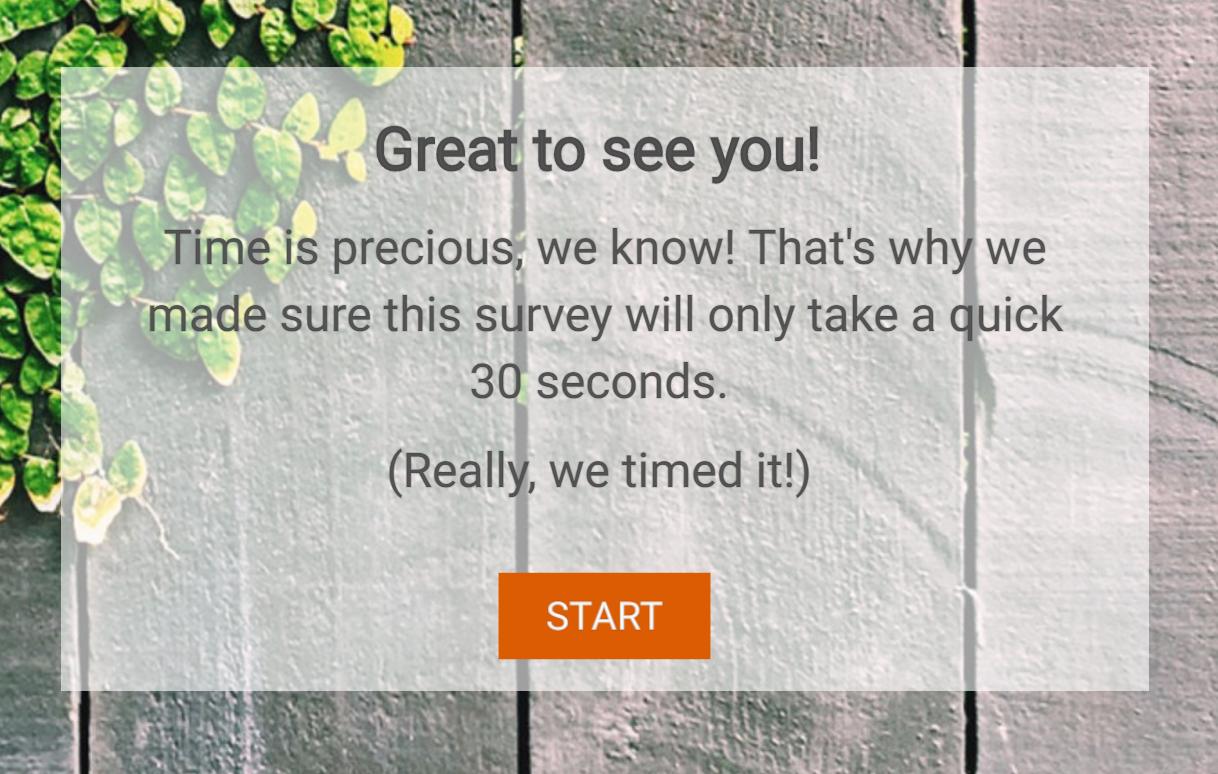
When we send out surveys, we try to add a personal (and true!) note: “Help us out! Please answer these four questions, it will only take 49 seconds of your time. Really! We timed it ;).”
Provide a benefit for the respondent
A strong trigger in your survey introduction is answering the “What’s in it for me?” question.
While incentives tend to work well, a benefit for the respondent doesn’t always have to be a prize.
By giving some knowledge or a piece of personalized information in return, you can also increase the value for respondents to become a part of your survey.
If you do have the possibility of adding an incentive, be conscious about choosing something that is relevant and useful. Big and expensive does not equal relevance.

Say thank you
Yes, life can be this simple! Try to make this survey experience as human and spontaneous as possible for your respondents by adding a personal touch.
The easiest and most genuine way to do this is by simply saying thank you. And hey, it’s the least you can do!
Include your logo
When it should be clear that a questionnaire is coming from your company, do not forget to add your logo in the design. It’ll increase brand recognition on your intro screen so you don’t need to push your brand name throughout the entire survey.
Make people feel like they’re talking to an old friend.
Be human and conversational
There’s always a time and place for a conversational tone. This is even acceptable in more serious environments. When you direct your questions to human beings, make sure the tone you use matches their way of interacting in everyday life.
Using a tone that is in line with your brand and is based on your target audience can increase participation and boost your completion rates.
Try working with interjections or even add an emoji every now and then to encourage emotion and empathy toward your brand. :)
Don’t use the word “survey”
The associations that are made with the word “survey” are (unfortunately) often enough to make people abandon ship even before you get to ask your first question. Solve this hurdle by using another phrase. Ask people to “answer a few questions” or to “spare 50 seconds of their time.”
This works in the introduction screen of your survey, as well as your e-mail invitations.
Write your intro based on the six building blocks above and then start erasing bits and pieces until you are left with only the most relevant and necessary information. In theory, that’s all you need when you launch your questionnaire.
What’s most important
People don’t want to waste their time reading page-long introductions before finally being able to start your survey. Use the essentials from the tips above but go ahead and focus on what’s most important to your company and research objective.
Here is a short, generic and to-the-point example:
Hey, glad to see you!
First let me thank you for taking our [survey duration] survey. You are a great help! :)
We at [company name] are on a daring quest to collect the right data about [survey subject]. Our target audience involves everyone who [target audience]. This is why we chose you!
And don’t worry, your data is just for [where you will use data] so [be clear about respondent privacy]. We promise!
Get started and take your chance to WIN [a grand prize].
By writing a survey introduction you force yourself to focus on the most important message. Inform your audience clearly – with room for a human touch – and watch your response rates grow.