
Editor’s note: Elizabeth Carger is director of insights at marketing research firm Beacon Insight Group, Milwaukee.
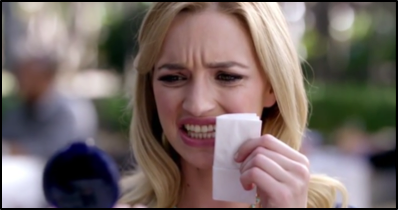
In the spring of 2016, Crest launched a new commercial complete with a hashtag to draw consumers through a #tissuetest. Are your teeth as white as a bleached tissue? If not, cue shame in the form of deleting all your photos with your not-so-pearly whites. But the friendly Crest 3D White Whitestrips can fix that – bleaching your teeth to make you socially acceptable once again.
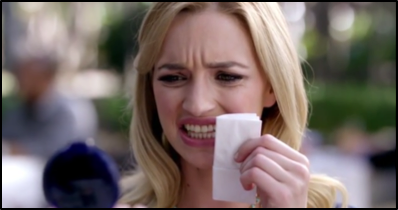
When watching this commercial, I kept seeing flashes in my mind of old ads … really old ads.
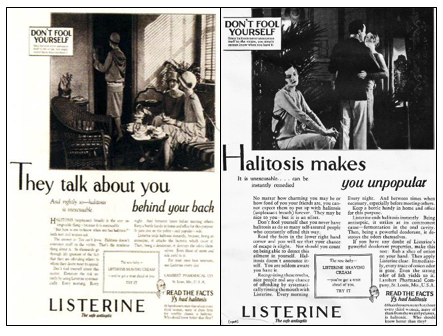
In the 1920s and 1930s, the advertising industry experienced a major change when copywriters began to adopt a “reason why” approach to sales that was targeted at specific segments. While it seems old-hat now, this type of focus on highly relatable, seemingly personalized advertising campaigns was a tremendous shift from the early years of simple, brand name awareness campaigns with snappy jingles and bland photos of the product.
Interestingly, while updated, slightly softened and modernized, this scenario has remained largely intact. The old is new again. But will this tactic work on Millennials and future generations?
Scare copy
Charles Roland Marchand, an American historian, described scare copy best in his seminal work Advertising the American Dream:
Scare copy sought to jolt the potential consumer into a new consciousness by enacting dramatic episodes of social failures and accusing judgments. Jobs were lost, romances cut short and marriages threatened. … the product stepped forward … to offer friendly help. Scare copy posited a universe in which the fate of each consumer lay in the hands of external disinterested forces and unsympathetic judgmental observers. … By contrast, the advertiser was solicitous and caring, a friend in need.
Listerine was most noted for this tactic, scaring young women with the prospect of severe social rejection if they experienced the scourge of a condition called halitosis (bad breath). These types of ads represent the first wave of reason-why campaigns but also the start of copywriters consciously recognizing that the primary drivers of consumer behavior were not rational or factual – they were emotional. Fear and disgust are two of the most elemental emotions in the evolution of humans. The tissue test smacks of the halitosis appeal, an invented concern to layer on consumers.
However, scare copy can also have a backhanded consumption vision for consumers. As the product stepped in as a friendly solution, it implicitly enables the consumer to rise to the status of bride not bridesmaid, man in the corner office, etc.
Reaching Millennial consumers
The question remains as to how these revived scare copy tactics play today, especially among Millennials. An old advertising guru reminded me, “Scare doesn’t sell anymore.” And there is ample evidence to show that in the realm of social norms Millennials are more about breaking down barriers, overcoming shame and embracing the authentic self. Pew Research concludes, “Millennials are more tolerant than adults in other generations of a wide range of nontraditional behaviors.” Pew also found that 38 percent of Millennials have tattoos as a form of self-expression, more than double the number of Boomers sporting body art (15 percent). This deviation suggests that the creation of a new norm of the tissue test for teeth whiteness may not play well among Millennial consumers.
One of the strongest trends I have seen over the last 10 years as Millennial women come into full adulthood is intense frustration with what they perceive as traditional treatment of women as sexual objects or beauty idols. In one study Beacon Insight Group conducted regarding Millennial attitudes toward their future and society at large, we saw an overwhelming number of comments that mirrored this one from 27-year-old Rashimi, “Companies and brands need to move away from advertising that solely sexualizes women. There are more creative ways to sell a product … We are human beings with other thoughts and purposes.”
Similarly, 26-year-old Cait talked about social and corporate expectations of women, saying, “I would like society to stop putting people into these perfectly labelled boxes and do away with ‘norms.’ As Millennial women we have been conditioned that being a woman means you check off all these standard boxes. There are so many variations and differences woman to woman.” Be it sexualized or generalized, Millennial women are keenly attuned to how they are portrayed in media and advertising – and they do actively reject brands they perceive as engaging in these types of sales tactics.
A powerful emotion
There is good reason for scare copy to have lasted this long. Disgust is still a primal and powerful emotion. Scare copy helped establish brands and foundational hygiene habits in an era where toothpaste, mouthwash, deodorant and feminine care products were all new to consumers. Like rungs on a ladder, most of these brands moved from innovation to innovation, solving one problem (like halitosis), then the next (cavities), then the next (stained teeth). Each major leap brought its own variation on the theme of disgust avoidance as a powerful motivator in the realm of social norms.
And yet, as strong a motivator as disgust can be, Millennials once again show us that they seek out opportunities to break from patterns of negativity and criticism. Consumers like Crystal, age 30, are representative of a larger pattern of active work toward self-acceptance. She says, “I think it’s important to be kind to yourself and build yourself up. We can be our own hardest critics so it’s important to practice self-love. I could do without the hate I’ve been seeing via social media. Comments sections are so depressing.”
As with fundamental framing of women, we do see this carry over into how they perceive advertising and larger brand identity. Perry, age 28, puts it very clearly, “I gravitate more toward brands that celebrate women rather than play to our insecurities, although basically all marketing done toward females is playing on their insecurities in some way.”
Will this type of halitosis appeal sell more product, particularly among Millennials and the generations that follow? The jury is still out. We can point to it for what it is – a revival of the very tried, sometimes true, scare copy.