
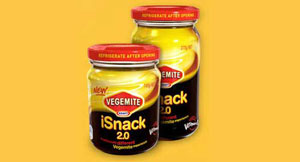
iSnack 2-point what? Vegemite reconsiders and renames product
When Australian Kraft Foods brand Vegemite failed to deliver a great name along with (what they hoped would be) a beloved new product, the company turned to research to reach Vegemite enthusiasts for guidance in correcting its marketing misstep - and in renaming the latest cream cheese-like iteration of the Aussie snack-time favorite.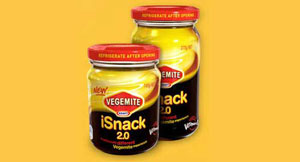
To remedy the situation, Vegemite teamed up with Quantum Market Research, Oakland, Calif., in early October 2009 to conduct a weekend-long online survey and telephone poll of over 30,000 households in Australia and New Zealand. Respondents were asked to choose a favorite among six potential product names. Vegemite Cheesybite emerged victorious with 36 percent of the vote, followed by Vegemite Smooth (23 percent); Vegemite Vegemate (20 percent); Vegemite Snackmate (8 percent); Vegemite Vegemild (7 percent); and Vegemite Creamymate (6 percent).
The Vegemite Cheesybite labels have begun replacing iSnack 2.0 on shelves.
Have heavy ad-clickers killed the click-through metric?
Ding dong, the click is dead! At least that’s what research from Reston, Va., research company comScore would indicate. Results from a study conducted on behalf of media agency Starcom USA and targeting network Tacoda call into question click-through rates as a primary source of accountability for Internet display advertising aimed at brand-building.
The decimation of the click-through is, in part, due to natural-born clickers, a very small group of consumers not representative of the total U.S. online population who are responsible for the vast majority of display-ad click-through behavior.
While many online media companies use the click-through rate as an ad negotiation currency, heavy clickers represent just 6 percent of the online population yet account for 50 percent of all display-ad clicks. Heavy clickers also skew toward Internet users ages 25-44 and households with an income under $40,000. Heavy clickers behave very differently online than the typical Internet user, and while they spend four times more time online than non-clickers, their spending does not proportionately reflect their abundant Internet usage. Heavy clickers are also relatively more likely to visit auctions, gambling and career-services sites - a markedly different surfing pattern than non-clickers.
Furthermore, data suggests no correlation between display-ad clicks and brand metrics and shows no connection between measured attitude toward a brand and the number of times an ad for a certain brand was clicked. When digital campaigns have a branding objective, optimizing for high click rates does not necessarily improve campaign performance.
“While the click can continue to be a relevant metric for direct-response advertising campaigns, this study demonstrates that click performance is the wrong measure for the effectiveness of brand-building campaigns,” said Erin Hunter, executive vice president at comScore. “For many campaigns, the branding effect of the ads is what’s really important, and generating clicks is more of an ancillary benefit. Ultimately, judging a campaign’s effectiveness by clicks can be detrimental because it overlooks the importance of branding while simultaneously drawing conclusions from a subset of people who may not be representative of the target audience.”
Asda panel taps customers for product development help
In October 2009, Asda Group Ltd., the U.K. supermarket business of Walmart, revealed plans to revamp and rename its Pulse of the Nation panel, a community of 18,000 regular Asda shoppers. The updated initiative, dubbed Chosen by You, is designed to incorporate and consult customers about every aspect of the business, such as product development, the feel of packaging and evolving products already being sold in-store in hopes of raising customer engagement and delivering items more closely aligned with consumers’ wants and needs. The panel, which is managed by Vancouver, B.C., research company Vision Critical, already makes Asda panel-member customers privy to information regarding company goings-on - from in-store launches to events happening around the world - but Chosen by You gives even more control to the customer and takes them deeper into the behind-the-scenes action.
Chosen by You members will have access to products before they reach the general public, and the panel will also reward the shoppers with the brightest money-saving ideas by cutting a check for 5 percent of Asda’s savings to the contributing customer. Additionally, Chosen by You will include Aisle Spy, a blog maintained by 14 Asda employees armed with video cameras who journal about what they do day in day out.
Asda has already begun involving customers in deciding what is sold and how it’s sold. One example is the company’s hunt for the right fragrance for a new Asda Orangeflower and Papaya Fabric Softener. Nearly 100 experts, including perfumers and the Asda brand team, and nearly 100 customers were involved in the first stage - narrowing down the choice to two fragrances from an initial 30 variations of orangeflower and papaya.
The different fragrances went through various stages of laboratory testing and were also tested by Asda’s home panel, where Asda-shopping moms could test them out in their everyday lives. Research revealed that Asda moms are “fragrance junkies,” and the smell of their laundry is very important to them. Asda has expanded the voting to include a wider range of customers to select the final fragrance. The new Orangeflower Papaya laundry range are set to hit stores in 2010 and will be among the first offerings “Chosen by You.”